
In this guide
If you’re shopping for a reliable forced air heater to warm up living spaces, garages, or workshops, you want options that deliver fast heat, offer safety features, and fit your space. The following selections highlight popular electric and fuel-burning models that balance performance with practical features. Each product is chosen for its suitability to typical American homes and spaces, ensuring you can compare options side by side before buying.
| Product | Brand | BTU / Heating Capacity | Power Type |
|---|---|---|---|
| Dura Heat EUH1465 Electric Forced Air Heater | Dura Heat | 1500W (approx. 5,120 BTU) | Electric |
| Dreo Space Heater | Dreo | 1500W | Electric |
| Comfort Zone CZ45EBK | Comfort Zone | 1,500W | Electric |
| PioneerWorks 80,000 BTU Diesel/Kerosene | PioneerWorks | 80,000 BTU | Oil/Diesel/Kerosene |
| InoKraft MaXheat MH68 | InoKraft | 30,000–68,000 BTU | Propane |
These selections span electric indoor units ideal for bedrooms and offices, as well as portable fuel-fired options designed for garages, workshops, and job sites. When choosing, weigh factors like space size, fuel availability, electrical capacity, noise level, and safety features to find the best fit for your home environment.
Dura Heat EUH1465 Electric Forced Air Heater
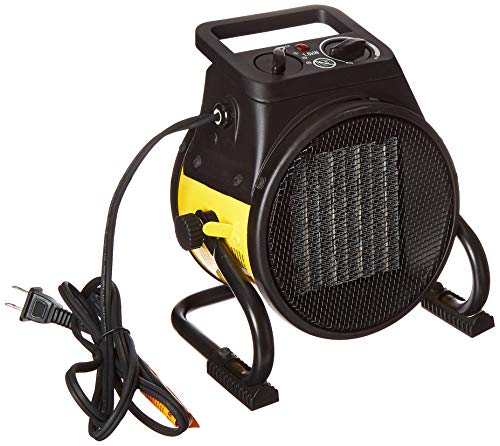
The Dura Heat EUH1465 delivers rapid warmth with 1500W of PTC ceramic heating, making it suitable for small spaces such as tight workshops or utility rooms. Its rugged steel construction stands up to everyday use in garages or commercial work areas. This model offers versatile heating options, including heat and fan-only settings, letting you use it as an electric heater or hot air circulator depending on needs. Built for quick warm-ups, it combines durability with practical control over heat output.
Dreo Space Heater

The Dreo space heater combines a high-efficiency 1500W PTC heating system with a redesigned heat funnel to project warmth faster and extend reach. It includes a tilt-detection sensor for safer operation, a flame-retardant shell, overheat protection, and an ETL certification for safety. The enhanced NTC thermostat provides precise temperature control from 41–95°F in 1°F increments, helping manage energy use while maintaining comfort. This model is well-suited for bedrooms, living rooms, and offices that require steady, controllable heat.
Comfort Zone CZ45EBK Indoor Space Heater

The Comfort Zone CZ45EBK offers a compact electric heating solution with practical safety features and energy-conscious design. It emphasizes versatility for home, bedroom, or small office use, including a fan-forced mode for quick air movement. The unit emphasizes energy efficiency with technology designed to reduce power consumption while delivering reliable warmth. A safety-oriented feature set includes overheat protection and a tip-over switch, making it a convenient, worry-free option for indoor spaces.
PioneerWorks 80,000 BTU Diesel/Kerosene Heater
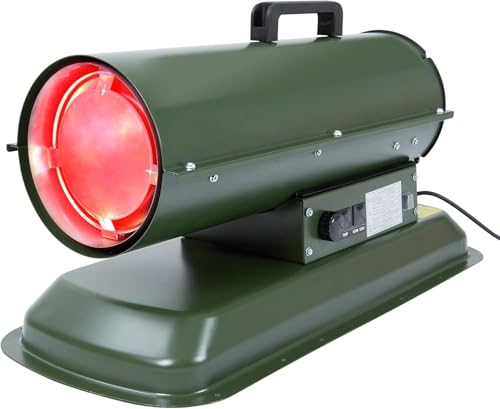
The PioneerWorks unit provides high-output warmth for larger spaces such as garages or job sites, capable of up to 80,000 BTU. It supports multiple fuel options, including kerosene and diesel, with a long runtime of up to 9.5 hours on a full tank (tank capacity around 4.76 gallons). Designed for outdoor or semi-enclosed spaces, it is a robust option when electric power is unavailable or impractical. Its dimensions and weight position it as a portable but substantial heater for demanding environments.
InoKraft MaXheat MH68 68,000 BTU Heater

The InoKraft MaXheat MH68 is a portable propane forced-air heater offering a flexible 30,000–68,000 BTU range suitable for garages, shops, and outdoor-covered spaces. It heats areas up to about 1,600 sq ft and includes a hose and regulator for propane supply. Features focus on fast heating, adjustable heat angle, and multi-protection safety mechanisms. CSA certified and designed for heavy-duty use, this unit emphasizes mobility and powerful heat output where electrical access may be limited.
Buying Guide
- Space and heat needs: Electric heaters (like Dura Heat, Dreo, Comfort Zone) are ideal for smaller rooms, offices, and bedrooms where plug availability is strong. For larger spaces or outdoor areas, consider fuel-fired units (diesel, kerosene, propane) that deliver higher BTUs and do not rely on electrical outlets.
- Fuel type and availability: Electric models use standard outlets and are quieter, with simpler venting. Propane, kerosene, or diesel units offer more power for garages or job sites but require fuel storage, ventilation, and proper safety handling.
- Safety features: Look for tip-over switches, overheat protection, flame sensors or tilt-detection for electric units, and CSA/ETL certification where applicable. Ventilation is critical for combustion heaters to avoid carbon monoxide buildup.
- Control and precision: Thermostats with fine increments (1°F steps) improve energy efficiency. Look for remote controls or programmable timers for convenience in living spaces or offices.
- Portability and setup: Sizes, weight, and carrying handles influence how easily you can move the heater between rooms or jobsites. Portable propane and diesel units are heavier but designed with mobility in mind.
- Maintenance: Electric heaters require less ongoing maintenance. Fuel-burning models need regular fuel quality checks, filter changes (if applicable), and ensuring fuel lines and connections are secure.
- Noise level: Electric models generally run quietly, while larger combustion heaters may produce noticeable operating noise. If noise is a concern, review decibel ratings or user reviews for real-world performance.
- Ventilation: Combustion heaters should be used with adequate ventilation to prevent CO buildup. Never operate in enclosed spaces without proper exhaust and CO detectors where required.
- Energy efficiency: Look for models with energy-saving modes or thermostats that minimize wasted heat. For longer-term use, efficiency reduces operating costs and environmental footprint.
- Budget and durability: Steel-bodied units tend to be more durable in workshop environments. Consider warranty coverage and expected lifespan when evaluating higher BTU ratings versus upfront cost.