
Finding an energy efficient gas wall heater can cut heating costs while keeping living spaces comfortable. This guide highlights five top options, explaining who each is best for and why they were selected. It’s ideal for renters, small-to-mid sized homes, or anyone looking to supplement central heating with targeted warmth.
Buyer’s quick reference table (selected products):
- Rinnai EX22DTWN Direct Vent Wall Furnace — Best for compact rooms and families seeking safe, efficient operation.
- Rinnai EX38DTWN Direct Vent Wall Furnace — Best for larger spaces needing strong, even warmth.
- Mr. Heater 30,000 BTU Vent Free Blue Flame — Best for open areas and garages needing rapid heat.
- EnviMAX 220V Electric Panel Heater — Best alternative for those open to electric heat and 24/7 use.
- Rinnai EX08DTN Direct Vent Wall Furnace — Best for smaller rooms with precise control and safety features.
Rinnai EX22DTWN Direct Vent Wall Furnace 21,500 BTU

The Rinnai EX22DTWN uses direct vent technology and modulation to maintain consistent temperatures with minimal cold spots. It features a cool-to-the-touch cabinet and self-diagnostic electronics, prioritizing safety in homes with children. This model emphasizes energy savings by precisely matching heat output to demand, helping reduce fuel use while keeping rooms comfortable.
Best for: Small to medium rooms where safety and precise control are priorities, such as living rooms or bedrooms in family homes.
Why chosen: It offers a balanced combination of safety features, efficient operation, and space-conscious design suitable for homes seeking reliable direct-vent warmth without excessive power draw.
Caution/limitation: Compact size means it’s best suited for single rooms or zones; for larger open areas, a higher BTU unit may be more appropriate.
Rinnai EX38DTWN Direct Vent Wall Furnace 38,400 BTU

This larger Rinnai model delivers more robust heat for bigger spaces, with the same direct vent and modulating capabilities as its smaller sibling. It includes the same cool-to-the-touch cabinet and self-diagnostic electronics for safety, making it suitable for homes with higher heating demands.
Best for: Open-plan living areas, or rooms over 400–600 square feet where even, consistent heat is required.
Why chosen: It extends the reputable Rinnai direct-vent platform to higher BTUs, enabling effective zone heating in larger spaces while keeping safety features frontline.
Caution/limitation: Higher BTU output means it may consume more fuel; ensure your space warrants the extra capacity to avoid oversizing concerns.
Mr. Heater 30,000 BTU Vent Free Blue Flame Natural Gas Heater

Mr. Heater’s vent-free blue flame heater delivers 30,000 BTU per hour and can heat areas up to about 1,000 square feet. It uses a battery-operated electronic ignition and does not require a vent, making it a practical option for well-ventilated rooms or spaces where venting is impractical.
Best for: Large, open rooms or attached spaces like basements, sunrooms, or garages where venting is challenging.
Why chosen: Provides substantial heat output without installing a vent, offering a flexible solution for temporary or space-constrained heating needs.
Caution/limitation: Vent-free units can affect indoor oxygen levels if used extensively in small, poorly ventilated spaces; ensure proper ventilation and usage guidelines are followed.
EnviMAX 220V Hardwired Electric Panel Wall Heater
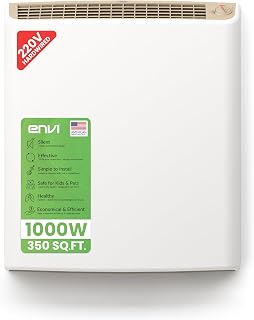
EnviMAX offers a 220V hardwired electric panel heater designed for large rooms. It emphasizes energy savings, with claims of up to 50% reduction on heating costs by localizing heat and reducing central heating reliance. The design highlights safety features like wall mounting and a cooled surface, with a silent operation profile due to its fanless design.
Best for: Homes or spaces where electric heat is preferred or required, especially to target zones while keeping overall energy use in check.
Why chosen: Provides an electric alternative with efficient, continuous heating and a quieter, dust-free operation, suitable for allergy-sensitive environments.
Caution/limitation: Being electric and wattage dependent, it may incur higher operating costs in cold climates if not paired with efficient insulation or strategic usage.
Rinnai EX08DTN Direct Vent Wall Furnace 8k BTU

The compact EX08DTN provides 8,000 BTU of heat and includes smart features such as electronic spark ignition, a 7-stage modulating gas valve, and a programmable thermostat range. It is designed with safety in mind, including a cool-to-the-touch cabinet and a child lock, while self-diagnostics help identify function issues.
Best for: Small rooms or tight spaces where precise temperature control is essential, such as bedrooms or home offices.
Why chosen: Combines essential safety features with reliable, small-scale heating, making it a practical choice for zones requiring targeted warmth.
Caution/limitation: Lower BTU means it may not suit larger rooms; pairing with other heaters or alternative solutions may be necessary for bigger spaces.
Buying Guide: Key Considerations For Gas Wall Heaters
- Room size and BTU needs: Higher BTU units heat larger spaces, while smaller rooms benefit from lower BTU models to avoid overheating.
- Ventilation and exhaust: Direct-vent models pull combustion air from outside, improving indoor air quality. Vent-free units should be used where adequate ventilation exists.
- Safety features: Look for cool-to-the-touch surfaces, child locks, automatic shutoff, and self-diagnostics for ongoing safe operation.
- Installation considerations: Gas line availability, venting feasibility, and proximity to living areas affect feasibility and cost. Professional installation is often recommended.
- Energy efficiency: Modulating gas valves and precise heat matching can reduce fuel consumption and lower energy costs over time.
- Operational preferences: For quiet operation and minimal dust dispersion, consider units with fanless or low-noise designs.
Frequently Asked Questions
- What is direct vent heating, and why choose it?
Direct vent systems pull combustion air from outdoors and vent exhaust outside, improving indoor air quality and safety compared to older venting methods.
- Do vent-free heaters require ventilation?
Yes, vent-free heaters release combustion byproducts into the room; ensure adequate ventilation and follow manufacturer guidelines to maintain air quality.
- Which heater is best for a large open living room?
Higher BTU direct vent models, such as the 38,400 BTU unit, are typically better suited for larger spaces requiring strong, even heat.
- Are electric panel heaters a good alternative to gas?
Electric panels can be effective for zone heating and silent operation, but operating costs vary with electricity rates and climate.
- Is professional installation necessary for gas wall heaters?
Most gas heaters require professional installation to ensure safe venting, gas connections, and proper vent clearance.
- What should I consider when selecting a heater for a child-friendly home?
Prioritize cool-to-the-touch cabinets, automatic safety shutoffs, and self-diagnostic features to minimize risk and simplify maintenance.