
If you’re searching for a reliable propane heater to warm an enclosed trailer, garage, or workshop, you’ll want models with built‑in safety features and steady heat output. The following five products are selected for versatility, safety, and suitability to small-to-medium spaces. This guide explains who each heater is best for, why it’s a strong pick, and potential limitations to consider.
| Product | Best For | Key Strength |
|---|---|---|
| OKF Propane Heater, 6000–18000 BTU | Small to medium enclosed spaces and outdoor use | Three heat settings and safety shutoffs |
| Mr. Heater MH9BX | Compact spaces up to 225 sq ft outdoors or well-ventilated interiors | Portability with auto shut-off on tip/low oxygen |
| Propane Patio Heater, 18,000 BTU (Gsmhoat) | Open or semi-enclosed outdoor areas, or garages with ventilation | High heat output with dual safety features |
| Mr. Heater Little Buddy 3,800–9,000 BTU | Very small spaces and portable use | Lightweight and efficient radiant heat |
| ProCom ML300HBA-B 30,000 BTU | Mid to large enclosed spaces where electricity is limited | No electricity required; multiple heat settings |
OKF Propane Heater, 6000–18000 BTU

Best for mid-sized enclosed spaces and outdoor use, this heater offers 6000, 12000, or 18000 BTU. It uses pulse ignition for easier startup and connects to a standard 20 lb propane tank with a regulator and hose. It can run up to 69 hours on low at 6000 BTU, helping reduce electricity use during power outages or in hurricane seasons. It’s designed with dual safeguards: Oxygen Depletion Sensor (ODS) and a tip-over shutoff to automatically cut gas if unsafe conditions are detected.
Who it’s best for: buyers needing flexible heat for a medium area (up to ~450 sq ft in outdoor or ventilated spaces) and prioritizing safety features. Why selected: versatile BTU range, reliable ignition, and strong safety protections make it suitable for trailers with occasional lounge or workshop zones.
Caution: Operate only in adequately ventilated areas; ensure proper clearance from combustibles and follow the included regulator and hose hookup instructions. In enclosed spaces, always monitor air quality and consider additional ventilation if running at higher BTUs for extended periods.
Mr. Heater MH9BX Portable Propane Heater

This compact unit is approved for outdoor use and is suitable for spaces up to about 225 square feet. It provides 4,000–9,000 BTU of radiant heat and is designed for clean burning and high efficiency. It includes automatic shut-off if tipped over, the pilot light goes out, or low oxygen is detected. Altitude considerations note that performance may vary above 7,000 feet, where some units may shut off.
Who it’s best for: travelers or workers needing a portable heater for small, ventilated spaces or patios. Why selected: its portability, continuous radiant heat, and robust safety features support frequent move-and-use scenarios.
Limitation: not ideal for fully enclosed spaces without sufficient ventilation due to oxygen-sensing safety features and recommended outdoor usage context.
Propane Patio Heater, 18,000 BTU (Gsmhoat)

This 18,000 BTU patio heater delivers strong warmth for larger open or semi-enclosed spaces like garages, porches, or patios. It features a built-in piezo ignition, a CSA-approved regulator, and dual safety protections including a tip-over switch and an Oxygen Depletion Sensor (ODS). It is designed to operate with a 20 lb propane tank and is intended for steady, stable heat across up to 450 square feet.
Who it’s best for: buyers seeking higher heat output for bigger spaces or outdoor-style setups adjacent to enclosed areas. Why selected: high BTU capacity, safety features, and included regulator improve reliability in variable environments.
Caution: In very tight enclosed spaces, ensure adequate ventilation and do not run the heater indefinitely without monitoring air quality.
Mr. Heater Buddy 9,000 BTU
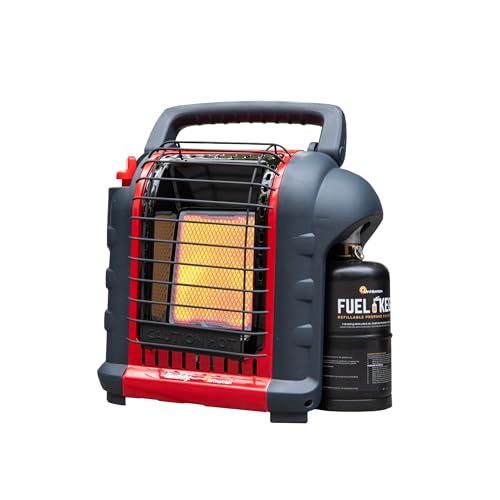
Radial warmth with versatile indoor/outdoor use, this heater emits up to 9,000 BTU and can heat about 225 square feet. It is designed for portability and quick setup, ideal for small workshops or trailers where compact, lightweight heat is needed. It includes safety features suitable for mixed-use environments.
Who it’s best for: users needing a light, portable heater for small spaces or occasional use. Why selected: balance of portability and heat output in a compact form factor.
Limitation: for larger spaces or extended cold periods, pairing with a higher BTU unit or supplemental heating may be necessary.
ProCom ML300HBA-B 30,000 BTU

This ventless blue flame heater offers up to 30,000 BTU and can heat areas up to 1,400 sq ft. It operates on propane only and requires no electricity, making it a strong choice for off-grid spaces or trailers without reliable power. It features push-button Piezo ignition and a manual three-heat setting control, plus an Oxygen Depletion Sensor for safety.
Who it’s best for: buyers wanting a high-heat option in spaces with limited electrical access. Why selected: no-electricity operation and high BTU capacity provide flexibility for remote or off-grid trailers and garages.
Caution: Ventless operation requires proper ventilation; ensure installation follows clearance and exhaust guidelines to avoid buildup in confined areas.
Buying Guide: Key Considerations For Enclosed Trailer Heaters
- Ventilation and safety: Enclosed spaces demand adequate ventilation. Look for Oxygen Depletion Sensors (ODS), auto shut-off on tip-over, and pilot light safety features. Consider models with both ODS and tip-over protection for better safety margins.
- BTU range and space size: Calculate the space you need to heat (square footage) and pick BTU output accordingly. Higher BTU is not always better if the space is well insulated; choose a unit that matches your typical occupancy and space layout.
- Fuel source and power needs: Most portable heaters run on propane and require a regulator and hose. If electricity is unreliable, ventless options or high-BTU units with minimal power needs can be advantageous, but ensure safe exhaust handling.
- Portability vs. fixed installation: For trailers and temporary setups, portable heaters with handles and compact footprints are practical. For permanent installations, consider mounted or ceiling-safe options with ventilation planning.
- Ignition type and reliability: Pulse ignition or piezo ignition offer quick starts in various conditions. Consider models with robust ignition systems and easy replacement parts if needed.
- Maintenance and durability: Stainless or powder-coated finishes and corrosion resistance help in damp trailer environments. Check for simple filter or sensor maintenance routines.
Frequently Asked Questions
- Are propane heaters safe to use in enclosed trailers? Yes, but they require adequate ventilation and safety features like ODS and tip-over protection. Use according to the manufacturer’s guidance and monitor air quality.
- What size heater is best for a 200–400 sq ft trailer? A heater in the 6,000–12,000 BTU range often suffices for well-insulated trailers of that size, but insulation and ceiling height affect performance.
- Can I use a ventless propane heater inside a trailer? Some models are ventless, but ensure sufficient ventilation and follow safety guidelines to avoid carbon monoxide buildup.
- Do I need a regulator and hose for propane heaters? Yes, most units require a regulator and hose to connect to a standard propane tank safely. Check the included accessories and compatibility.
- What maintenance improves safety and reliability? Regularly inspect hoses for wear, test safety shut-offs, clean ignition components, and ensure sensors like ODS are unobstructed and functioning.