
If your goal is to keep water flowing in freezing temperatures, these electric pipe heaters are designed to prevent freezing and maintain flow. They’re best for homeowners in areas that experience hard freezes and for facilities needing reliable freeze protection. The top picks below cover metal and plastic pipes, with self-regulating features and CSA/ETL safety marks where noted. This guide helps you choose based on pipe length, power needs, and installation style.
Summary of selected products:
| Product | Best For | Key Benefit |
|---|---|---|
| Frost King HC3A | Short runs on metal or plastic pipes | Compact 3 ft length with continuous protection |
| MAXKOSKO 6 Ft | Medium pipe runs | Self-regulating, energy-saving, -40°F protection |
| HEATIT HISD 6ft | Residential and small business pipes | CSA/ETL certified, reliable safety |
| Cupohus 12FT | Longer runs, roofs, hoses | Self-regulating with thermostat |
| Frost King HC9A | Longer residential runs | 9 ft length, strong freeze protection |
Frost King HC3A Automatic Electric Heat Kit Heating Cables

Length: 3 ft; Voltage: 120V; Power: 7W/ft. Best for short pipe sections or tight spaces. Keeps water flowing down to -40°F. Suitable for metal and plastic pipes. Best for small residential fixes where a compact heater is sufficient. Limitation: shorter length may require multiple units for longer runs.
MAXKOSKO 6 Ft. Heating Cable for Pipe Freeze Protection

6 ft heating cable with a 3 ft power cord. Self-regulating, adjusts heat output to prevent overheating. Protects pipes down to -40°F. Best for mid-length runs and both metal and plastic pipes. Limitation: must be used with proper installation and spacing to avoid oversized heating in long runs.
HEATIT HISD 6ft Cable with CSA & ETL Certification
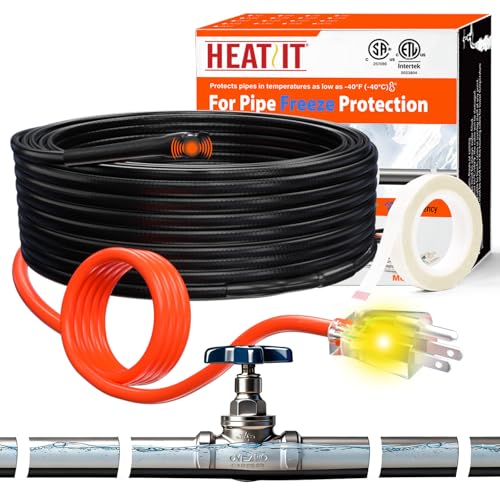
6 ft length, 7W/ft, 120V. Fully CSA and ETL certified with UL plug certification. Designed for water-filled plastic or metal pipes. Best for buyers prioritizing certified safety and reliable performance. Limitation: certification emphasizes safety; ensure full end-to-end certification for your setup.
Cupohus Heat Tape for Water Pipes (12FT)

12 ft self-regulating heat trace with thermostat, designed for metal and plastic pipes. Operates at 120V. Keeps water above 59°F (15°C) to prevent freezing down to -40°F. Best for longer runs or pipes that require extended coverage. Caution: ensure proper insulation and avoid overlapping the heat tape itself.
Frost King HC9A Automatic Electric Heat Kit

9 ft length, 7W/ft, 120V. Keeps water flowing down to -40°F, suitable for both metal and plastic pipes. Best for longer residential runs where more coverage is needed. Limitation: longer length may require more complex installation in tight spaces.
Buying Guide
What length do you need? Measure your pipe run and select a heater length that covers the exposed area with margin. Self-regulating options help prevent overheating and save energy by responding to temperature changes.
What pipe material is involved? Most models cover metal and plastic pipes, but verify compatibility if you have specialized hose lines or fittings. For hoses or roof gutters, consider models marketed for outdoor use.
What safety certifications matter? CSA and ETL marks indicate compliance with North American standards. For electrical safety, look for UL-listed plugs and fully certified end-to-end products.
Where will you install it? Some options include a standalone heat cable with thermostat, while others are pre-assembled kits. Consider accessibility for wiring, the presence of a thermostat, and how you will secure the tape or cable along the pipe.
Energy considerations and cost. Self-regulating tapes adjust heat output to reduce energy use. If you only need occasional protection, a shorter length may be more economical; for ongoing freezing conditions, longer runs reduce the risk of cold spots.
Frequently Asked Questions
- What is a self-regulating heat tape? It automatically adjusts heat output based on temperature, helping prevent overheating and reducing energy use.
- Can these be used on plastic pipes? Yes, many models are designed for both metal and plastic pipes; check product specifications for compatibility.
- Do I need a thermostat with pipe heating cables? A built-in thermostat provides automatic on/off control; some kits include one, others rely on the heating element’s self-regulation.
- Are these safe for outdoor use? Many are rated for outdoor use, but verify weatherproofing and installation guidelines for your climate and setup.
- How long should the heat tape stay on? Run times depend on outdoor temperatures and pipe length. Use as directed by the manufacturer to avoid excessive energy use.
- What installation considerations are important? Ensure proper securing along the pipe, avoid crossing or overlapping the tape, and insulate to maximize efficiency.