
Electric water heaters designed for small cabins prioritize space, efficiency, and safe, on-demand hot water. This guide highlights five compact, installable models suited for cabins, RVs, or tiny homes. Each option balances speed, safety features, and energy use, helping buyers choose based on space, usage, and power availability. The top picks below are best for: minimal footprint dwellers, single-sink setups, and off-grid or limited-power environments.
| Product | Best For | Key Benefit |
|---|---|---|
| 1) 110V Tankless Water Heater Electric | Small apartments or cabins with 110V circuits | Instant hot water with compact, wall-mounted design |
| 2) VEVOR 6-Gallon Tank Water Heater | Single-room cabins or RVs needing a storage heater | Fast heating and excellent insulation |
| 3) GE Appliances 10 Gallon Plug & Play | Where easy installation matters in cabins | Flexible mounting and adjustable thermostat |
| 4) Mini Tankless 3kW Under Sink | Point-of-use under-sink setup | Low-flow, compact control with safety features |
| 5) ThermoMate 2.5 Gallon UL Listed | Under-sink or cabinet spaces | Quick hot water with durable insulation |
110V Tankless Electric Water Heater with Digital Display
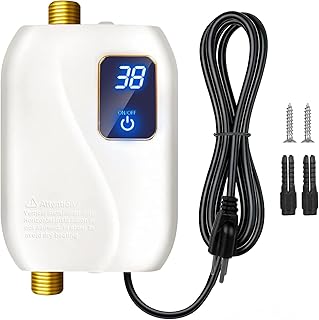
Best for: small kitchens, vans, or compact bathrooms that want instant hot water without preheating. This 3000W unit heats water quickly and provides a precise LED readout for Fahrenheit or Celsius, helping avoid overshooting temperatures. The compact wall-mount saves space in tight cabins. Caution: its 110V design means it depends on stable power availability; consider circuit capacity in full-time off-grid cabins.
Why chosen: It delivers on-demand hot water with a high thermal efficiency and safety protections, including IPX4 waterproofing, leakage and dry-boil protection, and automatic shutoff when overheating or idle. The unit is designed for fast, space-conscious installations highly suitable for cabins with limited room.
Best use case: a sink-only setup in a tiny cabin where hot water is needed instantly for handwashing or dishwashing. Energy-conscious users can benefit from the high efficiency while avoiding bulky storage tanks.
Limitations: It’s a compact tankless unit designed for 0.3–0.5 GPM scenarios; ensure your water flow expectations align with the model’s performance curves.
VEVOR Electric Tank Water Heater, 6 Gallon

Best for: cabins needing a compact storage heater with steady supply for daily tasks like handwashing and kitchen use. The 6-gallon capacity is a good balance between space and available hot water for moderate usage. Caution: storage heaters may take longer to recover after heavy use compared to tankless models.
Why chosen: It combines fast heating through an extended immersion tube with strong insulation to minimize heat loss, maintaining temperatures. Built-in protections and IPX4 waterproofing enhance safety in small, potentially damp cabin environments.
Best use case: a small cabin bathroom or kitchenette where a reliable hot-water source is preferred without installing multiple point-of-use units.
Limitations: Not designed for high-flow showers; best for low to moderate water use per session.
GE Appliances 10 Gallon Plug & Play Electric Water Heater

Best for: cabins needing flexible placement and easy setup with adjustable thermostat. The 120V plug-and-play design makes it straightforward to install where standard outlets and plumbing exist. Caution: ensure the electrical circuit and outlet can handle continuous use and that space allows for venting if required.
Why chosen: Its compact form and versatile mounting options suit cabins with limited space. The model’s design aims to provide a practical, straightforward solution for cabins, tiny homes, or RVs where a larger system isn’t feasible.
Best use case: a bathroom or kitchen corner where quick installation with minimal wiring is desirable, especially when you want a simple upgrade from no hot water to convenient use.
Limitations: May require careful planning for long-term reliability if used as a primary hot-water source in colder months or higher-demand scenarios.
Mini Tankless 3kW Under Sink Water Heater

Best for: point-of-use setups under sinks where space is tight and only low-flow use is needed. This unit is ideal for a single sink in a cabin’s kitchen or bathroom. Caution: it’s not suitable for showers or simultaneous taps due to its 3kW rating.
Why chosen: It offers a simple LED display with a control knob and robust safety features, including IPX4 protection and automatic fault diagnostics. The 30–55°C adjustable range provides practical warmth for minimal hot-water needs.
Best use case: under-sink hot water for washing dishes or quick handwashing where a compact, plug-in solution is preferred over a larger storage system.
Limitations: Limited capacity and flow; not designed for higher-demand scenarios or showers.
ThermoMate Electric Mini Tank Water Heater, 2.5 Gallons

Best for: cabins needing a compact under-sink heater with rapid on-demand hot water. The 2.5-gallon tank size and high-efficiency insulation support steady use for small households or guest facilities. Caution: capacity is limited; multiple simultaneous hot-water uses may strain supply.
Why chosen: The unit features a robust 1440W heating element and fused enamel-lined tank to resist corrosion and leaks. The Incoloy 800 element provides enhanced durability and efficiency for long-term use.
Best use case: single-sink hot water in cabins or tiny homes where space is at a premium and you want a reliable, straightforward installation.
Limitations: The small tank size means it can run out of hot water quickly under higher demand; plan for staggered usage.
Buying Guide: Key Considerations For Cabin-Wise Electric Water Heaters
- Water demand and flow rate: For cabins, determine if you need point-of-use (under sink) or a compact storage option. Tankless units shine when you need continuous hot water at low flow, while small tanks are easier to install where space is limited.
- Electrical capacity: Check available circuit amperage and voltage. 110V units are common in cabins with limited power supplies, but higher-wattage models may require upgrades to circuits or dedicated circuits.
- Space and mounting: Wall-mounted tankless units save space; compact storage tanks fit inside cabinets or closets. Consider distance to the hot water faucet and potential heat loss.
- Safety features: Look for IPX4 waterproof rating, dry-boil protection, overheat protection, and automatic shutoff. These are important in damp cabin environments.
- Installation ease: Plug-and-play models offer quick setups; hard-wired options may require professional installation but can be more robust for constant use.
- Insulation and energy efficiency: Superior insulation reduces standby heat loss in cabins with long idle periods. High thermal efficiency helps conserve energy in off-grid scenarios.
- Maintenance needs: Enamel-lined tanks and corrosion-resistant elements extend life in humid climates; consider access for servicing or element replacement.
Frequently Asked Questions
- What size water heater is best for a small cabin?
- Can I install a water heater in a cabin myself?
- Is a tankless heater better than a storage tank for cabins?
- What safety features should I prioritize?
- How do I choose between 110V and 220V models?
- Do these heaters require venting?
For light daily use, a compact 2–6 gallon unit or a small tankless model is typically best. If you anticipate longer showers or higher demand, a larger capacity or a tankless system with higher flow may be needed.
Some units are designed for easy, plug-and-play installation, while others require plumbing and electrical work. Always follow the product’s installation instructions and local codes; consult a licensed professional for hard-wired setups.
Tankless models save space and reduce standby energy but may be limited by flow rate. Storage tanks provide ready hot water but require more space and can waste energy if not sized correctly.
Look for IPX4 waterproofing, leakage protection, dry-boil protection, overheating protection, and automatic shutoff. These features help prevent hazards in damp or off-grid environments.
Choose based on your available electrical supply. 110V units are common in smaller cabins and easier to wire, while 220V models offer higher power for faster heating but may require dedicated circuits or professional wiring.
Most small electric heaters do not require venting, as they do not burn fuel. Always follow the manufacturer’s guidance and local codes.