
Answering common buyer needs, these 240V electric water heaters cover tank-based, tankless, and point-of-use models. They are selected to suit tight spaces, single- or small-family homes, apartments, and cabins. The list highlights top picks for different use cases so you can choose the right fit based on flow rate, space, and installation considerations. The following products are best for small households, space-constrained kitchens, and point-of-use setups where quick hot water matters.
Product Quick Reference
| Product | Best For | Type | Approx. Flow (GPM) |
|---|---|---|---|
| GE Appliances 18 Gallon Versatile Electric Water Heater | Small families, tight spaces | Tank | Lowboy, 1–2 person household |
| Rheem 11kW 240V Tankless Electric Water Heater | Single bathroom, high efficiency | Tankless | Up to 2.68 |
| Rheem 18kW 240V Tankless Electric Water Heater, Gray | Families needing more hot water | Tankless | Up to 4.4 |
| CAMPLUX 6kW 240V Point of Use | Apartments, under-sink usage | Tankless POE | Up to 1.0–1.5 |
| EcoSmart ECO 11 Electric Tankless Water Heater | Compact installs, energy savings | Tankless | Up to 1.9–2.0* |
*Actual flow depends on incoming water temperature and setpoint.
GE 18 Gallon Versatile Electric Water Heater

The GE model is a lowboy 18-gallon tank designed for tight spaces and quick replacement. It is best for a small household of 1–2 people where height is a constraint. Features highlight an adjustable thermostat and a drain valve for straightforward maintenance. This tank is especially suitable for replacing an older unit in a compact utility area or kitchen closet.
Who it’s best for: buyers needing a compact tank solution for limited vertical space and a small family.
Why selected: It maximizes space efficiency while providing a reliable hot water supply for light to moderate daily use. A potential limitation is its smaller capacity, which may require longer showers or more frequent hot water management in peak usage times.
Rheem 11kW 240V Tankless Electric Water Heater
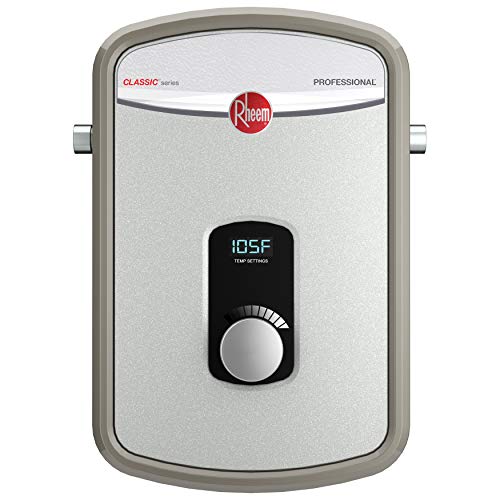
This Rheem model is a compact tankless option with an on/off dial and adjustable digital temperature display. Self-modulating power helps align energy use with demand, making it a strong choice for single-bathroom homes or apartments with variable hot water needs. Flow rate is up to 2.68 GPM, which supports smaller fixtures such as a shower with reasonable performance when water temperatures are moderate.
Who it’s best for: buyers seeking a compact, energy-conscious unit for light to moderate hot water needs.
Why selected: Its self-modulating control helps protect energy use while delivering stable hot water. Limitation: lower maximum flow may be insufficient for simultaneous multiple uses or colder climates where higher flow is required.
Rheem 18kW 240V Tankless Electric Water Heater, Gray
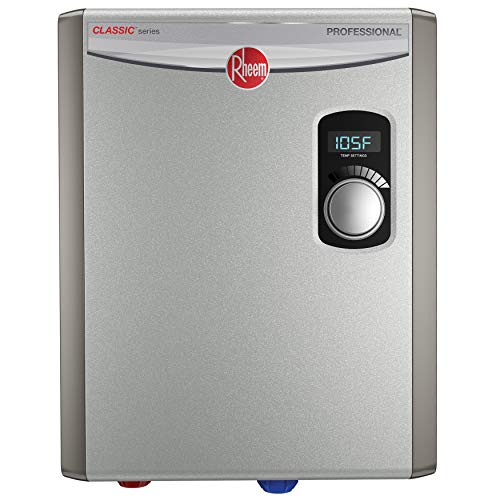
With a higher 18kW rating, this Rheem unit offers a larger flow capacity up to 4.4 GPM and an external digital thermostat with an LED display. Self-modulation minimizes energy use while meeting hot water demand. The copper immersion elements and serviceability make it a practical option for households needing more hot water without a bulky tank.
Who it’s best for: homes needing higher flow and consistent hot water across simultaneous uses.
Why selected: It balances higher output with energy efficiency through advanced modulation. Caution: installation requires appropriate electrical service capacity and space for venting and clearance.
CAMPLUX 6kW Point Of Use Electric Water Heater

This under-sink unit provides near-instant hot water for single fixtures, with a compact footprint and energy-saving self-modulating technology. It reduces on-demand energy costs by heating only when water is needed. Flow is suitable for a single faucet or shower in small setups, making it ideal for apartments, offices, or tiny homes.
Who it’s best for: users needing efficient point-of-use hot water without a full-house installation.
Why selected: space-saving design and clear temperature display. Limitation: lower total output means it’s not suitable for entire households or multiple simultaneous uses.
EcoSmart ECO 11 Electric Tankless Water Heater

The EcoSmart ECO 11 is a compact tankless option rated around 13 kW at 240V. It employs patented self-modulating technology to deliver on-demand hot water while conserving energy. It is notably space-efficient, often installed on a wall or as a point-of-use unit, with a claimed energy advantage of up to 99% relative to traditional tank heaters.
Who it’s best for: households prioritizing space savings and energy efficiency with modest hot water demand.
Why selected: its small footprint and continuous hot water capability are compelling for tight spaces. Caution: ensure electrical service and installation fit the unit’s electrical requirements, especially in colder climates where higher flow can impact temperature stability.
Buying Guide: Key Considerations for 240V Electric Water Heaters
What size and type do you need?
Tank models (like the GE 18 Gallon) provide instant hot water and are simple replacements in small spaces. Tankless options (Rheem, EcoSmart, CAMPLUX, WINTEMP) heat water on demand, saving space and energy but require correct sizing for your peak usage and incoming water temperature.
What installation considerations matter?
Tankless 240V units often demand higher electrical service and proper clearances. Point-of-use models are ideal where you need hot water near one faucet but not for whole-house use. Tank models need standard plumbing connections and adequate space for venting and maintenance.
Energy use and running costs
Self-modulating technology helps modulate energy use to match demand. Tankless systems generally save energy compared to traditional tanks, but the savings depend on your hot water habits and climate. Space savings also reduce costs related to installation footprint.
Flow rates and temperature stability
For tankless heaters, consider the maximum gallons per minute (GPM) at your climate. Colder incoming water reduces available hot water. Temperature stability matters; look for units that maintain set temperatures within 1–2 degrees for a comfortable shower experience.
Maintenance and durability
Copper immersion elements and serviceability improve long-term durability. Self-modulating units reduce scale buildup by adjusting power usage, but regular checks on mineral content and system wiring are still prudent.
Frequently Asked Questions
- Do I need a 240V unit for hot water? A 240V unit is common for home use and can handle larger loads, but smaller apartments may manage with 120V devices for point-of-use needs. Check your electrical panel capacity.
- Which is better for a small home, tank or tankless? Tankless units save space and energy but may require higher upfront electrical work. Tanks are simpler to install and provide quick, constant hot water for small homes with limited peak demand.
- Can a 240V tankless heater supply warm water to multiple fixtures? Some high-capacity models can support more than one fixture, but capacity is climate- and flow-dependent. Verify the GPM rating against your needs.
- What maintenance is required? Regular checks on connections, valves, and mineral buildup help maintain performance. Self-modulating units tend to require less energy management but still benefit from periodic service.
- Is installation safer with professional help? For tankless models requiring high amperage, professional electrical work is recommended to ensure code compliance and safe operation.
- How does climate affect performance? Colder inlet water lowers the available hot water flow. In such cases, selecting a unit with a higher GPM or a pre-warming strategy can help maintain comfort.