
Looking for an efficient electric tankless water heater that delivers instant hot water without a bulky tank? This guide highlights five top picks that balance flow, efficiency, and compatibility for typical American homes. Each product is suited to different households—from apartments needing space-saving options to small homes that demand reliable hot water for multiple fixtures. The selections are organized to help you compare best-for scenarios and identify potential limits before you buy.
| Product | Best For | Flow (GPM) | Notes |
|---|---|---|---|
| Rheem 18kW 240V | Medium homes with moderate hot water demand | Up to 4.4 | Advanced self-modulation, durable elements |
| Orbek 14kW 240V | 2-fixture households | Up to 3.38 | High efficiency; requires ample electrical service |
| EcoSmart ECO 11 | Space-saving installations | Up to 11 kW unit, ~1–2 GPM typically | Compact; highly modulating |
| Rheem 11kW 240V | Smaller apartments or point-of-use needs | Up to 2.68 | Simple dial with digital display |
| WINTEMP 27kW 240V | Whole-house performance in moderate climates | Up to 6.5 | High capacity; self-modulating |
Rheem 18kW 240V Tankless Electric Water Heater, Gray
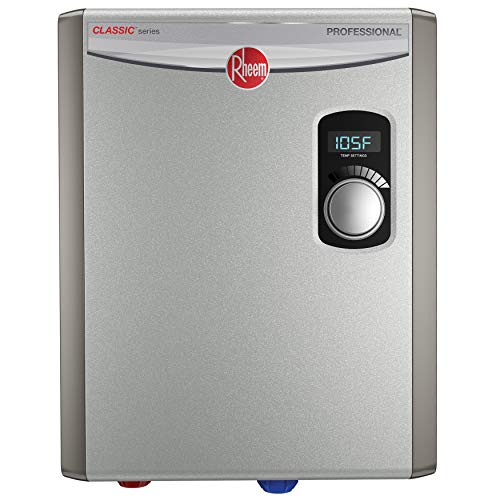
The Rheem 18kW model is a mid-to-high capacity electric tankless heater designed for homes needing reliable hot water for multiple fixtures. It uses external digital thermostatic control with LED display for precise temperature management and features self-modulation to adjust power as demand changes. Copper immersion heating elements ensure durability, and the unit is field serviceable for easier maintenance. Best for households with standard hot water needs across a few outlets, this unit pairs well with well-sized electrical service. A potential limitation is that higher flow at peak demand may require adjustments to electrical capacity in older homes.
Orbek 14kW Tankless Water Heater Electric

The Orbek 14kW unit is designed for on-demand hot water with a real-world flow up to 3.38 GPM, typically suitable for 2 fixtures or for use in smaller homes. It emphasizes energy efficiency and reduced electricity use compared with tank heaters. A practical note: installation requires a robust electrical panel, usually a 240V/60A two-pole breaker, plus proper wiring and water connections. This model is a strong option for smaller homes or apartments where space and energy savings are priorities, but may be limited for larger households with higher simultaneous hot water needs.
Tankless Water Heater Electric 110V (Under Sink)

This compact 110V under-sink model focuses on point-of-use hot water, typically suitable for kitchens or small bathrooms that need a quick, localized supply. With a 3000W rating, it can raise water temperature quickly but is generally not ideal for showering or high-flow demands. It’s best for single fixtures or small spaces where space-saving installation is critical and shower performance is not required. The unit includes safety protections and a digital display to monitor temperature and status.
EcoSmart ECO 11 Electric Tankless Water Heater

The EcoSmart ECO 11 uses patented self-modulating technology to adjust energy use based on flow and temperature needs, making it a popular choice for energy-conscious homeowners. It is notably compact and can be installed on the wall or used as a point-of-use unit, ideal for small spaces. This model is best for low-to-moderate hot water demand and for users prioritizing space savings and energy efficiency. A common consideration is that higher demand may require multiple units or a larger model to sustain comfort during busy periods.
Rheem 11kW 240V Tankless Electric Water Heater
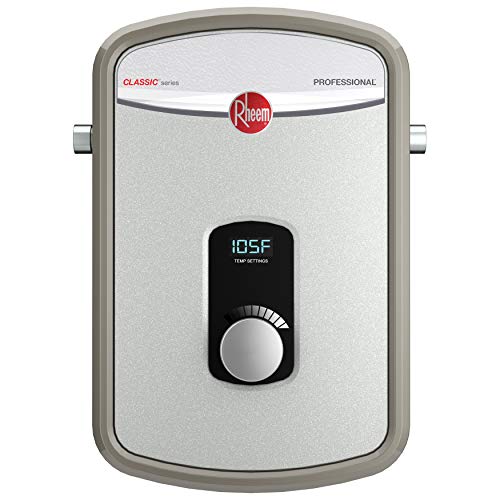
This Rheem 11kW model offers a straightforward control approach with an ON/OFF dial and an adjustable digital temperature display. The self-modulating power control helps optimize energy use, and the unit provides a flow rate up to 2.68 GPM, making it suitable for smaller apartments or limited spaces where only a couple of fixtures require hot water. Choose this if you want a compact, dependable option with simple operation, but avoid it if you regularly need hot water for multiple simultaneous outlets.
110V Tankless Water Heater Electric, 3000W

This 110V unit focuses on under-sink or small-space hot water delivery with a 3000W rating. It can provide quick, on-demand hot water at up to 0.5 GPM in higher temperature ranges, with supporting safety protections and a digital display. Best for tight spaces and limited hot water needs in kitchens or small bathrooms, but not ideal for showers or households with higher simultaneous demand.
WINTEMP 27kW 240V Tankless Water Heater

The WINTEMP 27kW model is designed for whole-house hot water supply with strong capacity suitable for households with higher demand. It uses self-modulating technology to optimize energy use and is compatible with high-power installations requiring a robust electrical service. It’s best for 2–3 bathroom homes in temperate climates or where continuous hot water is essential. A key precaution is ensuring your electrical service meets the unit’s 200-amp recommendation and the proper wiring needs are understood before installation.
Buying Guide: How To Choose An Electric Tankless Water Heater
- Hot water demand: Assess the number of fixtures that may use hot water simultaneously. Higher GPM ratings support more simultaneous users; smaller units are better for kitchens or single bathrooms.
- Electrical service: Most electric tankless heaters require a dedicated 240V circuit. Check your home’s service amperage and panel capacity before upgrading wiring or breakers.
- Location and space: If space is limited, compact models or point-of-use units can save space. Wall-mounted options free up cabinet or utility room space.
- Energy efficiency: Self-modulating technology adjusts power in real time. This reduces energy waste, especially in homes with fluctuating hot water demand.
- Installation considerations: Some units require professional installation due to electrical and water line requirements. Verify NPT connections and wiring gauges (e.g., 6 AWG for heavier models).
- Maintenance: Field-serviceable designs and accessible heating elements simplify periodic maintenance and element replacement.
Frequently Asked Questions
- What is a tankless electric water heater? It heats water on demand as it flows through the unit, eliminating the need for a storage tank.
- Does higher wattage mean better performance? Higher wattage increases the maximum flow rate, but actual output depends on incoming water temperature and electrical supply.
- Can I install a tankless heater myself? Some models allow DIY electrical and water connections, but many require a licensed electrician for safe installation and code compliance.
- Is a tankless heater better for energy savings? Yes, because it heats water only when needed, reducing standby heat loss associated with storage tanks.
- What maintenance is required? Regular flushing or descaling may be required in areas with hard water to maintain performance and longevity.
- Can these heaters supply hot water for a whole house? Larger, higher-capacity units (like the 27kW models) are designed for whole-house use in suitable electrical systems; smaller units are typically best for single fixtures or limited kitchens/bathrooms.