
Electric radiant baseboard heaters offer quiet, zone-based warmth for bedrooms, living spaces, and home offices. This guide highlights five top options, explaining who they’re best for and why they stand out. Whether you want simple, plug-in models or hardwired systems with smart controls, these picks help you balance comfort, energy use, and installation needs.
Buyer snapshot table (selected products):
- Cadet F Series 36″ Electric Baseboard Heater — Best for versatile, mid-sized spaces needing strong convection heat.
- Cadet F Series 24″ Electric Baseboard Heater — Best for smaller rooms or secondary zones where compact units fit.
- Comfort Zone CZ600 — Best for flexible, safe, quiet, and adjustable heating in home offices and bedrooms.
- Stelpro Brava 500W — Best for compact, low-profile, quiet operation in living areas or dens.
- Cadet Ul 30″ 500W Baseboard — Best for straightforward replacement or uniform coverage in mid-sized rooms.
Cadet F Series 36″ Electric Baseboard Heater
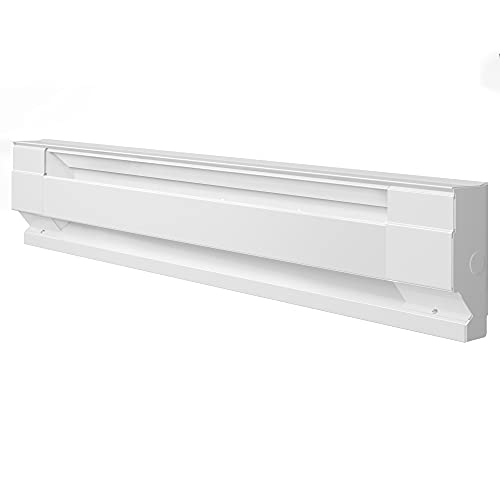
Model: 3F750W, 09952; 750/563 Watts; 240/208 Volts; White. Key features include multi-watt capability, universal wiring, pre-punched knockouts, and convection that circulates warm air across the room. This unit is best for medium to large rooms where you want strong, steady heat with straightforward installation.
Best for: Medium-to-large rooms or multi-zone setups where a robust, convection-based heater is desired. Better for spaces needing consistent wall-to-wall warmth without complex controls.
Limitations: Dual voltage requires correct wiring during installation; consult an electrician if you are unsure about 240/208V power supply compatibility.
Cadet F Series 24″ Electric Baseboard Heater
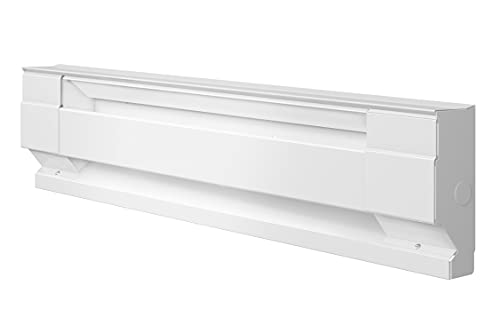
Model: 2F350W, 09949; 350/262 Watts; 240/208 Volts; White. Notable for its compact footprint and simple installation. A good pick for secondary rooms, closets, or smaller living areas where space is limited but steady heat is still needed.
Best for: Small to medium rooms or as a supplemental zone heater in an open-plan space. Choose this if you need a lower-wattage option with easy mounting.
Limitations: Less capable of heating large spaces on its own; may require pairing with another heater for uniform warmth in bigger rooms.
Comfort Zone CZ600 Electric Baseboard Heater

1,500W convection baseboard heater with adjustable thermostat, two heat settings, and safety features. It includes a tip-over switch, stay-cool body, and overheat protection for safer operation. Whisper-quiet performance helps maintain a tranquil living or work environment.
Best for: Bedrooms, home offices, and spaces where adjustable heat and quiet operation matter. Better for those who value safety features and customizable warmth without noise.
Limitations: Higher wattage means more energy use; ensure the space benefits from 1,500W before installation to avoid overheating larger rooms.
Stelpro Brava Electric Baseboard Heater
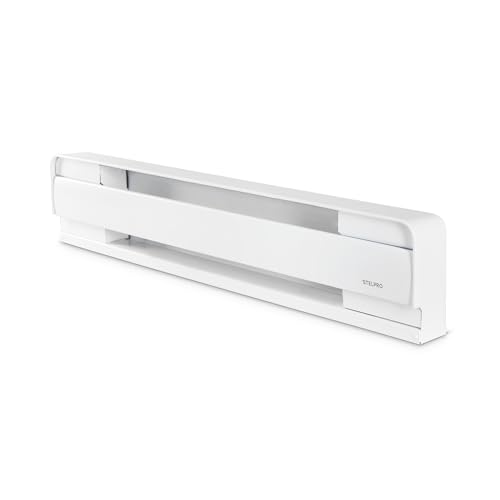
Model AB0501W; 500W at 120V; compact 27 7/8″ L × 5 7/8″ H with rounded corners. This hardwired unit aims for quiet, even heat distribution with a no-end-cap, one-piece design to reduce noise and expansion. It supports wall thermostat connections and optional built-in thermostat kits for room control.
Best for: Small living areas or dens where low-profile profiles and quiet operation are a priority. Better for those who prefer a hardwired setup with adaptable thermostat options.
Limitations: Requires hardwiring; not a plug-in model, so installation complexity is higher than plug-in units.
Cadet Ul 120 V/4.17 A 30″ 500 W Baseboard

White, 30″ length, 500 W convection heat with floor-mount installation. Includes two units for versatile placement and remote-control convenience for easy operation without leaving your seat.
Best for: Medium-sized rooms requiring reliable, uniform warmth with simple remote control. Choose this if you want straightforward replacement or uniform coverage in a standard 30″ baseboard space.
Limitations: Remote control is an added convenience—not all households may want or use it; ensure compatibility with your existing setup.
Buying Guide: Key Considerations For Electric Baseboard Heaters
What size heater do I need?
Measure the room and select wattage per square foot. For bedrooms or small spaces, 250–500 watts can be enough; larger living areas may require 500–1500 watts or more, depending on insulation and climate.
Should I choose plug-in or hardwired?
Plug-in units are easier to install and ideal for rental homes or temporary setups. Hardwired models offer more permanent performance, thermostat integration, and often quieter operation with fewer visible cords.
What about safety features?
Look for tip-over protection, overheat sensors, and a stay-cool exterior. For homes with pets or children, these features significantly reduce risk during routine use.
Do I want smart controls?
Smart thermostats make it possible to schedule heat, set routines, and integrate with home assistants. Ensure compatibility with your system and that wiring supports four or more conductors as needed by the thermostat.
How important is quiet operation?
Convection-based baseboard heaters typically run quietly, making them suitable for bedrooms, study spaces, and home offices where silence is valuable for productivity and rest.
FAQ
- What is convection heat in baseboard heaters? A: Convection heat moves warm air through the space, producing even warmth without fans, reducing noise and drafts in the room.
- Can baseboard heaters be used in all rooms? A: They work well in living rooms, bedrooms, offices, and dens, especially where wall space is available and zoning is desired.
- Do these heaters require professional installation? A: Some models are plug-in and easy for DIY setup; others require hardwiring and may need an electrician for safe electrical work.
- Are smart thermostats compatible with all baseboard heaters? A: Compatibility depends on the model and wiring; verify the thermostat’s voltage range and terminal requirements before purchase.
- Can baseboard heaters be combined for larger warmth needs? A: Yes, multiple units can be used in different zones to create even heat distribution in larger spaces.
- What maintenance is needed for baseboard heaters? A: Regular dusting and inspection for loose connections or damaged components help maintain efficient operation.