
Answering your search, these tankless units deliver on-demand hot water with compact designs and high efficiency. This guide highlights five options that balance performance, installation needs, and energy savings. The top picks include condensing gas models for strong flow in busy homes, plus a high-power electric option for locations with electrical readiness. Best for peak hot-water demand and multi-fixture setups, these selections help you compare capabilities, installation requirements, and ongoing energy use.
Summary table of chosen products:
| Product | Fuel Type | Max Flow (GPM) | Key Benefit |
|---|---|---|---|
| Rhinem/Rinnai RXP199iN | Natural Gas/Propane | Up to 11.1 | Smart Sense control; indoor/outdoor versatility |
| Rheem RTG-84DVLN-3 | Natural Gas | 8.4 | High efficiency condensing indoor model |
| Rheem Natural Gas Condensing 9 GPM | Natural Gas | 9 | Condensing design; compact for tight spaces |
| Rheem RTG-70XLN-3 | Natural Gas | 7.0 | Outdoor installation; robust for varied climates |
| Rheem 18kW Electric | Electric | Up to 4.4 | Electric tankless with digital control |
Rheem RTGH Series 8.4 GPM Condensing Gas Model
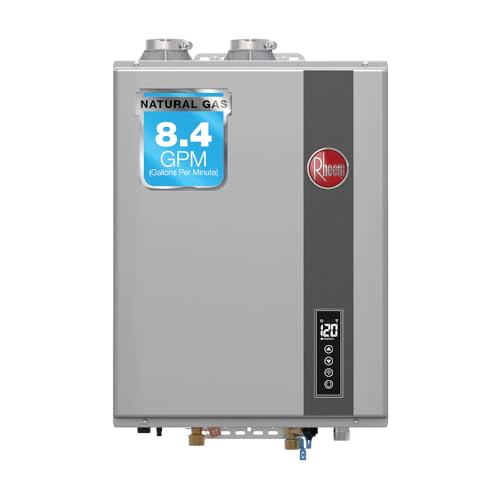
Product Overview: The Rheem RTGH84DVLN-3 series delivers up to 8.4 GPM with 180,000 BTU input for strong simultaneous hot-water needs. This indoor condensing unit emphasizes efficiency and compact installation. The default 120°F setting can be adjusted within a 100–140°F range, and it includes electric ignition for reliable light-off in cold conditions.
Best for: medium-to-large homes with multiple baths or laundry rooms where energy efficiency and space-saving design matter. Best when you have a dedicated gas line and an indoor utility area for venting and service access.
Limitations: As a gas-condensing unit, venting and proper combustion air are required. Installation should be performed by a qualified professional to ensure venting, gas connection, and clearances meet code.
Rinnai RXP199iN Smart Sense Condensing Tankless Water Heater

Product Overview: The Rinnai RXP199iN offers up to 11.1 GPM and 199,000 BTU, supporting versatile indoor or outdoor installation with Versa Vent compatibility. Its Smart Sense gas control automatically adapts to natural gas or propane, enabling flexible whole-home performance and easy maintenance with Quick Flush features.
Best for: large households needing concurrent hot water across showers, laundry, and appliances. Its adaptability makes it suitable for new construction or major remodels with space for venting and a versatile installation footprint.
Limitations: Outdoor use requires specific venting components (RX-OVC cap). Indoor installations need appropriate venting and service clearances; ensure your space accommodates these requirements.
Rheem RTG-70DVLP-3 High Efficiency Propane Tankless

Product Overview: This indoor propane model delivers up to 7.0 GPM with 160,000 BTUs. Its compact cabinet supports easy wall mounting by a qualified installer, and its high efficiency suits homes with multiple hot-water needs in moderate-sized layouts.
Best for: homes with existing propane service and limited indoor space, where indoor installation and simple mounting are priorities. Choose this if you have two to three bathrooms and want dependable hot water with a straightforward venting path.
Limitations: Propane fuel requires proper storage and regulatory compliance. The unit is designed for indoor installation and may require professional hookup and venting assessment.
Rheem RTG-84DVLN-3 Condensing Indoor Tankless Gas Heater

Product Overview: With 8.4 GPM and 180,000 BTUs, this indoor gas unit emphasizes a durable cabinet and a compact footprint. Its condensing design supports higher efficiency, making it a strong candidate for homes with multiple hot-water demands and limited space for a traditional tank.
Best for: 2–3 bathroom homes seeking strong simultaneous hot-water capability in a compact package, especially where energy efficiency matters. It’s a solid match for new construction or a remodel with dedicated gas lines and venting access.
Limitations: Like other gas condensing systems, proper venting and professional installation are essential for safe and efficient operation.
Rheem 18kW Electric Tankless Water Heater
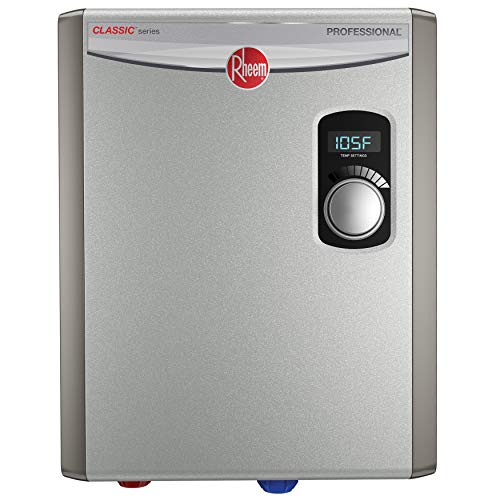
Product Overview: This electric unit uses external digital thermostatic control with LED display and field-serviceable copper immersion elements. It supports up to about 4.4 GPM, with self-modulating power to meet demand in real time, making it suitable for point-specific hot water needs or smaller homes.
Best for: residences with available 240V electrical service and lower simultaneous hot-water needs. Choose this if you want a compact electric option that avoids gas venting and combustion considerations.
Limitations: Electric tankless heaters require a robust electrical panel and proper wiring. Check service capacity and available space in the breaker panel before installation.
Buying Guide
What size tankless heater do I need?
Flow rates in GPM and the number of fixtures you run simultaneously determine size. For busy households with multiple showers, sinks, and laundry, prioritize higher GPM units and consider condensing gas models for efficiency.
Gas versus electric: which is right for you?
Gas condensing units generally deliver higher flow and are cost-effective where natural gas is available. Electric models are best when gas is unavailable or you want a compact, vent-free installation, but may have lower maximum flow.
Ventilation and location considerations
Gas units typically require proper venting and a dedicated space for air intake. Indoor installations must have clearances and venting routes. Outdoor or indoor-friendly models offer varied placement flexibility but still require professional evaluation.
Energy efficiency and operating costs
Condensing gas models achieve higher efficiency than traditional non-condensing units. Electric models depend on electricity rates and your home’s electrical capacity. Look for efficiency ratings and proper installation to maximize savings.
Installation and maintenance
Tankless heaters need professional installation for gas lines, venting, and electrical connections. Regular descaling and maintenance help sustain performance, particularly in hard-water regions.
Keep in mind
Choose a model aligned with your home size, hot-water demand, and readiness to handle venting, gas supply, or electrical installation. The five products above represent a range of capacities, fuels, and installation scenarios to fit different homes.
FAQ
- Do gas condensing tankless water heaters require venting? Yes, most gas condensing units require venting and an air supply; installation must follow local codes.
- Can I install a tankless heater myself? Installation is best performed by a licensed professional for gas or high-voltage electric units to ensure safety and compliance.
- What is the typical flow rate I need for a family of four? A common target is 6–10 GPM, depending on shower usage, faucet use, and whether simultaneous appliances run.
- Are electric tankless heaters suitable for large households? They can cover smaller or moderate needs, but high-demand homes often require significant electrical capacity or multiple units.
- Do tankless heaters always save energy? They reduce standby losses but savings depend on usage patterns and proper sizing compared with tank-style heaters.