
Answering the question for buyers seeking compact, efficient heat with simple installation, these electric ceramic wall panels blend convection heat with slim profiles. Ideal for quick warmth in living rooms, bedrooms, or home offices, they’re best suited for small to mid-size spaces you want to heat evenly. Below are five top options, each chosen for reliability, energy efficiency, and straightforward operation. Use this guide to compare features, installation needs, and safety considerations.
Product Summary
- EconoHome Wall Heater Panel with Thermostat — 400W, 120V
- Envi Plug-in Electric Panel Wall Heaters — Plug-in, 24/7 operation
- Smart EnviMAX 220V Hardwired Electric Panel Heater — 1000W
- EconoHome Wall Mount Space Heater Panel — 600W, 200 sq ft
- DREO Smart Wall Heater — 1500W
EconoHome Wall Heater Panel With Thermostat

Best for small to medium rooms up to 120 square feet, this 400-watt convector panel provides steady ambient warmth. It operates at 120V and includes a heat reflector, improving energy efficiency. The exterior tends to feel warm, making it best for adults and careful handling. A caution: some installations may require hard-wiring, depending on the setup. The model is UL-2021 and RoHS compliant, with overheat protection and a 3-year warranty. Use this when you want a slim wall-mounted solution with reliable temperature control.
Envi Plug-in Electric Panel Wall Heaters

Best for plug-in flexibility and continuous comfort, this model supports 24/7 operation with a safety sensor. It emphasizes a quiet, energy-efficient design, suitable for rooms where you want a subtle heat presence without fan noise. A caution: plug-in units may be limited by outlet placement and power strip usage. Selected for environments needing simple, tool-free installation and steady warmth without loud components.
Smart EnviMAX 1000W Hardwired Panel

Best for larger rooms or whole-room heating with a wired connection, this 1000-watt model supports demanding warmth while maintaining energy efficiency. It’s suited for spaces where a hardwired solution is preferred for consistent heat without outlet limitations. A caution: installation may require a professional for electrical compliance. Selected for its higher output and reliable convection heat, making it better for medium-to-large living areas.
EconoHome Wall Mount Space Heater Panel — 600W
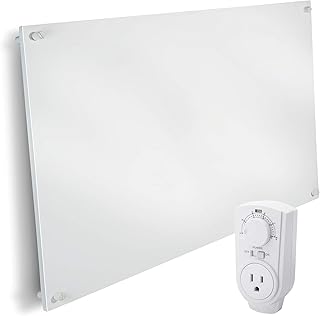
Best for mid-sized rooms up to 200 square feet, this 600-watt convector panel offers adjustable heat via a plug-in thermostat. It is cETL approved, UL-2021 compliant, and RoHS compliant, with a heat reflector included. The unit can be hard-wired if needed. Caution: exterior panels can become warm to the touch, so placement away from high-traffic areas is wise. This option is ideal when you want a wall-mounted aesthetic with reliable convection heat and simple control.
DREO Smart Wall Heater 1500W
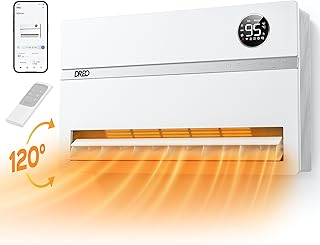
Best for high-demand heating or converting larger rooms, this 1500-watt unit offers strong convection heat suitable for bedrooms or living spaces. It is a wired solution that supports robust warmth with steady operation. A caution: higher wattage means greater energy use if not properly managed. Chosen for its high output, making it a strong option where heat demand is persistent and space is moderate to large.
Buying Guide: Electric Ceramic Wall Panels
What size room should I heat?
Look at the wattage and the recommended room size from the product specs. Smaller rooms (up to ~120 sq ft) often work well with 400–600W panels. For rooms around 200–300 sq ft, consider 600–1000W panels. Large spaces may require higher-output, hardwired units or multiple panels.
Plug-in vs hardwired: what’s the difference?
Plug-in panels are easy to install and ideal for renters or quick setups. Hardwired panels integrate into the home’s electrical system for cleaner appearance and continuous operation, sometimes with higher wattage. Always follow local electrical codes and consider professional installation for high-wattage models.
Energy efficiency considerations
Convection panels warm room air efficiently with minimal noise and no moving parts. Check for energy-saving features like thermostats, safe surface temperatures, and compliance marks (UL, cETL, RoHS). Models that include heat reflectors help direct warmth into the room, improving efficiency.
Safety and installation tips
Choose models with overheat protection and appropriate clearance from walls, furniture, and drapes. Wall-mounted units should be installed to avoid contact with moisture and ensure stable mounting. Do not operate in damp areas unless the product is rated for such use.
Installation flexibility
Consider whether you need flexible placement (plug-in) or a hidden, minimized look (hardwired). Some panels are designed for easy wall mounting, while others offer plug-in thermostats for simple temperature control. If you rent, plug-in options may be preferable to avoid alterations.
FAQ
- Q: Are electric ceramic wall panels safe for everyday use? A: Yes, when used as directed, with safety features like overheat protection and proper clearances.
- Q: Can I install these panels myself? A: Many plug-in models are DIY-friendly, but hardwired units may require a licensed electrician.
- Q: Do these panels heat a whole room quickly? A: Convection panels heat by circulating warm air; larger rooms may take longer and may benefit from higher-wattage models or multiple panels.
- Q: Do they reduce overall heating costs? A: They can lower energy use in targeted zones compared with running a central heater, especially when used to supplement existing heating.
- Q: Are these panels suitable for bedrooms? A: Yes, many are quiet and designed with safe surface temperatures, though placement away from beds and outlets is advised.
- Q: What maintenance is required? A: Minimal; keep vents unobstructed and ensure electrical connections remain secure with periodic checks.