
When shopping for an electric ceiling heat thermostat, aim for models that offer reliable wall-mount or baseboard control, easy wiring, and clear temperature signaling. This guide highlights five solid choices across styles—from mechanical to digital—that suit different installation needs and heating setups. Whether you want quick replacement, precise analog control, or programmable scheduling, these options provide clear pros and some practical trade-offs. The buyer profiles below show who each product is best for and why it was selected.
| Product | |||
|---|---|---|---|
Cadet T522-W Double Pole Mechanical Wall Thermostat

The Cadet T522-W is a 22 Amp, double pole, mechanical wall thermostat designed for electric heaters. It offers a positive off position and color-coded wires for straightforward installation. Best for replacing older line-voltage thermostats in rooms with electric baseboards or ceiling heaters where simple, durable control is preferred. Choose this if you want a reliable, easy-to-wire unit without advanced features that could complicate setup. Caution: mechanical controls may be less precise than digital models in fluctuating rooms.
YeloDeer 240 V 4-Wire Electric Baseboard Thermostat

The YeloDeer thermostat pairs a modern, flush design with a large adjustment knob and a 240 V capacity up to 4800 W. It’s best for contemporary rooms needing precise dial control and a sleek wall presence. It supports 40 °F to 80 °F (4.4 °C to 26.7 °C) ranges for flexible comfort. This model is well-suited for users who want easy manual control with good temperature resolution. Limitation: detailed wiring diagrams may be required for non-standard setups.
Dr. Infrared Heater DR-001 Wall Thermostat
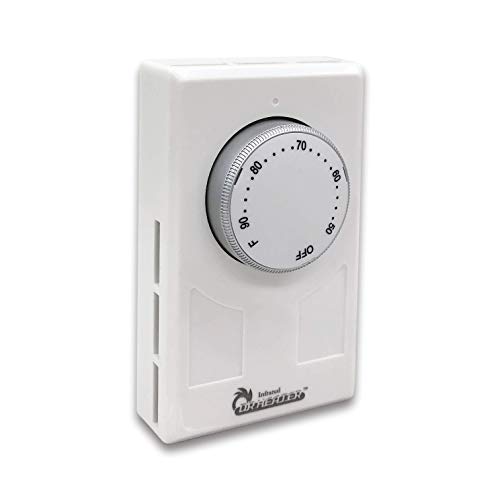
The DR-001 offers a broad voltage range and high wattage compatibility, making it suitable for large rooms or higher-capacity electric systems. It includes both C and F control dials, supporting a wide temperature range and precise adjustments. Best for rooms where higher power baseboard or wall heaters are used. Choose this if you need a wall thermostat that remains effective across multiple voltage scenarios. Caution: may be more feature-rich than needed for small spaces.
Honeywell T410A1013 Electric Baseboard Thermostat

The Honeywell T410A1013 is a two-wire, mechanical thermostat designed for easy installation with color-coded leads and a long-lasting micro switch. It’s best for legacy baseboard heaters or simple, low-cost projects where durability and straightforward control are priorities. Opt for this if you want a proven, no-frills solution that integrates with older 2-wire systems. Limitation: fewer features for precise digital scheduling or advanced programming.
Stelpro SWT1F Single Pole Line Voltage Thermostat

The Stelpro SWT1F is a versatile, single-pole thermostat for 240 V systems, compatible with electric baseboards, wall heaters, and some fan-forced heaters. It features a simple mechanical dial for easy adjustments and a straightforward installation process. Best for small to medium rooms where a compact, reliable mechanical control is sufficient. Choose this if you prioritize simplicity and broad compatibility over advanced programming features. Limitation: single-pole design offers basic control without independent line sensing.
Buying Guide: Key Purchase Considerations
What type of thermostat do you need? Mechanical models are durable and simple to wire, ideal for straightforward baseboard or ceiling heaters. Digital or programmable units offer finer control and scheduling but can require more setup. Consider whether you need single-pole or double-pole operation, which affects how the unit breaks both hot and neutral lines for safety and compatibility with your heater.
What voltage and wattage does your heater require? Ensure the thermostat supports your system voltage (120 V, 208 V, 240 V) and the maximum wattage of your heater. Higher-capacity units suit larger rooms or multiple baseboard sections; smaller rooms benefit from compact units with easy-to-use knobs.
Installation and wiring ease. Look for color-coded leads, included mounting hardware, and clear wiring diagrams. Double-pole models provide better safety by cutting power to both conductors. If you’re replacing an existing thermostat, confirm the new unit matches the wire count and mounting style of the old one.
Temperature control and reliability. Analog dials are intuitive and reliable in stable environments, while digital thermostats reduce temperature swings and can offer scheduling. If you want living space-wide consistency, consider a model with a narrow tolerance and smooth ramping.
Doorways, walls, and visibility. Some thermostats are designed to sit flush with walls and disappear into decor. In busy spaces, a larger dial with clear markings can improve usability. For high-traffic rooms, durability and resistance to tampering matter.
Frequently Asked Questions
- What is the difference between single-pole and double-pole thermostats?
Answer: Single-pole controls power to the heater on one hot line, while double-pole also disconnects the other conductor, providing safer and more complete shutdown in some installations. - Can I replace a baseboard thermostat with a ceiling heat thermostat?
Answer: Yes, if the voltage, amperage, and wiring configuration match your system. Check compatibility with wire counts and mounting style. - Are digital thermostats worth it for electric baseboards?
Answer: For many users, digital thermostats offer precise control and scheduling, which helps reduce energy waste and maintain consistent comfort. - What installation considerations should I review before buying?
Answer: Verify voltage compatibility, wall space for mounting, whether the unit is intended for residential or commercial use, and if you need a model with a large adjustment knob for easy access. - Do these thermostats require professional installation?
Answer: Some simple replacements can be DIY if you are comfortable with electrical wiring; however, consult a licensed electrician for unfamiliar wiring or high-wattage systems. - How do I know which thermostat matches my heater model?
Answer: Check the heater’s voltage, wattage, and the existing wiring type. Look for a thermostat designed for line-voltage heaters and the same pole configuration as your current setup.