
Answering the question, “What are the costs to run electric baseboard heating and which option fits my space?” this guide compares five practical products and explains how to estimate ongoing expenses. This overview helps homeowners, renters, and DIY renovators choose efficient, affordable heating solutions for bedrooms, offices, and living spaces.
The buyer types most likely to benefit from these options include: residents seeking simple, inline electric heat for small to medium rooms; tech-savvy users who want smart control to cut energy use; and households prioritizing safety features such as tip-over and overheat protection. The following table highlights the five products selected for clear comparison on key points like wattage, control, and suitability.
| Product | Wattage | Best For | Key Note |
|---|---|---|---|
| Cadet F Series 36″ Electric Baseboard Heater | 750/563 W | Medium rooms needing reliable convection heat | Simple universal wiring |
| Mysa Smart Thermostat LITE for Electric Baseboard Heaters | WiFi-based control, 120V-240V | Tech-friendly homes aiming to save up to 26% | Requires compatible baseboard units |
| COMFORT ZONE 1,500W Baseboard Heater | 1500 W | Larger rooms needing high heat output | Safety features include tip-over and stay-cool body |
| Cadet F Series 24″ Electric Baseboard Heater | 350/262 W | Compact spaces, secondary zones | Smaller footprint, modest output |
| DREO Smart Wall Heater | 1500W (wall-mounted) | Space-saving alternative to baseboards | Smart features, 1500W capacity |
Cadet F Series 36″ Baseboard Heater

Product overview: Cadet Store’s 36″ F Series baseboard delivers convection heat with multiple watt settings (750/563 W) at 240/208 volts. It features universal wiring and pre-punched knockouts for straightforward installation, making it suitable for DIY upgrades and installed renovations alike. Best for medium rooms where steady, wall-mounted warmth is desired.
- Best for durable, straightforward baseboard heating with reliable convection.
- Choose this if you want simple wiring and flexible voltage compatibility.
- Limitation: Higher wattage models may draw more electricity; plan wiring accordingly.
Mysa Smart Thermostat LITE for Electric Baseboard Heaters

Product overview: This WiFi thermostat supports 120V-240V systems and offers scheduling, remote control, and compatibility with Apple HomeKit, Alexa, and Google Assistant. It is designed to help users save up to 26% on heating costs by optimizing when and how heat is produced. Best for tech-forward homes seeking flexible control and energy savings.
- Best for energy-conscious users who want mobile control and automation.
- Better for homes with existing baseboard units that support smart thermostats.
- Limitation: Requires reliable WiFi and compatible baseboards for full feature use.
COMFORT ZONE 1,500W Electric Baseboard Heater

Product overview: This Comfort Zone model targets medium-to-large rooms with a robust 1500 W convection heater. It includes a two-setting thermostat and safety features like a tip-over switch, stay-cool body, and overheat protection. Best for rooms that need strong, steady heat with reliable safety. Caution: higher wattage may increase energy use if not properly zoned.
- Best for larger spaces that require quick, consistent warmth.
- Choose this if you want straightforward control with solid safety features.
- Limitation: Higher energy demand—plan for adequate circuit capacity.
Cadet F Series 24″ Baseboard Heater

Product overview: The 24″ Cadet F Series option provides a compact, lower-wattage solution (350/262 W at 240/208 V). It’s well-suited for small rooms, hallways, or zone heating where space is at a premium. Best for secondary rooms or budget-conscious installations. Caution: Lower heat output may be insufficient in very cold climates without supplementary heat.
- Best for compact spaces or budgeted upgrades.
- Better for zone control where a smaller heater is sufficient.
- Limitation: Lower output in extremely cold conditions; consider pairing with another unit.
DREO Smart Wall Heater
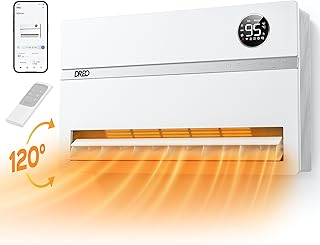
Product overview: The DREO Smart Wall Heater provides 1500 W of heating capacity in a wall-mounted form, combining space-saving design with smart features that enable remote control and scheduling. Best for rooms where wall-mount is preferred over baseboard installation. Caution: Wall clearance and clearance around mounting must be respected for safe operation.
- Best for space-saving heating with smart features.
- Choose this if you prefer a wall-mounted solution with automation.
- Limitation: Requires wall installation space and proper electrical layout.
Buying Guide: Key Considerations For Electric Baseboard Heating Costs
What size of heater do I need?
Baseboard heater output is primarily measured in watts. To estimate required wattage, multiply room area (in square feet) by desired temperature rise and consider insulation. Typical guidance ranges from 10–22 W per square foot depending on climate and insulation. Use zone strategies to avoid overheating entire spaces.
How does running cost work?
Electric baseboard heaters draw power from your electrical panel. Costs depend on wattage, voltage, insulation, and local electricity rates. Higher wattage units deliver more heat but cost more to run; smart thermostats can offset this by better scheduling and temperature control.
Should I choose smart control or simple thermostats?
Smart thermostats offer energy savings through scheduling and remote control. They are best when you have multiple rooms and consistent WiFi access. Traditional thermostats are straightforward but lack remote operation, which can limit cooling and heating efficiency.
What safety features matter?
Look for tip-over switches, overheat protection, and stay-cool casings. These features reduce burn risk and accidental contact, especially in homes with children or pets. Some units also include auto shutoff for unsafe temperatures or misalignment.
How do installation considerations affect cost?
Wiring needs, available voltages (120V vs. 240V), and room layout influence installation costs. Units with universal wiring or easier mounting reduce labor time. For smart thermostats, ensure compatibility with existing wiring and baseboard models.
Energy savings strategies
- Zoning: Heat only the rooms you use.
- Programmable or smart schedules: Lower temperatures when away or sleeping.
- Proper insulation: Reduces heat loss and improves efficiency.
FAQ
- Are electric baseboard heaters expensive to run? Running costs depend on wattage, usage, and electricity rates. Smart controls can reduce unnecessary heating.
- Can I install baseboard heaters myself? Some models offer straightforward wiring, but installation should follow electrical codes. When in doubt, hire a licensed electrician.
- Is a 1500W heater suitable for large rooms? Yes, for larger rooms or spaces with poor insulation, but evaluate climate and room size to avoid overheating other zones.
- Do smart thermostats work with all baseboard heaters? Compatibility varies. Ensure your baseboard supports the thermostat’s wiring and control requirements.
- What is the advantage of a wall-mounted heater like the DREO model? It saves floor space and can be integrated into custom room layouts, but requires proper wall mounting and clearance.
- Can I mix baseboard heaters with other heat sources? Yes, but coordinate thermostats and zoning to prevent conflicting heat cycles and to optimize energy use.