
Whether you’re upgrading a condo, outfitting a tiny apartment, or adding a point-of-use heater for a kitchen sink, these electric hot water heaters deliver fast, reliable hot water. This guide highlights five compact and efficient options suitable for under-sink, wall-mounted, or small-space installations. They’re ideal for singles, couples, or small households who want immediate hot water without a full-size tank. The summary below helps you compare capacities, installation style, and safety features at a glance.
| Product | Type | Capacity/Flow | Best For |
|---|---|---|---|
| AIYEZIDT Tankless 110V | Tankless, Under Sink | Up to 5 gal/hour flow at 131°F | Small kitchens and RVs |
| BOSCH Tronic 3000 T ES2.5 | Mini-Tank, Shelf/Wall | 2.5 gallons | Under-sink placement, easy maintenance |
| xwdzswgs Tankless 110V | Tankless, Under Sink | 0.3-0.5 GPM depending on temp | Compact spaces, quick delivery |
| VEVOR 12 Gallon Tank | Mini Storage Tank | 12 gallons | Small apartments with more hot water needs |
| DOYXC Tankless 110V | Tankless, Under Sink | 0.3-0.5 GPM depending on temp | Compact, versatile spaces |
AIYEZIDT Mini Tankless Electric Water Heater
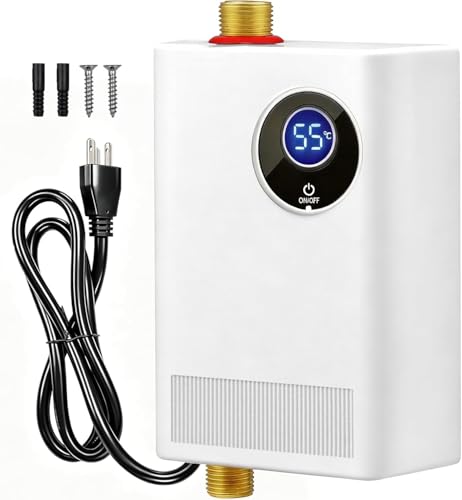
Best for: Small kitchens, apartments, and RVs needing instant hot water at the sink. This 110V heater claims 3-5 seconds to hot water with a maximum around 131°F, eliminating long preheating times. The compact, wall-mounted design saves space and supports point-of-use needs.
Why selected: It offers instant delivery, a digital LCD display, and integrated safety features for reliable operation in tight spaces. The quick-response capability suits task-focused hot water use like dishwashing and handwashing near the sink.
Limitation: The 55°C / 131°F top temperature may limit very hot water requirements in colder climates or high-flow scenarios.
BOSCH Tronic 3000 T 2.5-Gallon Mini-Tank
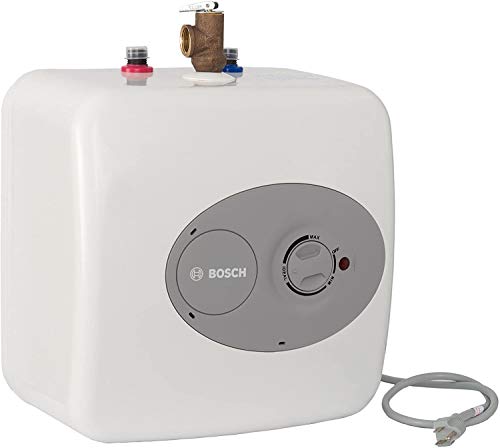
Best for: Very small spaces under sinks where you want hot water on demand without running a full-size heater. It’s a compact, easy-to-install option for isolated faucets.
Why selected: The 2.5-gallon capacity and high thermal efficiency (around 98%) provide dependable hot water with straightforward maintenance. Independent installation with a standard 120V outlet simplifies setup.
Limitation: This unit is best for limited hot-water use at one point of use; it’s not designed for multiple outlets simultaneously.
xwdzswgs Tankless 110V Under Sink Heater

Best for: Homes requiring a compact, fast-responding unit for limited-space kitchens or bathrooms. It delivers hot water in seconds and supports wall-mounted installation.
Why selected: Notable for its 3-5 second warm-up and safety protections, including IPX4 waterproofing and dry-burning protection. A digital display helps users monitor status and temperature.
Limitation: Install orientation matters; vertical installation is advised to avoid element malfunctions (E2).
VEVOR 12 Gallon Tank Water Heater

Best for: Small apartments or studios that need a reliable storage hot-water supply without constantly reheating. The 12-gallon capacity supports multiple outlets with steady temperature.
Why selected: Its 1600W heating capability, coupled with an enamel-coated interior, supports durability and consistent performance. The LED display and adjustable knob allow simple temperature control.
Limitation: It’s a tank-based design, so standby heat loss is a consideration compared to tankless options.
VEVOR 10 Gallon Electric Water Heater

Best for: Families or roommates needing more hot water storage in compact spaces. The 10-gallon tank provides a larger supply than ultra-compact units.
Why selected: Combines higher capacity with safety features like IPX4 waterproofing and enamel coating, offering a balanced option for steady hot water delivery.
Limitation: Larger footprint than pure tankless models; installation space should be considered in advance.
Buying Guide: Key Purchase Considerations
- Tank vs. tankless: Tankless units heat water on demand with minimal standby loss; tanks store hot water but may waste energy keeping it warm.
- Capacity and flow: For point-of-use, smaller capacities (2.5–5 gallons) or low-flow tankless units work well. For multiple outlets, opt for larger storage or higher-flow tankless models.
- Power and electrical requirements: Most under-sink heaters run on 110–120V. Check your outlet capacity and required amperage (commonly 12A or higher) before installation.
- Safety features: Look for IPX4 waterproofing, dry-burning protection, over-temperature shutoff, and automatic power-off in non-working states.
- Installation location: Wall-mounted units save space; under-sink installations are convenient for kitchens and bathrooms. Vertical orientation may be necessary for certain models to ensure proper heating element operation.
- Temperature control: Digital displays and knobs help set precise temperatures. Note whether units offer Fahrenheit/Celsius switching and the range of possible temperatures.
- Maintenance: Consider ease of access for service, shelf or wall-mount compatibility, and the availability of replacement parts or glass-line interiors.
Frequently Asked Questions
- What is the difference between tankless and tank heaters?
The key difference is how they heat water: tankless heaters heat on demand, while tank heaters store hot water in a tank for immediate use. - Can I install a tankless water heater under a kitchen sink?
Yes, many models are designed for under-sink, point-of-use installation with a compact footprint. - Do these heaters require professional installation?
Some models are simple enough for DIY installation with basic electrical work, while others may require a licensed electrician or plumber depending on local codes. - Will a small heater supply hot water for multiple taps at once?
Small point-of-use units are best for single faucet use; for multiple outlets, choose higher flow or a storage tank with sufficient capacity. - What safety features should I look for?
IPX4 waterproofing, dry-burning protection, over-temperature protection, and automatic shutoff are important for safe operation. - How do I choose the right temperature for my needs?
Set a comfortable range (typically 120–130°F / 49–54°C) to balance user comfort and energy use; some units allow precise digital control.