
Answering your search for a reliable dual fuel ventless heater: these units offer flexible fuel options and can heat compact to mid-sized spaces without venting. They’re best for homeowners needing budget-friendly, year-round warmth, garages or living areas without chimneys, and spaces where fuel choices vary. The top picks below cover blue flame and radiant styles, with capacities from 20,000 to 30,000 BTU to fit up to about 1,100 square feet. Below, compare who each model suits best and why it was selected.
Summary Table
| Product | Fuel Options | BTU | Area (approx.) | |
|---|---|---|---|---|
| Mr. Heater 20,000 BTU Vent Free Blue Flame Dual Fuel Heater | Natural Gas or Propane | 20,000 | Up to 700 sq ft | A compact, versatile option for living rooms or small spaces. |
| Mr. Heater 20,000 BTU Vent Free Radiant Dual Fuel Heater | Natural Gas or Propane | 20,000 | Up to 700 sq ft | Quiet, radiant heat ideal for bedrooms or offices. |
| ProCom Dual Fuel Ventless Blue Flame Garage Heater – 30,000 BTU | Natural Gas or Propane | 30,000 | Up to 1,000 sq ft | Better for workshops or garages needing quick warmth. |
| Mr. Heater 30,000 BTU Vent Free Blue Flame Dual Fuel Heater | Natural Gas or Propane | 30,000 | Up to 1,000 sq ft | Stronger heat for mid-size living spaces or open floor plans. |
| JEWUNO 30,000 BTU Wall Heater for Indoor Use – Dual Fuel | Propane or Natural Gas | 30,000 | Up to 1,000 sq ft | Thermostatically controlled, compact wall-mount option. |
Mr. Heater 20,000 BTU Vent Free Blue Flame Dual Fuel Heater

BTU: 20,000. Heats up to 700 sq ft. Features battery-operated electronic spark ignition. Best for compact living areas or zones where quick, draft-friendly warmth is needed. Choose this if you want reliable blue-flame convection and simple ignition with dual-fuel flexibility. Caution: ensure adequate ventilation to maintain safe indoor air quality.
Mr. Heater 20,000 BTU Vent Free Radiant Dual Fuel Heater

BTU: 20,000. Heats up to 700 sq ft. Battery-operated electronic ignition included. This radiant model is best for bedrooms, home offices, or rooms needing quick, direct warmth without strong airflow. Better for quiet operation and steady heat at lower noise levels. Limitation: radiant heat may warm objects and occupants differently than blue flame in open spaces.
ProCom Dual Fuel Ventless Blue Flame Garage Heater – 30,000 BTU
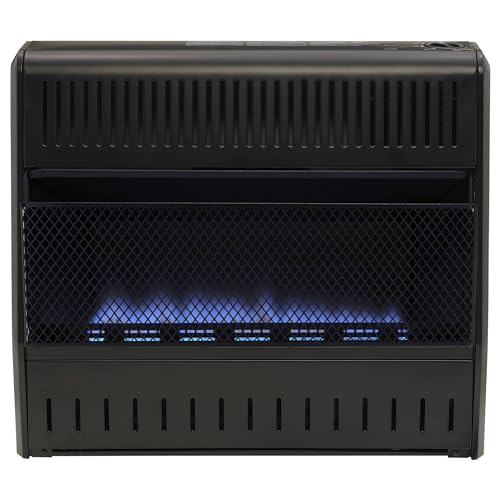
BTU: 30,000. Heats up to 1,000 sq ft. Dual fuel, with thermostatic control and high efficiency. Best for garages or workshops where space is larger and reliability is critical. Choose this if you need more heat output and ongoing temperature control. Caution: vent-free units require proper clearance from combustibles and adequate ventilation.
Mr. Heater 30,000 BTU Vent Free Blue Flame Dual Fuel Heater

BTU: 30,000. Heats up to 1,000 sq ft. Battery-operated electronic ignition included. This higher-capacity unit suits larger living spaces or open-plan layouts. Best for users who want robust heat with dual-fuel versatility. Caution: ensure room ventilation and follow unit clearances to maintain safe operation.
30,000 BTU Natural Gas/Propane Wall Heater for Indoor Use – Dual Fuel, Vent-Free
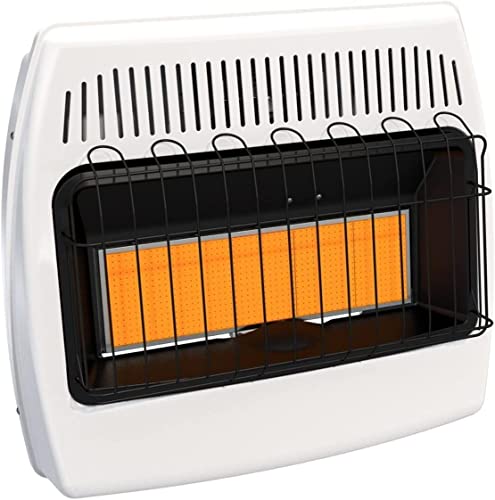
BTU: 30,000. Heats up to 1,000 sq ft. Features electronic spark ignition and thermostatic control. Includes oxygen depletion sensor and auto safety shut-off. This wall-mounted dual-fuel option is best for rooms where floor space is limited. Limitation: vent-free operation requires correct installation and ventilation considerations.
Duluth Forge Dual Fuel Ventless Gas Stove – 26,000 BTU

BTU: 26,000. Heats up to 1,200 sq ft. Includes thermostat remote control and realistic log look with hand-painted details. Best for those seeking a more aesthetically pleasing ventless option with good coverage. Caution: remote requires battery setup; check fuel type compatibility with your home system.
Mr. Heater 30,000 BTU Vent Free Blue Flame Propane Heater

BTU: 30,000. Heats up to 1,000 sq ft. Battery-operated ignition included. Best for those needing robust heat output in larger rooms. Caution: functioning requires proper vent-free clearances and ventilation.
Buying Guide: Key Considerations for Dual Fuel Ventless Heaters
- Fuel flexibility: Dual-fuel models support propane or natural gas. Confirm which fuel is readily available in your area and the unit’s connection requirements.
- Heat output and space: Higher BTU heaters cover larger areas but may oversupply smaller rooms. Match BTU to square footage and ceiling height.
- Ventless safety: Vent-free design requires airflow and oxygen depletion sensing. Ensure installation follows local codes and keeps combustion away from occupied spaces.
- Ignition and controls: Battery or electric ignition, thermostat options, and remote controls affect convenience and energy use. Check compatibility with your preferred control style.
- Installation needs: Wall-mounted versus free-standing options change clearance, mounting requirements, and room layout. Confirm clearance from furniture and combustibles.
- Maintenance: Look for accessible ignition components and durable materials. Some models include remotes for climate control convenience.
FAQ
- What does “dual fuel” mean for ventless heaters? It means the unit can burn either propane or natural gas, offering fuel choice flexibility.
- Are ventless heaters safe for living areas? Yes, when installed and operated per manufacturer instructions and local codes, with proper ventilation and oxygen depletion sensing in place.
- Which heater is best for a small room? A 20,000 BTU blue flame or radiant model is typically suitable for rooms around 700 sq ft, depending on insulation.
- Do these units require electricity? Many models use a battery-powered ignition and some rely on a thermostat or remote control, but may need power for certain features.
- Can I install a ventless heater myself? Installation should follow local code requirements; many installations require professional assessment for venting, clearances, and gas connections.
- What maintenance is needed? Regular inspection of connections, ignition, and carbon monoxide sensors is advisable, along with confirming that vent-free air quality remains within safe limits.