
If you’re searching for an efficient way to add warm, ambient heat to a living space without relying on electric systems, propane wall heaters are a solid option. This guide highlights five reliable models that balance heat output, safety features, and ease of use. The top picks are ideal for small-to-medium rooms, bedrooms, and home offices. Each entry explains who it’s best for, why it was selected, and practical limitations to consider.
Buying quick reference: the following table summarizes the key attributes of the five highlighted heaters. Use it to compare heat output, coverage, safety features, and controls at a glance.
- Product: BILT HARD Vent Free Blue Flame Propane Heater
- Coverage: Up to 1,400 sq. ft.
- Safety: Oxygen Depletion Sensor (ODS) shut-off
- Controls: Thermostatic control with High/Medium/Low
- Best for: Large living spaces or home offices needing steady warmth
- Product: ProCom Liquid Propane Ventless Infrared Plaque Heater (ML250 family)
- Coverage: Up to 1,100 sq. ft.
- Safety: Oxygen Depletion Sensor
- Controls: Manual with 3 heat settings
- Best for: Compact spaces where placement flexibility matters
- Product: ProCom Infrared Plaque Heater With Base Feet (ML250TPA-B)
- Coverage: About 1,150 sq. ft.
- Safety: Thermostat control with multiple settings
- Best for: Modern rooms seeking a slim, stylish heater
- Product: Rinnai EX17DTP Direct Vent Wall Furnace
- Coverage: Variable output with precise control
- Safety: Cool-to-touch cabinet and self-diagnostics
- Best for: Families wanting predictable, efficient heating
- Product: Mr. Heater 30,000 BTU Vent Free Radiant Heater
- Coverage: Up to 1,000 sq. ft.
- Safety: Battery-operated electronic ignition
- Best for: Simple, reliable heat in medium rooms
Best for Large Rooms: BILT HARD Vent Free Blue Flame Propane Heater

This blue flame model delivers up to 30,000 BTU, heating areas as large as 1,400 square feet. It uses liquid propane and includes a thermostat sensing bulb for automatic temperature regulation. The built-in ODS safety shut-off guards against unsafe air conditions, making it suitable for larger living rooms or open-plan spaces. Best for buyers who want robust heat with adjustable fan-less warmth. A potential limitation is higher fuel consumption if you run it at maximum output for long periods.
Best for No-Electric-Needed Heat: ProCom 25,000 BTU Ventless Infrared Plaque Heater
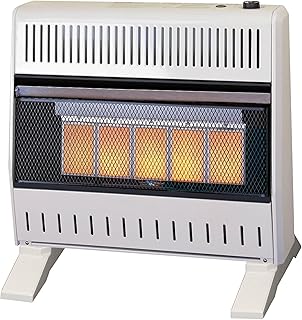
With 25,000 BTU and a heat range up to about 1,100 square feet, this unit is designed for spaces where propane supply is steady and electricity isn’t required. It features a Piezo push-button ignition and three heat settings. It’s best for small-to-medium rooms where a simple, no-fuss heating solution is desired. The limitation to consider is that its effectiveness depends on propane availability and proper venting in ventless configurations.
Best Slim Profile: ProCom Infrared Plaque Heater With T-Stat Control

This 25,000 BTU heater offers a slim, modern profile with a wall-mount option or base feet. The thermostat control enables High/Medium/Low settings to tailor warmth precisely, which helps conserve propane. It’s a solid choice for rooms where aesthetics matter alongside efficient heat delivery. A consideration is that installation may require secure mounting and venting planning for optimal safety and performance.
Best Direct Vent Comfort: Rinnai EX17DTP Direct Vent Wall Furnace

Rinnai’s wall furnace uses direct venting to provide consistent temperatures while reducing drafts. It features a cool-to-the-touch cabinet and self-diagnostic electronics to support safe operation in homes with children. It is best for buyers who want precise temperature control and energy-efficient operation. A potential limitation is that installation is typically more involved than basic ventless models, requiring venting considerations and professional setup.
Better for Traditional Homes: Mr. Heater 30,000 BTU Vent Free Radiant Heater

This vent-free radiant heater provides 30,000 BTU per hour to heat up to about 1,000 square feet. It uses battery-operated electronic ignition for easy startup. It is best for spaces where steady, radiant warmth is preferred and where a simple install is desired. A limitation is that vent-free units require proper installation to comply with safety regulations and may influence indoor air quality if not used with appropriate ventilation.
Buying Guide: Key Considerations For Propane Wall Heaters
What room size should guide your choice?
Match BTU output to the room size. Larger spaces may benefit from heaters delivering 25,000–30,000 BTU, while smaller rooms can be comfortable with 12,000–20,000 BTU. Always check the manufacturer’s suggested coverage area.
Ventilation and safety features matter
Look for Oxygen Depletion Sensor (ODS), cool-to-touch cabinets, and automatic shut-off options. Direct vent models reduce indoor air contaminants but require proper venting and professional installation in many cases.
Control type and energy efficiency
Thermostatic controls help maintain consistent comfort and prevent wasteful cycling. Thermostats with multiple heat settings allow you to dial warmth precisely, which can save propane over time.
Installation considerations
Wall-mounted units save floor space but may require more secure mounting and professional wiring or venting. Vent-free models are easier to install in many settings but require good room ventilation and adherence to local codes.
Fuel and maintenance
All models run on liquid propane. Consider fuel availability and storage. Regular inspection of ignition systems, gas lines, and safety devices is important for continued safe operation.
Best use-case guidance
Choose a unit with the right balance of heat output and space coverage. For large rooms, a higher BTU model with a robust safety system is preferable. For bedrooms and home offices, compact units with quiet operation and stable thermostat control are ideal.
FAQ
- Q: Are propane wall heaters safe for bedrooms?
- A: Yes, when equipped with safety features such as oxygen depletion sensors and proper venting; follow manufacturer guidelines for installation and clearances.
- Q: Do ventless propane heaters require ventilation?
- A: Ventless units rely on indoor air to vent combustion byproducts; ensure adequate airflow and comply with local codes.
- Q: Can I install a propane wall heater myself?
- A: Installation complexity varies by model. Some units are designed for DIY mounting, while others require professional installation for venting and gas connections.
- Q: How do I choose between direct vent and vent-free models?
- A: Direct vent models offer better air quality control and safety, but require proper venting; vent-free models are easier to install but rely on room ventilation.
- Q: Will a propane heater heat my entire home?
- A: Propane wall heaters are designed to heat targeted spaces. For whole-home warmth, combine with central heating or multiple units in different rooms.