
In this guide
- DeLonghi Convection Panel Heater With Timer
- Sealey Cd2005Tt Convector Heater With Timer
- Yufenj Oil Radiator With Thermostat And Timer
- SUNDATE Convection Heater With Wifi Control
- DREO Space Heater With Timer And Thermostat
- Buying Guide: Key Considerations For Timer-Equipped Convector Heaters
- Frequently Asked Questions
Searching for a convector heater with a timer? This guide highlights five top options that combine timer controls with efficient, convection-style heat. The best fits vary by room size, mounting preference, and desired features such as ECO modes or remote control. Each product below is chosen for clear timer functionality, reliable operation, and practical use cases—from bedrooms to home offices.
| Product | Best For | Key Benefit |
|---|---|---|
| DeLonghi HCX9115E | Medium to large rooms | Timer with energy-saving ECO Plus |
| Sealey Cd2005Tt | Home, office, light industrial | 24-hour timer, versatile mounting |
| Yufenj Oil Radiator | Continuous warmth with smart temp control | Intelligent heating, LED display |
| Sundate Convection Heater | Living rooms and bedrooms | Remote control, 24-hour timer |
| DREO Space Heater | Bedrooms, small offices | 1-12H timer, thermostat, safety features |
Note: All five products emphasize timer functionality to help manage heating schedules and save energy. They also offer varying installation styles, from freestanding units to wall-mount options, depending on your space needs.
DeLonghi Convection Panel Heater With Timer
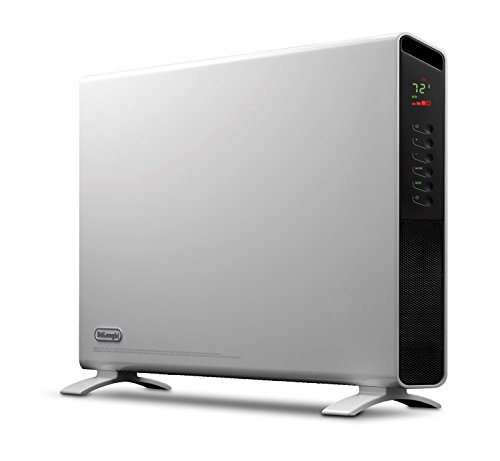
The DeLonghi HCX9115E uses up to 1500 watts to deliver fast heat distribution suitable for medium to large rooms. It supports both freestanding placement and wall mounting with an included kit. The ECO PLUS function adjusts heat and energy use for economical warmth, making it a strong pick for bedrooms or living spaces where quiet operation matters. Best for buyers who want a compact, design-friendly heater that blends with decor while offering a reliable timer-based heating schedule.
Who it’s best for: shoppers needing a balance of performance and aesthetics, with wall-mount flexibility. Limitation: some users may prefer a dedicate thermostat separate from timer settings for ultra-precise control.
Sealey Cd2005Tt Convector Heater With Timer

The Sealey Cd2005Tt offers a 24-hour timer and flexible installation as a freestanding unit or wall-mounted. Its slimline construction fits tighter spaces, making it ideal for home offices and small living areas. Best for: buyers who want straightforward timer programming and a durable, professional-looking heater. Caution: Power-on delay or timer programming complexity can occur if the user is new to digital timers.
Yufenj Oil Radiator With Thermostat And Timer

This oil radiator combines an intelligent heating element with an LED touch screen and a thermostat that maintains a set temperature automatically. The timer feature supports daily scheduling, enabling consistent warmth while reducing energy use. Best for: users who want smooth, long-lasting warmth in larger rooms with easy-to-read controls. Limitation: oil-filled radiators can take longer to heat up compared to ceramic or fan-forced models.
SUNDATE Convection Heater With Wifi Control

The SUNDATE convection heater delivers 1500W of power with digital display and remote control. A 24-hour timer helps create customized heating schedules for living rooms and home offices. Best for: tech-friendly buyers who want remote access and programmable timing for steady warmth without manual adjustments. Caution: WiFi control requires a stable network for full enjoyment of smart features.
DREO Space Heater With Timer And Thermostat

The DREO space heater combines a 1500W PTC ceramic system, a thermostat with precise controls (41–95°F), and a 1–12 hour timer. It emphasizes safety with tilt-detection and overheat protection. Best for: bedrooms and small offices where programmable warmth is helpful and safety features are valued. Limitation: high heat output can be intense in small spaces, so sizing is important.
Buying Guide: Key Considerations For Timer-Equipped Convector Heaters
- Room size and heating needs: Match wattage and heater type to room square footage. Larger spaces often benefit from higher wattage and more robust convection flow.
- Timer and scheduling: Decide between simple on/off timers, 24-hour calendars, or smart timers with app control. Consider daily energy management benefits.
- Mounting and placement: Freestanding units offer flexibility; wall-mount options save floor space. Ensure clearances and ventilation for safe operation.
- Thermostat precision: Look for thermostats with narrow increments and automatic mode where available to maintain comfort with energy efficiency.
- Safety features: Tilt or tip-over protection, overheat protection, and flame-retardant materials increase safe, long-term use in households with children or pets.
- Noise level: Convection heaters are typically quiet; select models with whisper-quiet fans if near a bed or workspace.
- Control method: Physical dials, digital displays, remote controls, or app-based systems affect daily usability and integration with smart home devices.
Frequently Asked Questions
- What is a convector heater with a timer best used for? It is ideal for setting a heating schedule to match daily routines, maintaining comfortable temperatures while conserving energy.
- Do all convector heaters have to be wall-mounted? No. Many models are freestanding, but some offer wall-mount compatibility for space-saving setups.
- Which feature improves energy savings the most? An ECO or adaptive heating mode that adjusts power based on ambient temperature can significantly cut energy use.
- Is remote control important for a timer-enabled heater? Remote or app control adds convenience, especially for operating from across rooms or when away from the unit.
- Are oil-filled radiators better for steady heat than convection heaters? Oil radiators provide stable, long-lasting warmth but typically heat up more slowly than convection units; timer use can help manage this trade-off.
- Can timers be used to simulate occupancy? Yes, scheduling heat to run at set times can help reduce energy waste when rooms are unused.