
In this guide
When winter weather demands dependable, electricity-free heating, convection kerosene heaters offer portable warmth for homes, garages, basements, and emergency setups. This article highlights top convection kerosene heaters, explaining how they heat spaces efficiently, safety features to look for, and what to consider before buying. Each model below is selected for strong BTU output, broad heating coverage, and practical operation without power. Use the buying guide to compare options and choose the heater that best fits your space and needs.
| Product | BTU / Heating Capacity | Electricity | Notes |
|---|---|---|---|
| Dyna-Glo WK95C8 | 23,800 BTU | No | Heats up to 1,000 sq ft |
| Dyna-Glo WK11C8 | 10,500 BTU | No | Heats up to 500 sq ft |
| Dyna-Glo WK24BK | 23,000 BTU | No | Heats up to 1,000 sq ft |
| Dyna-Glo WK24WH | 23,000 BTU | No | Heats up to 1,000 sq ft |
| HeatMate HMC-23K (Sengoku) | 23,500 BTU | No | Heats up to 1,000 sq ft |
Dyna-Glo WK95C8 Indoor Kerosene Convection Heater

The WK95C8 model delivers 23,800 BTU per hour, designed to heat up to about 1,000 square feet without electricity. Its convection design promotes even warmth release, making it suitable for living rooms, workshops, or basements where electrical power is limited or unavailable. Built with safety and efficiency in mind, this unit emphasizes strong heat output with straightforward operation. For spaces that require quick, power-independent warmth, the WK95C8 provides a robust option.
Dyna-Glo WK11C8 Indoor Kerosene Convection Heater

The WK11C8 offers 10,500 BTU and is capable of heating up to 500 square feet. It operates without electricity, making it a practical choice for backup power scenarios or off-grid spaces. Its compact design supports portability within the home, garage, or cabin. While lower in BTU than larger models, it provides reliable warmth for smaller rooms or spaces that don’t require extensive heating capacity.
Dyna-Glo WK24BK Indoor Kerosene Convection Heater
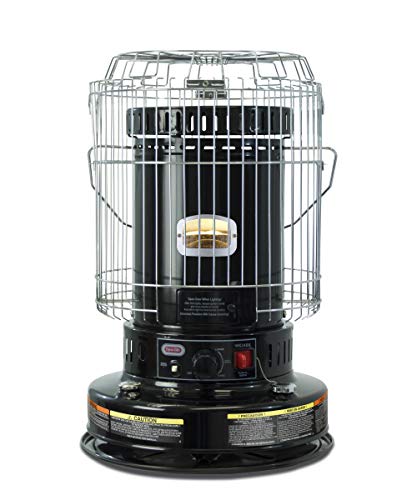
The WK24BK is another 23,000 BTU option, heating up to 1,000 square feet without a power source. Its bold output makes it well-suited for larger living spaces or workshops. As with other kerosene units, consider fuel availability and proper ventilation. The WK24BK emphasizes consistent convection heat, ensuring a steady warmth distribution across the room without relying on electricity.
Dyna-Glo WK24WH Indoor Kerosene Convection Heater

The WK24WH shares the same 23,000 BTU heat capacity, capable of warming up to 1,000 square feet without electricity. It offers the same convection-based heat distribution and is designed for easy placement in living areas, garages, or basements. This model provides dependable heat for spaces with limited electrical access, combining capacity with straightforward operation and maintenance.
HeatMate/Sengoku HMC-23K Kerosene Heater
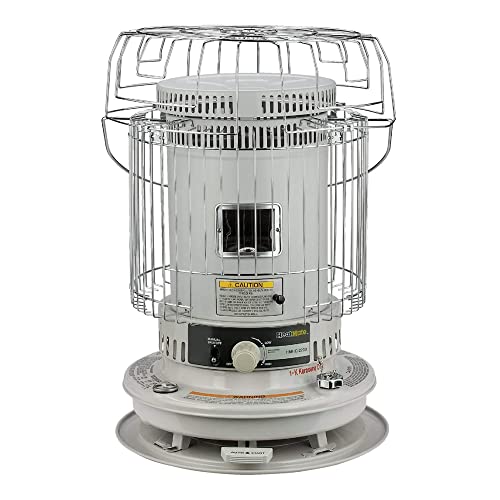
The HeatMate HMC-23K delivers 23,500 BTU and heats up to 1,000 square feet, making it suitable for larger rooms, garages, or outdoor spaces that require portable, non-electric warmth. Features include a substantial 1.9-gallon fuel capacity for extended operation, automatic safety shut-off, a tip-over switch, and protective grills. This model provides robust heating with emphasis on safety and easy lighting, ideal for emergency preparedness or versatile indoor/outdoor use.
Buying Guide: Key Purchase Considerations
Space and BTU: Evaluate room size and ceiling height. Larger spaces benefit from higher BTU ratings (around 20,000+ BTU) to ensure quick, even warming. For smaller rooms, a 10,000–15,000 BTU unit may suffice, reducing fuel consumption and noise.
Fuel and Availability: Kerosene models require a steady fuel supply and proper storage. Check fuel costs, availability in your area, and the ease of refilling without spills. Consider a model with a transparent fuel gauge and a reliable wick system for steady performance.
Ventilation and Safety: Use kerosene heaters only in well-ventilated areas to minimize emissions. Look for safety features such as automatic shut-off on tip-over, flame guards, and sturdy housings. Ensure the unit includes a push-button ignition or easy-start mechanism and a clear, accessible fuel valve.
Portability and Setup: If you need warmth in multiple rooms or during outdoor events, consider weight, handle construction, and ease of transport. Some models are designed to sit on sturdy bases with wide footprints to prevent tipping on uneven floors.
Maintenance and Durability: Select heaters with durable construction, corrosion-resistant components, and straightforward wick replacement or cleaning cycles. Regular maintenance improves efficiency and safety over time.
Ventilation Alternatives: For enclosed spaces, pair a kerosene heater with a carbon monoxide alarm and adequate air exchanges. In some cases, using a heater with built-in oxygen depletion sensors can add a safety margin.
Warranty and Support: Compare manufacturer warranties, replacement parts availability, and access to customer support. A robust warranty helps mitigate long-term maintenance costs.
Overall, convection kerosene heaters provide a practical, electricity-free heating option for larger rooms, garages, basements, and emergency readiness. When selecting a model, consider space coverage, fuel logistics, safety features, and maintenance needs to ensure reliable warmth when you need it most.