
Answering the need for instant hot water, these tankless options provide on‑demand heating for kitchens, bathrooms, RVs, and apartments. This guide highlights five reliable models and explains who each is best for, plus practical trade‑offs to consider before buying.
| Product | Best For | Key Benefit |
|---|---|---|
| 110V Tankless Water Heater Electric, 3000W | Small spaces, under-sink setups | Compact, adjustable °F/°C display |
| Rheem 18kW 240V Tankless Electric | Homes needing higher flow | Self‑modulating, up to 4.4 GPM |
| Rheem 11kW Multi Fixture Tankless Electric | Single or multi‑fixture comfort | 2.68 GPM, compact footprint |
| HYDRO MASTER Valve Kit | System plumbing upgrades | Pressure relief and isolation components |
| ThermoMate 27kW Tankless Electric | Higher demand homes | Up to 6.6 GPM, ETL certified |
1) 110V Tankless Water Heater Electric (3000W)
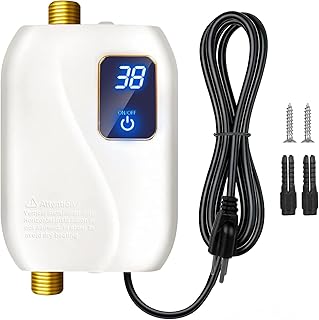
Best for small kitchens or bathrooms needing instant hot water without a bulky unit. This 3000W model uses stainless steel and ABS materials with an LED display. It can raise water temperature quickly (up to 82°F at 0.3 GPM or 131°F at 0.5 GPM) and supports Fahrenheit or Celsius. The unit is 110 volts and highlights rapid on‑demand heating without preheating.
Who it’s best for: apartment dwellers, under‑sink installations, and travelers who need space‑saving hot water. Why selected: compact design and easy digital controls streamline installation in tight spaces. Limitation: performance scales with flow rate and water temperature, so very high hot water demand may require a larger model.
2) Rheem 18kW 240V Tankless Electric Water Heater

Best for households that need higher hot water output and better temperature control. This Rheem uses an external digital thermostat with an LED display and self‑modulating technology to adjust power to match demand. Copper immersion elements provide durable heating, and it supports up to 4.4 GPM depending on supply and temperature rise.
Who it’s best for: homes with multiple fixtures or larger bathrooms where a steady supply of hot water is essential. Why selected: robust self‑modulation and durable heating elements. Caution: 18 kW requires appropriate electrical capacity and professional installation.
3) Rheem 11kW Multi Fixture Tankless Electric – 240V

Best for homes optimizing space across several fixtures with moderate hot water needs. The 11 kW model aims to balance efficiency and capacity, delivering up to 2.68 GPM when properly sized and installed. It emphasizes proper electrical sizing and professional installation for reliable on‑demand hot water.
Who it’s best for: households with a few fixtures or smaller homes prioritizing space savings. Why selected: good balance between capacity and footprint. Limitation: not ideal for simultaneous high‑flow use across many fixtures.
4) HYDRO MASTER Tankless Service Valve Kit
Best for plumbing upgrades or system maintenance, this kit includes a pressure relief valve and isolation components. It supports safe installation and helps protect a tankless system from pressure issues. Use this as part of a broader installation plan to ensure durability and safety.
Who it’s best for: homeowners performing DIY plumbing work or pro installers adding a valve kit to an existing setup. Why selected: essential safety accessories that complement tankless systems. Limitation: not a heater by itself; requires compatibility with your unit and proper installation knowledge.
5) ThermoMate 27kW Tankless Electric Heater
Best for homes with higher hot water demand or larger families, this higher‑output model can handle significant flow. It’s rated up to 6.6 GPM and carries ETL certification, signaling compliance with safety standards. This unit is designed for advanced electrical setups and installation expertise.
Who it’s best for: larger households or renovations that require substantial simultaneous hot water at multiple fixtures. Why selected: high capacity supports busy households. Limitation: higher energy draw and installation complexity mean professional electrical work is advised.
Buying Guide: Key Purchase Considerations
- Water flow needs: Determine your peak GPM requirements for bathrooms, kitchens, and other fixtures to choose a model with adequate output.
- Electrical capacity: Verify available amperage and voltage; some units require 240V, others can operate at 110V. Professional electrical work may be required.
- Space and installation: Under‑sink or wall‑mounted units save space but may need proper venting and water connections.
- Temperature control: Look for units with digital displays and accurate thermostats to maintain comfortable water temperature.
- Safety features: Waterproof ratings, dry‑boil protection, and automatic shutoff under fault conditions improve long‑term reliability.
- Materials and durability: Stainless steel components and copper heaters generally offer longer life and better heat transfer.
- Maintenance accessibility: Choose models with serviceable parts and clear installation guides for future upkeep.
Frequently Asked Questions
- What size tankless heater do I need for a single bathroom?
- Do I need professional installation for tankless heaters?
- Can tankless water heaters run on 110V?
- What is the advantage of self‑modulating heat in tankless heaters?
- Are tankless heaters safer than traditional tanks?
- How important is the GPM rating?
For one bathroom, a unit delivering around 2‑3 GPM is usually sufficient, depending on shower and faucet requirements and incoming water temperature.
Many units require electrical work and water connections; professional installation is often recommended to ensure safety and code compliance.
Yes, some models operate at 110V but may have lower maximum flow; verify electrical specs and expected GPM before purchase.
Self‑modulating systems adjust power to match demand, improving efficiency and reducing energy use when hot water needs are lower.
Tankless systems offer reduced risk of leaks from a storage tank and include safety features, though proper installation and maintenance are essential for safety.
GPM reflects the potential hot water flow; higher GPM supports more fixtures simultaneously, but actual performance depends on incoming water temperature and pressure.