
Looking for affordable designer radiators that still deliver solid heat and a modern look? This guide highlights five value-friendly options suited for small spaces, medium rooms, and larger living areas. Each product is assessed for best-use scenarios, potential limitations, and why it stands out in the budget category. Ideal buyers include apartment dwellers seeking quick heat, small-space renovators prioritizing compact design, and homeowners who want a stylish upgrade without a premium price.
| Product | Best For |
|---|---|
| EMKE Designer Radiator Small 900 x 304 mm | Small rooms and bathrooms |
| Caynel Space Oil Filled Radiator Heater (Black) | Budget-friendly room comfort, medium spaces |
| DREO Radiator Heater | Large rooms needing fast warmth |
| Q-Hillstar Quiet Energy Saving 8-Panel Radiator | Quiet, energy-conscious spaces |
| AB Wall-mounted 10-Panel Radiator | Stylish, higher-heat need with aluminum |
EMKE Designer Radiator Small 900 x 304 mm

The EMKE model offers a compact, vertical panel design with a middle connection, ideal for tight spaces. It heats quickly due to steel construction and a slim 52 mm depth, delivering 297 watts suitable for roughly 5 m². Best for small bathrooms or bedrooms where footprint matters. The radiator emphasizes a robust steel build and rust protection through an environmentally friendly coating. A potential limitation is the single-layer panel layout which may offer less heat dispersion than multi-panel designs in larger rooms.
Caynel Space Oil Filled Radiator Heater, Black

The Caynel oil-filled radiator heater uses 9 fins for efficient heat distribution, covering spaces up to 200 sq. ft. It offers adjustable thermostat and three heat settings (1500W, 1000W, 600W). Best for moderate rooms needing steady warmth with straightforward control. It includes safety features like tip-over and overheat protection. A consideration is refill and maintenance of oil-filled units, which may differ from compact electric panels in quick-response heating.
DREO Radiator Heater For Large Rooms
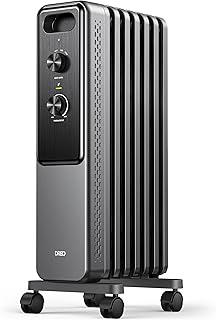
This DREO radiator targets larger spaces with 1500W of heat and a 92.3% heating boost, delivering broad warmth across rooms where heat gaps are common. It features seven M-shaped fins to enlarge heat area by about 39.5% for even coverage. Choose this for open-layout living rooms or family rooms; it includes dual knobs for heat and temperature and an auto thermostat to reduce energy use. A limitation is that higher wattage units may require more clearance and power capacity in some homes.
Q-Hillstar Quiet Energy Saving 8-Panel Radiator

The Q-Hillstar 8-panel aluminum radiator emphasizes quiet operation and energy efficiency. Side baffles promote even airflow, aiding quick room warming while staying relatively low-noise. This model suits kitchens, bathrooms, or bedrooms where low noise is valued. It can warm up to 4,700 BTUs with efficient aluminum construction and baked painting for durability. A possible drawback is aluminum’s thermal response compared with oil-filled options in extremely cold environments.
AB Wall-mounted 10-Panel Radiator

The AB 10-panel design delivers strong heat output (up to 5,768 BTUs) and uses high-quality scratch-free aluminum for rapid warming and durability. Its baking paint finish resists peeling and simplifies cleaning. Best for rooms needing noticeable warmth with a modern, low-profile look. The installation requires attention to proper wall mounting and pressure considerations; some users may prefer a slimmer profile if space is very tight.
Buying Guide: Key Considerations For Budget Designer Radiators
What room size and layout determine radiator choice? For small spaces, compact vertical panels like EMKE are ideal. For open-plan areas, consider higher wattage or more fins as in DREO or AB to minimize cold corners. Do you prefer oil-filled stability or quick panel heat? Oil-filled options like Caynel offer steady warmth and safety; panel radiators respond faster but may feel different in temperature sensation.
How important is noise and energy use? Quiet models such as Q-Hillstar minimize disruption, while auto thermostats help manage energy. Aluminum radiators are lighter and heat quickly but can be more sensitive to surface damage; steel and aluminum mixes offer durability and good heat distribution. Always verify wall mounting requirements and clearance from decor or furniture.
Which safety features matter most? Look for tip-over protection, overheat protection, and stable mounting systems. If you rent or anticipate reconfiguring space, portable or easily adjustable radiators provide flexibility. Consider maintenance needs: oil-filled units require less frequent topping up, while panel radiators are easier to wipe clean and maintain.
Budget vs. performance balance: higher BTU outputs improve room fill but may demand higher electrical capacity or plumbing considerations. For bathroom or damp areas, ensure moisture resistance and corrosion protection are present. Compare heat output per square meter to align with room characteristics and insulation quality.
Frequently Asked Questions
- Which radiator is best for a small bathroom on a budget? — The EMKE Designer Radiator Small fits compact spaces with quick heat at a reasonable price.
- Are oil-filled radiators safer than panel radiators? — Oil-filled units typically stay warmer longer and need fewer fast heating cycles, but panel radiators heat up quickly and are easier to install.
- What should I consider for energy efficiency? — Look for models with thermostats, auto shutoff, and good insulation; aluminum radiators can be efficient but check heat distribution in your room.
- Can these radiators be wall-mounted? — Yes, most listed options are designed for wall mounting; follow the manufacturer’s installation instructions and clearance requirements.
- Is BTU or wattage more important for room warmth? — Wattage (or BTU) determines total heat output; select a rating appropriate for your room size and insulation level.
- Which material offers the best durability for high-moisture areas? — Aluminum and steel radiators with proper coatings resist corrosion; verify surface protection in product specs.