
Ceiling-mounted forced air heaters are ideal for garages, workshops, barns, and other utility spaces where floor space is precious. This guide highlights five top options that balance power, reliability, and ease of installation. They’re suited for different environments: large open garages, small workshops, or bathrooms needing supplemental heat. The following selections emphasize clear performance, install practicality, and reasonable maintenance considerations.
Quick Comparison Of Top Picks
- Mr. Heater 80,000 BTU Forced-Air Unit Heater — Best for large garages and barns.
- Mr. Heater 50,000 BTU Forced-Air Unit Heater — Best for mid-size spaces and flexible thermostat compatibility.
- Comfort Zone 7,500 Watt Ceiling Mount — Best for crowded spaces with ceiling installation and robust construction.
- Broan-NuTone High-Capacity Wall Heater (not ceiling) — Best for wall-anchored, lower-profile needs in homes or workspaces.
- VEVOR 5,000 Watt Digital Ceiling/Wall Heater — Best for precise temperature control and smart-like operation in smaller shops.
The table above helps buyers compare capacity, intended space, and installation style at a glance. For each product, you’ll find a concise explanation of who it’s best for, plus practical cautions and reasons to choose or avoid it in specific scenarios.
Mr. Heater 80,000 BTU Forced-Air Unit Heater
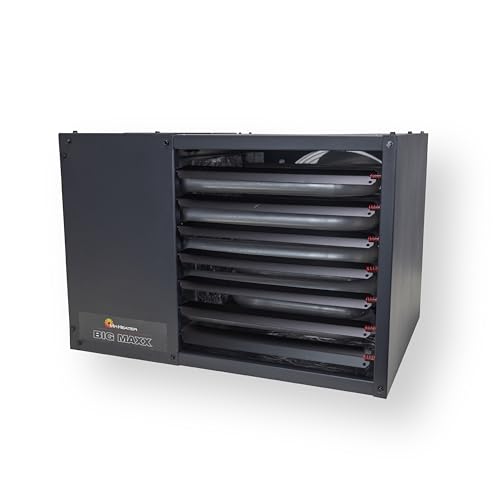
Best for very large spaces, including garages, barns, and workshops that need rapid and substantial warmth. This ceiling-mounted unit delivers 80,000 BTUs and can heat up to about 2,667 square feet. It supports propane or natural gas and is suited for spaces where floor clutter must be minimized. Choose this if you have a large, open workspace and the infrastructure to support high-output propane or natural gas.
Limitation: The heavy-duty output requires proper venting and professional installation in some setups; verify clearance and fuel source compatibility before mounting.
Mr. Heater 50,000 BTU Forced-Air Unit Heater

Best for midsize spaces up to roughly 1,667 square feet, such as a 3-car garage or similar workshop. This ceiling-mounted model works with propane or natural gas and can be paired with standard 24-volt thermostats or newer Wi-Fi enabled thermostats (sold separately) for smarter control. It’s a balanced option when you need solid heat without the highest BTU output.
Limitation: It requires an appropriate thermostat system and gas supply setup; ensure compatibility with your existing controls if you plan remote or automated temperature adjustments.
Comfort Zone Hard-Wired Ceiling Mount Heater

Best for spaces prioritizing floor clearance and ceiling-mounted heat distribution. This 7,500-watt unit is designed for hard-wired installation with a 240-volt circuit. Its robust steel body and adjustable louvers provide direction control, making it suitable for garages, warehouses, or storage areas where floor space must remain open.
Limitation: As a high-wattage model, proper electrical requirements and professional wiring are essential; verify circuit availability and mounting clearance before purchase.
Broan-NuTone 198 High Capacity Wall Heater
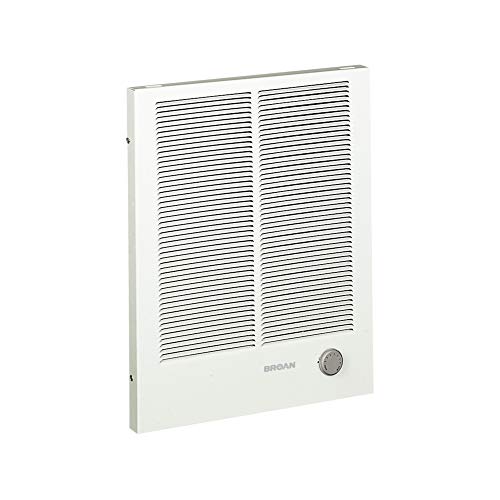
Best for supplemental heating in homes or workshops where a wall-mounted, high-capacity unit is preferred. This 4,000-watt, 240-volt heater can also convert to 2,000 watts at 120 volts and features a heavy-duty 18-gauge steel grille with downflow louvers to direct heat downward. It includes a front-mounted adjustable thermostat for simple control and is suited for zones requiring focused heat without ceiling installation.
Limitation: Not a ceiling-mounted model; performance depends on room layout and insulation; consider ceiling options if floor space is already tightly used.
VEVOR Electric Garage Heater, 5,000 Watt

Best for precise temperature control in smaller shops and garages where you want dependable hum-free electric heat. This 5,000-watt ceiling or wall-mount unit features digital controls, a remote, an overheat protection system, and a 9-hour timer. It’s a solid choice for spaces needing steady warmth without fuel combustion.
Limitation: Being electric, it will require an adequate electrical service capacity and may incur higher operating costs relative to gas units in very large spaces.
Buying Guide: How To Choose The Right Ceiling-Mounted Forced Air Heater
- Space size and heat load: Calculate or estimate the square footage to determine BTU needs. Larger spaces often justify higher BTU units like the 80,000 BTU model, while smaller rooms may be well-served by 5,000–7,500 watt electric options.
- Fuel source: Gas-powered units (propane or natural gas) deliver high heat output, ideal for uninsulated or large spaces. Electric models are easier to install in spaces without gas lines and offer robust thermostat control.
- Installation type: Ceiling mounting saves floor space and is ideal for workshops and garages. Ensure structural support, proper clearances, and required venting or electrical connections.
- Thermostat and control: Look for compatibility with standard or smart thermostats. Some units offer remote controls or wireless thermostat options for convenience.
- Durability and build quality: For commercial or semi-commercial spaces, opt for heavy-gauge steel enclosures and corrosion-resistant finishes to withstand tough environments and temperature fluctuations.
- Safety features: Overheat protection, automatic shutoffs, and approved electrical or gas connections are important for long-term reliability and user safety.
- Noise and air distribution: Consider units with adjustable louvers or directional airflow to target specific zones and minimize noise disruption in nearby living or working areas.
Frequently Asked Questions
- What ceiling-mounted heater is best for a large garage?
- Can I install a ceiling heater myself?
- Are ceiling heaters safe for workshops?
- Do these units require a thermostat?
- What should I consider for ongoing maintenance?
- Which option is best for a space under 1,000 square feet?
For very large garages, models with 50,000–80,000 BTU or 5,000–7,500 watts electric capacity tend to provide effective warmth with fewer units. Gas-powered options often deliver sustained heat in expansive spaces.
Installation varies by model and fuel type. Gas units typically require professional venting and connections, while electric units require appropriate wiring. Always follow manufacturer guidelines and local codes.
Yes, when mounted correctly and equipped with appropriate safety features, ceiling heaters can be safe for workshops. Look for overheat protection and stable mounting hardware.
Many units support standard thermostats, and some are compatible with Wi-Fi or smart thermostats. This improves energy efficiency and convenience.
Regularly inspect mounting hardware, venting (for gas models), electrical connections, and aeration paths. Clean louvers and ensure remote controls or thermostats function properly.
For smaller spaces, a 1,250–2,000 watt electric ceiling heater or a mid-range gas unit can provide adequate warmth without over-heating.
Notes On Product Data And Compatibility
All selected products are described based on their listed features and intended uses. When planning installation, verify local codes, venting requirements (for gas models), and electrical capacity. The buying guide emphasizes practical considerations rather than speculative performance figures.
Summary Table Of Key Buying Points
| Product | Main Benefit | Best For | Limitations |
|---|---|---|---|
| Mr. Heater 80,000 BTU | High heat output | Large garages and barns | Requires proper fuel supply and installation |
| Mr. Heater 50,000 BTU | Solid mid-range heat | Mid-size spaces | Thermostat integration may be needed |
| Comfort Zone 7,500W | Ceiling-mounted with robust build | Crowded spaces, ceiling mount | Electrical wiring required |
| Broan-NuTone 198 | High-capacity wall heater | Wall-mounted supplement heat | Not a ceiling model |
| VEVOR 5,000W | Precise control, remote | Smaller shops, fixed locations | Electric service needed |