
In this guide
- 800W Wall-Mount Dog House Heater for Outdoor Kennels
- Fanspex 600W Hanging Heater for Poultry and Livestock
- 600W Large Hanging Heater for Cattle, Horses, and Donkeys
- Futurebatt Dog House Heater with 300W/600W Options
- Cozy Coop Chicken Coop Heater, 150 Watts
- Buying Guide: Key Considerations For Barn Heaters
- FAQ
Answering the demand for reliable warmth in farm settings, these barn heaters are designed to keep pigs and other livestock comfortable during cold months. This guide focuses on practical, safe options that provide even heat distribution, easy installation, and durable construction. The best picks are suitable for outdoor pens, chicken coops, and livestock shelters, depending on space and heat needs. Whether you’re warming a pig sty or a poultry house, these heaters help minimize cold stress and support animal welfare.
Summary table of selected products
| Product | Best For | Heat Level | Notes |
|---|---|---|---|
| 800W Dog House Heater | Small to medium kennels and pens | 800W / 400W | Chew-proof cord, fast heat, covers up to 350 ft³ |
| Fanspex 600W Hanging Heater | Large poultry houses and coops | 300W / 600W | Aluminum panel, metal mesh cage included |
| 600W Large Hanging Heater | Large animal spaces (cattle/horses/donkeys) | 600W / 300W | Aluminum alloy cover, sturdy frame |
| Dog House Heater for Indoor/Outdoor | Versatile pet spaces | 300W / 600W | Digital display, remote control option |
| Cozy Coop 150W Panel Heater | Chicken coops and small shelters | 150W | Energy efficient, ETL-listed |
800W Wall-Mount Dog House Heater for Outdoor Kennels
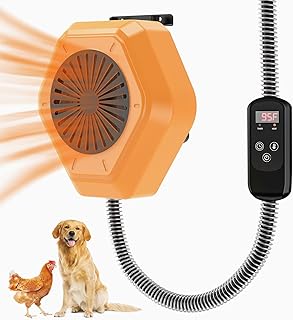
Best for: Small-to-medium outdoor kennels and pig housing where quick warmth is needed. This heater offers 800W high heat or 400W low heat, with a built-in fan to circulate warm air for even coverage. The 10-foot insulated bite-proof cord reduces chewing risks, a common concern in pig pens where cords can attract nibbling. The unit heats up quickly and covers about 350 cubic feet, making it suitable for compact barns or pens with limited space.
Why chosen: The dual heat settings provide flexibility for varying cold snaps, and the chew-resistant cord adds safety in environments with pigs that may gnaw on connections. The compact wall-mount design helps maximize floor space in busy barn layouts.
Limitation: Larger pig pens may require supplemental heating to maintain uniform warmth across the entire area, especially in windy or exposed locations.
Fanspex 600W Hanging Heater for Poultry and Livestock

Best for: Large poultry houses, chicken coops, and other livestock spaces where bulk heating is needed. The 600W setting provides strong warmth, while the 300W option helps conserve energy when heat demand is lower. Its carbon fiber element delivers long life with a high MTBF, and a metal mesh cage guards animals from direct contact with hot surfaces.
Why chosen: The dual-mode operation supports both moderate and peak cold periods. A durable metal body and protective cage make it a practical choice for busy farm environments where safety and longevity are important.
Limitation: Because heat is distributed via a canopy-like surface, ensure adequate mounting height and clearance to avoid direct exposure to animals or nesting areas.
600W Large Hanging Heater for Cattle, Horses, and Donkeys

Best for: Larger animal shelters or barns where a robust heating solution is required. Offering two heat levels, 600W and 300W, this heater uses a carbon fiber heating tube and an aluminum alloy cover for durability. A metal frame mesh cage adds safety, and the hanging design simplifies installation in high spaces.
Why chosen: The robust construction and wide heat range suit bigger enclosures used by cattle, horses, or donkeys, delivering dependable warmth quickly. It’s better for expansive barns than smaller models.
Limitation: Installation height and location should keep heat from directly hitting sensitive equipment or feeding areas to avoid overheating or moisture exposure.
Futurebatt Dog House Heater with 300W/600W Options

Best for: Indoor/outdoor pet houses that benefit from smart controls and enhanced safety. This unit provides dual power levels and a digital display, with remote online control, helping avoid accidental pet tampering. The steel-spring bite guard on the power cord reduces chewing risks, and automatic safety shutoffs protect animals in extreme heat. Wall-mounted installation minimizes tipping hazards.
Why chosen: Remote operation and a compact footprint make it a versatile solution for pig pens and livestock shelters where space is at a premium. The safety features and easy cleaning considerations are valuable in busy farm settings.
Limitation: Remote control requires connectivity; ensure reliable access in remote barn locations.
Cozy Coop Chicken Coop Heater, 150 Watts

Best for: Chicken coops, small animal shelters, or tight spaces where steady, gentle heat is needed. The Cozy Coop provides radiant warmth with lower energy use, reducing heat stress risks while keeping the space comfortable in freezing temperatures. ETL-listed and designed for zero-clearance operation, it minimizes safety concerns in outdoor environments.
Why chosen: Energy efficiency and safer operation make this a practical option for smaller poultry spaces and lighter heat requirements. Its simple design is easy to install and maintain in coops or sheds used by pigs as shelter when temperatures drop.
Limitation: With only 150W, this unit is best for small areas or supplemental heating rather than large pig pens or expansive barns.
Buying Guide: Key Considerations For Barn Heaters
- Space and heat requirements: Assess the total volume of the space you need to heat. Larger spaces demand higher wattage or multiple units to ensure even warmth.
- Heat distribution: Look for models with built-in fans or air circulating design to minimize cold spots and ensure uniform warmth across the shelter.
- Durability and safety: Choose heaters rated for outdoor or livestock environments, with sturdy enclosures and safety features such as tip-over protection and bite-proof or reinforced cords where pigs may gnaw.
- Installation: Wall-mount, hanging, or free-standing options affect placement flexibility. Ensure proper clearance from water, feed, and bedding to reduce fire risk.
- Energy efficiency: Dual heat settings and energy-saving modes help manage operating costs over the winter season.
- Maintenance: Consider ease of cleaning, protective cages, and removable covers to simplify routine upkeep in dusty or hair-prone barns.
- Safety standards: If available, choose units with ETL or equivalent safety listings for electrical reliability in farm environments.
FAQ
- What size heater do I need for a pig pen?
Estimate the space in cubic feet and select a heater that provides sufficient BTUs for that volume. For smaller pens, 300–600W units may suffice; larger barns may require 600–800W or multiple units.
- Can these heaters be used indoors and outdoors?
Many models are designed for both indoor and outdoor use with weather-resistant housings. Always follow manufacturer instructions for outdoor exposure and installation.
- Are chew-proof cords necessary for pig environments?
Yes. Pigs may chew cords. Look for insulated bite-proof cords or animals-safe cord guards to prevent chewing and electrical hazards.
- Is automatic temperature control important?
Automatic safety features and temperature controls help prevent overheating and ensure consistent warmth as outdoor temperatures change.
- Should I use a single heater or multiple units?
For larger spaces, multiple units or a larger single unit with long-range heat distribution is often more effective to reduce cold spots and improve energy efficiency.
- What maintenance is required?
Regularly inspect cords and guards, clean dust from vents, and ensure fans and cages are free of obstructions to maintain performance and safety.