
If you’re shopping for an 80,000 BTU torpedo heater, you want reliable heat for large spaces like garages, workshops, and job sites. This guide highlights five dependable options, explains who each is best for, and notes practical limitations. Use the quick comparison table below to decide which model fits your needs, fuel preferences, and operating environment.
| Product | BTU Range | Fuel Type | Best For |
|---|---|---|---|
| Habitio 125,000 BTU | 75,000 – 125,000 | Propane | Large garages and construction sites needing rapid warm-up |
| Mr. Heater 60,000 BTU Quiet Burner | 30,000 – 60,000 | Propane | Smaller open areas where quiet operation matters |
| Mr. Heater 80,000 BTU Kerosene | 80,000 | Kerosene | Open workshops requiring steady heat and fuel flexibility |
| CRAFTSMAN 80,000 BTU | 80,000 | Kerosene/Diesel | Durable performance across varied fuels and large spaces |
| Reddy Heater 80,000 BTU Kerosene | 80,000 | Kerosene | Rugged, high-heat environments with multi-fuel flexibility |
Habitio 125,000 BTU Forced Air Propane Heater
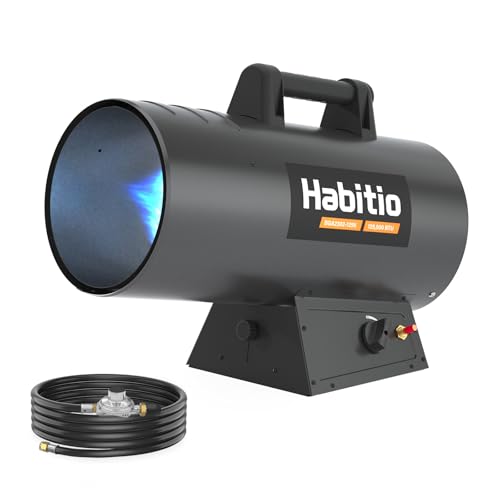
Heating capacity: 75,000 to 125,000 BTU/h; coverage up to 3,125 sq ft. This model is best for large spaces where rapid warmth is necessary. It includes a 10 ft hose with regulator for connection to a propane tank and CSA certification. Best for big job sites and garages that require quick, robust heat delivery. A potential limitation is the required gas connection; ensure you have a compatible propane supply on-site.
Who it’s best for: contractors and workshop operators needing strong, fast heating with CSA safety features. Why chosen: high-capacity range accommodates fluctuating space sizes; the included hose simplifies setup.
Caution: Ensure proper venting and avoid enclosed, poorly ventilated areas when operating propane heaters.
Mr. Heater 60,000 BTU Quiet Burner Technology

BTU range and features: 60,000 BTU with QBT technology for quieter operation; adjustable output from 30,000 to 60,000 BTU and up to 14 hours of run time on a 20 lb tank at low settings. This model is ideal where noise reduction matters, such as indoor warehouses or noise-sensitive environments. Caution: performance is best in moderately sized spaces; extremely large areas may require more BTU output.
Who it’s best for: users prioritizing quiet operation in medium-sized spaces. Why chosen: notable reduction in noise while maintaining solid heat output; good for general workspace heating.
Mr. Heater 80,000 BTU Kerosene Heater

Fuel: Kerosene with built-in thermostat and LED diagnostics. Heats up to about 2,000 sq ft; features high-temperature safety shut-off and a flame sensor. Best for open, well-ventilated spaces where kerosene is readily available. Limitation: kerosene odor and fuel handling considerations in densely occupied areas.
Who it’s best for: larger open spaces where sustained, consistent heat is needed and kerosene fuel is preferred. Why chosen: reliable 80,000 BTU output with safety features for persistent operation.
CRAFTSMAN 80,000 BTU Forced Air Heater

BTU and fuels: 80,000 BTU/hr; compatible with kerosene, diesel #1 & #2, fuel oil 1 & 2, Jet-A, and JP-8 without conversion. Includes digital LED thermostat control. Best for users who want flexible fuel options in larger spaces and easy thermostat control. Data note: actual on-site performance depends on fuel quality and venting conditions.
Who it’s best for: operators who want multi-fuel flexibility and straightforward digital control. Why chosen: broad fuel compatibility reduces the need for fuel-specific equipment, while maintaining strong heating capacity.
Caution: always follow fuel safety guidelines and ensure proper ventilation when running kerosene or diesel heaters indoors.
Reddy Heater 80,000 BTU Kerosene

Capability and fuels: 80,000 BTU heats up to 2,000 sq ft; supports multi-fuel use including kerosene, diesel, JP8, and jet fuel. High-performance motor with a large heating area for rapid, efficient warming. Best for rugged job sites where fuel flexibility and robust heat output are required. Limitation: multi-fuel operation can require careful fuel type management to avoid cross-contamination.
Who it’s best for: professionals needing high heat with broad fuel options. Why chosen: strong heating footprint and flexible fuel compatibility for varied site conditions.
Caution: follow fuel handling guidelines to minimize odors and emissions in enclosed spaces.
Buying Guide: Key Considerations For Selecting An 80,000 BTU Torpedo Heater
- Fuel type and availability: Propane offers clean burn and easy refueling, but kerosene/diesel can be more economical in some regions. Consider fuel storage and on-site logistics.
- Space size and heat needs: Calculate the area (sq ft or cu ft) to match BTU output. Higher BTU models heat larger spaces faster but require adequate ventilation.
- Ventilation and safety: Torpedo heaters should be used in well-ventilated areas to avoid carbon monoxide buildup. Look for units with automatic shut-off safety features and tip-over protection.
- Fuel efficiency and runtime: Check expected runtime on a standard tank and whether the unit supports low- and high-power modes for longer operation.
- Control and usability: Digital thermostats, adjustable flame settings, and easy-start ignition improve daily use and accuracy in maintaining temperatures.
- Durability and CSA/UL certification: CSA-certified models meet safety standards; choose rugged builds for jobsite use.
Frequently Asked Questions
- What space size should I heat with a 80,000 BTU heater? – It depends on insulation, ceiling height, and airflow. Expect coverage from roughly 1,500 to 3,000+ sq ft in well-insulated spaces, with larger areas requiring more BTU or supplemental heating.
- Are kerosene and diesel heaters safe indoors? – They can be safe when used with proper ventilation and following manufacturer safety guidelines. Always ensure adequate airflow and carbon monoxide awareness.
- What fuel type is easiest to manage on a job site? – Propane is often easiest for quick setup and clean burning, while kerosene can offer a longer runtime in some conditions. Choose based on fuel availability and site logistics.
- How important is a thermostat on a torpedo heater? – A thermostat helps maintain a consistent temperature and saves fuel by turning off when the set temperature is reached.
- Do these heaters require professional installation? – Most portable torpedo heaters are designed for simple setup, but always follow the user manual and safety guidelines for venting and fuel handling.
- Can I use these heaters in an enclosed garage? – Only if the space is well-ventilated and you follow safety guidelines. If in doubt, consult the manufacturer’s instructions and consider alternative heating methods for enclosed areas.