
When you need reliable warmth for large spaces such as workshops, barns, or job sites, a 75,000 BTU kerosene heater is a practical choice. This guide highlights five strong options, focusing on reliability, fuel flexibility, and ease of use. The top picks are best for contractors, equipment-intensive environments, and home remodelers who require portable heat with straightforward operation. Below is a quick summary table of the featured models to help compare core specs at a glance.
| Product | Fuel Type | Heating Area* | Portability | |
|---|---|---|---|---|
| DEWALT 80,000 BTU/h | Kerosene | Up to large spaces | Portable | CSA certified |
| LB White Tradesman 75,000 BTU | Kerosene / #1 diesel / #1 fuel oil | Industrial spaces | Portable | Dual-fuel capability |
| Master MH-75T-KFA | Kerosene | 1875 sq ft | Portable | Thermostat included |
| VEVOR 45,000 BTU | Kerosene / Diesel | Medium to large | Portable | Relatively compact for size |
| CRAFTSMAN 80,000 BTU | Kerosene / Diesel / Oil | Up to 2,000 sq ft | Portable | Digital thermostat control |
*Approximate heating area varies with insulation, ambient temperature, and ceiling height. Always follow manufacturer guidance for best results.
DEWALT 80,000 BTU/H Kerosene Heater
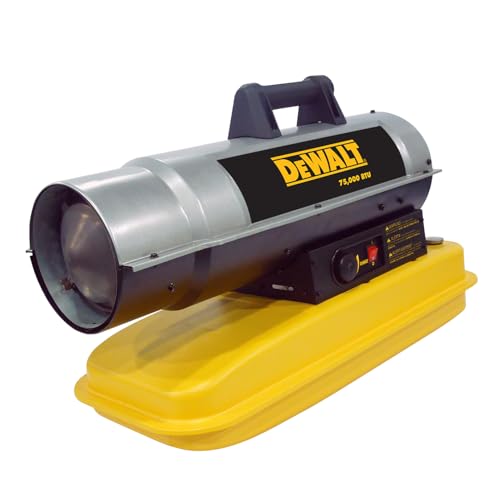
The DEWALT unit delivers about 80,000 BTU per hour and is designed for spaces like workshops, barns, and job sites. It uses kerosene and is CSA certified, offering robust performance in demanding environments. This model is best for contractors and shop owners who value reliable heat on large work floors and need a portable solution as a primary heat source.
Best for: contractors and shop owners who need high output with trusted construction-grade hardware. Why chosen: strong heating capacity, portable design, and CSA certification provide confidence in routine use. Caution: ensure ventilation to manage combustion byproducts in enclosed spaces.
Tradesman 75,000 BTU Utility Heater

From L.B. White, this model supports multi-fuel compatibility, including kerosene, No. 1 diesel, No. 1 fuel oil, and more. It also includes standard pumps, gauges, and a thermostatic control for steadier heat. Best for job sites and garages where fuel options may vary or where a versatile heat source is beneficial.
Best for: job sites and maintenance shops needing fuel flexibility. Why chosen: broad fuel compatibility and built-in controls simplify operation on fluctuating work sites. Caution: some fuels may require more frequent maintenance; verify fuel type before use.
Master MH-75T-KFA Kerosene Heater

The Master unit provides 75,000 BTU with a thermostat for a controlled environment up to about 1875 sq ft. CSA certified and designed for durability, it suits construction zones, barns, and larger living spaces undergoing remodeling. This option excels where stable room temperature management is desired.
Best for: spaces where a thermostat improves comfort and energy use. Why chosen: integrated thermostat helps maintain consistent warmth; heat output aligns with mid-sized commercial spaces. Caution: ensure the fuel source is kerosene-compatible and follow ventilation guidelines.
VEVOR 45,000 BTU Forced Air Heater

This VEVOR model offers rapid whole-room heating in about 15 minutes and is suitable for spaces up to 260㎡ (roughly 2,800 sq ft). It uses a 5 gallon fuel tank and features a simple start switch for easier ignition, making it a practical choice for mid-to-large workshops and garages.
Best for: quick warm-up in sizable workshops or garages without complex setup. Why chosen: fast heat onset and larger fuel tank support longer runs between fills. Caution: check local ventilation requirements when operating in enclosed structures.
VEVOR 175,000 BTU Dual-Fuel Heater

With a massive 175,000 BTU output, this torpedo heater is designed for large-scale workspaces, barns, and industrial settings. It supports both kerosene and diesel fuels (one type at a time) and includes a thermostat with a temperature display. This model is best for spaces where maximum heat output is required and where fuel type can be managed safely.
Best for: expansive spaces needing sustained, powerful heat. Why chosen: unparalleled BTU output for its class and dual-fuel compatibility provide versatile performance. Caution: operating at this scale requires careful ventilation planning and fuel management.
CRAFTSMAN 80,000 BTU Heater

RAISING heat up to 2,000 sq ft, this Craftsman model supports kerosene, diesel, fuel oil, Jet-A, and JP-8 without requiring conversion. It features a digital LED thermostat for precise control. This is a solid choice for larger residential spaces or light industrial areas where digital control matters.
Best for: spaces needing flexible fuel options and precise temperature control. Why chosen: broad fuel compatibility and digital thermostat enhance manageability in variable environments. Caution: ensure proper ventilation and fuel storage practices to minimize odors and smoke.
Buying Guide
- Fuel flexibility vs. single-fuel performance: Multi-fuel units offer flexibility on fuel sourcing but may require more upkeep. Single-fuel heaters tend to be straightforward and predictable.
- Room size and heat distribution: Match BTU output to your space. Too much heat can waste fuel; too little reduces comfort. Consider ceiling height and insulation.
- Ventilation and safety: Kerosene heaters burn fuel and produce combustion byproducts. Ensure proper ventilation and follow clearance recommendations to reduce fire risk and exposure.
- Controls and thermostat features: Thermostats help maintain steady temperatures and can save fuel. Digital controls offer precision; mechanical knobs are more rugged in harsh environments.
- Portability and setup: If you need to move heat between spaces, prioritize lightweight, compact models with simple startup procedures.
- Durability and certification: Look for CSA or equivalent certifications in commercial settings. Rugged builds and brass fuel fittings can improve longevity in demanding conditions.
Frequently Asked Questions
What is a typical heating area for a 75,000 BTU kerosene heater?
Most 75,000 BTU units can comfortably heat large garages or workshops, but actual performance depends on insulation and layout.
Can I use any kerosene in these heaters?
Most models specify kerosene No. 1 as a preferred fuel. Some units support #1 diesel or fuel oil; always follow the manufacturer’s fuel guidance.
Is a thermostat necessary for a space heater?
A thermostat helps maintain a stable temperature and can improve fuel efficiency, especially in variable spaces.
Are these heaters safe for indoor use?
Yes, when used with proper ventilation, clearances, and adherence to safety guidelines. Always read the user manual for specific indoor-use instructions.
How do I choose between multi-fuel and single-fuel models?
Choose multi-fuel if you need flexibility due to fuel availability. If you have a reliable kerosene supply, a single-fuel model can be simpler and more economical.
What maintenance is required for kerosene heaters?
Regularly check fuel lines, fittings, and filters. Keep the unit clean and replace worn parts per the manufacturer’s schedule to prevent performance drops.