
Searching for a 50 gallon water heater with a thermostatic mixing valve? This guide highlights options that mix hot water with cold to deliver tempered water at a safe, comfortable temperature. It’s ideal for households seeking steady, scald-free showers and baths while maintaining efficient water usage. The top picks below are best for families with moderate to high hot-water demand and for installers prioritizing easy, push-to-connect installation. A quick buyer table follows to compare core specs at a glance.
| Product | Best For | Key Benefit |
|---|---|---|
| Cash Acme 24644 | Homes with varied heating sources | Push-to-connect mixing valve; safe output to 120°F (can go to 140°F) |
| Cash Acme 24643 | Shower-focused households | Temperature gauge; easy hook-up with PEX/CPVC/Copper |
| Charman Manufacturing 3/4 Inch | New installs with PEX/CPVC | Push-to-connect; tempered water at 95–120°F |
| Rinnai REHP50 Electric Heat Pump | Energy-efficient large households | Energy Star; high first-hour delivery; 50 gallon capacity |
| GE 18–30 Gallon Alternatives | Smaller setups or limited spaces | Versatile plug-and-play with adjustable thermostats |
Cash Acme 24644 Tank Booster With Mixing Valve
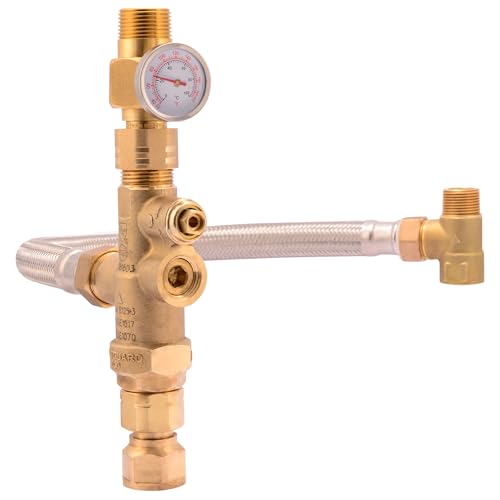
The Cash Acme 24644 is a tank booster with a thermostatic mixing valve and a temperature gauge. It blends hot water with cold to deliver tempered water at a controlled temperature, suitable for various heating systems including gas, electric, and tankless heaters. The unit supports PEX, PE-RT, CPVC, and copper piping and emphasizes push-to-connect installation for fast setup without soldering or crimping. Best for homes needing reliable scald protection and straightforward installation. Limitation: output temperature range is fixed by the device and may require manual adjustment if your supply temperature changes significantly.
Cash Acme 24643 Tank Booster With Gauge
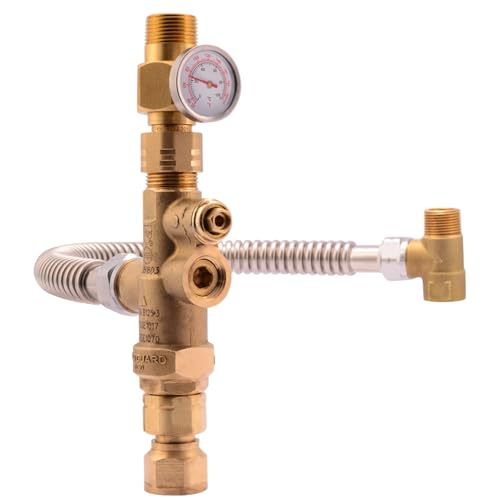
The Cash Acme 24643 combines a thermostatic mixing valve with a temperature gauge and corrugated hose. It’s designed for easy installation using PEX, PE-RT, CPVC, or copper piping. It helps prevent scalding by maintaining output around 120°F (49°C), with a possible increase to 140°F (60°C) to deter bacterial growth. Best for families seeking a precise, monitored output. Caution: ensure the gauge is correctly calibrated after installation to reflect real water temperature.
Charman Manufacturing 3/4 Inch Mixing Valve

The Charman Manufacturing valve provides automatic temperature control to deliver tempered water for safe showers, baths, and washing. It supports gas, power vent, electric, and tankless heaters and uses push-to-connect installation with PEX, PE-RT, CPVC, and copper pipes. Best for installations where straightforward, tool-free setup matters. Limitation: the listed temperature target is adjustable, but gradual changes may be needed for very cold incoming water to reach the desired output.
Rinnai REHP50 Electric Heat Pump (50 Gallon)

The Rinnai REHP50 is a 50-gallon electric heat pump water heater designed for energy efficiency and high first-hour delivery. It carries Energy Star certification and a high Uniform Energy Factor (UEF) for reduced energy costs. It’s best for households with high hot-water demand seeking energy savings. Limitation: as a heat-pump model, performance depends on ambient air temperatures; in cooler spaces, heating efficiency can decrease.
GE Appliances 30 Gallon Electric Heater (Compact Option)

The GE 30 Gallon Electric Heater offers adjustable thermostat and compact design for spaces where a traditional 50-gallon model won’t fit. It provides a reliable hot water supply for small households or apartments. Best for budget-conscious setups or limited spaces. Caution: not a direct 50-gallon solution, but useful when combined with tempering devices for controlled output in smaller systems.
Buying Guide: Key Considerations For A Mixing-Valve System
What capacity do you actually need?
For households with 3–4 people, a 50-gallon tank paired with a mixing valve improves safety and comfort. If your space or existing plumbing limits you to 30 gallons, a smaller unit with a high first-hour rating plus a reliable mixing valve can still meet daily needs.
How does a thermostatic mixing valve work?
A thermostatic mixing valve blends hot and cold water to deliver a consistent outlet temperature, typically around 120°F (49°C). This reduces scald risk and helps maintain stable shower temperatures even when cold water pressure fluctuates.
Is installation easy?
Push-to-connect valves simplify connections to PEX, CPVC, PE-RT, or copper piping. Avoid soldering or crimping where possible. Check local codes for backflow prevention and venting requirements when integrating with a home’s water system.
What about energy efficiency?
Energy-efficient models, especially heat-pump units, reduce operating costs by extracting ambient heat. If space temperature is a factor, consider the environment to ensure consistent performance and avoid reduced efficiency in cool areas.
What cautions should you consider?
Always verify temperature limits, gauge calibration, and compatibility with your heater type (gas, electric, tankless). Some devices have adjustable max temperatures; ensure safe settings for children and elderly users.
FAQ
- Do I need a 50-gallon tank to use a mixing valve? Not necessarily. A 50-gallon tank plus a mixing valve is common for households with higher hot-water demand, but smaller tanks with effective mixing can meet lower demand as well.
- What is the typical safe water temperature? Commonly 120°F (49°C); some users adjust to 130–140°F (54–60°C) for bacterial control or personal preference, but be cautious of scald risks.
- Can I install a mixing valve myself? Push-to-connect valves simplify installation, but always follow manufacturer instructions and local codes. If unsure, hire a licensed plumber.
- Will a mixing valve save energy? It can reduce energy use by preventing overheating water at the outlet and by facilitating lower heater temperatures while maintaining comfort.
- Which option works best for apartments? Compact electric models or 30–50 gallon options with mixing valves provide flexibility in tight spaces and safer outlet temperatures.
- Are there safety considerations with gas vs electric? Both can use mixing valves, but verify compatibility with your heater type and ensure proper venting and gas line sizing for gas units.