
Answering the question “can I replace a 40-gallon tank with a tankless system?” yes, with proper planning. This guide highlights five electric and gas tankless options suited for households moving from a traditional 40-gallon tank. Electric models excel in spaces with ample electrical capacity, while gas units suit larger homes with steady hot water demand. Each product is chosen for reliability, performance potential, and suitability for multi-point hot water needs. Use this comparison to identify which system aligns with your home’s layout, power availability, and peak usage patterns.
Summary at a glance:
| Product | Best For | Key Considerations |
|---|---|---|
| NOVIEEX 18kW Electric | Small-to-medium homes, apartments | Requires 240V, high current, compact size |
| Rheem RTG Series 8.4 GPM | Whole-house with outdoor install | Gas, outdoor, high flow |
| APUS 27kW Electric | Large homes with high simultaneous demand | High-flow, digital control |
| WINTEMP 36kW Electric | Homes with strong electrical service | High power, WiFi capable |
| Stiebel Eltron Tempra 36 | Quiet, compact indoor | Energy-efficient modulation |
NovieEx 18kW Electric Tankless Water Heater

This compact electric unit delivers up to 4.9 GPM at 240V, making it well-suited for 2–3 simultaneous outlets in smaller homes or apartments. It is best for buyers who have available 40A circuit capacities per line and can accommodate the required wiring and electrical panel space. The unit’s slim wall-mount design saves space in utility closets or garages. A potential limitation is the need for professional electrical work to meet the 75A maximum current and wiring requirements.
Rheem RTG Series 8.4 GPM Gas Tankless (Outdoor)

Best for whole-house use with outdoor installation, this gas unit delivers up to 8.4 GPM at a 35°F rise and 180,000 BTU/hr. It’s ideal for homes with multiple bathrooms and higher hot-water demands, reducing the risk of temperature drops during peak use. The outdoor placement eliminates indoor venting space constraints. A caveat is that outdoor installation may require weatherproofing and professional venting considerations; it is not a fit for indoor-only setups.
APUS 27kW Electric Tankless, 6.5 GPM
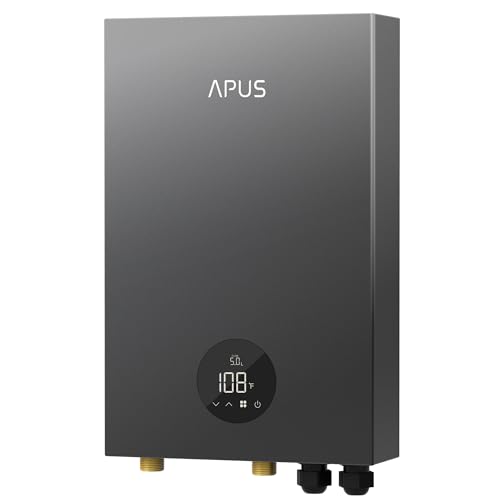
This high-flow electric model supports up to 6.5 GPM, suitable for larger homes with multiple simultaneous hot-water needs. Features include a digital control with 1°F precision, an automatic memory function, and self-modulating technology to minimize energy waste. Choose this if you need tight temperature control and strong performance across several fixtures. Monitor electrical demands since 27kW requires substantial electrical capacity; lack of adequate service can limit performance.
WINTEMP 36kW Electric Tankless, WiFi
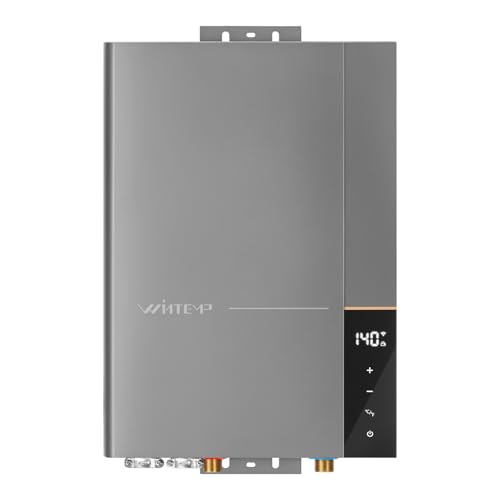
For households with robust electrical service, this 36kW unit offers high flow and smart features, including WiFi connectivity. It supports heavy-duty, multi-point usage and is designed to maintain stable temperature under varying loads. A caution: the installation requires a substantial electrical service (potentially 300A home service) and multiple 40A breakers, so confirm service capacity and panel space before purchase.
Stiebel Eltron Tempra 36 Trend

Designed for indoor use with quiet operation and a compact footprint, the Stiebel Eltron Tempra 36 Trend emphasizes continuous flow with auto-modulation to reduce energy use. It’s best for homes prioritizing a small form factor and energy efficiency. Best for users who want straightforward, reliable control without outdoor exposure. The main limitation is that high-end models require careful electrical planning and may necessitate a dedicated circuit strategy to reach optimal performance.
MIZUDO Gas Tankless, 199,000 BTU Indoor

With high heating input (199,000 BTU) and 10.3 GPM capacity, this unit is built for households needing multiple simultaneous hot-water outlets. It features precise ±1°F temperature control and a wide adjustable range. It can handle heavy usage in busy kitchens and baths. A potential limitation is that gas units require proper venting and professional installation to ensure safe operation.
APUS Propane Tankless With Booster

This propane model delivers rapid hot water with a 140,000 BTU burner and a booster pump that can raise flow to up to 6.8 GPM. It’s ideal for households needing quick response and multiple fixtures without electric service constraints. Best for off-grid or areas where gas is readily available. A caveat is the need for a stable gas supply and venting considerations for indoor installation.
Buying Guide: How To Choose The Right Tankless System After 40 Gallon
What type of energy source fits your home?
Electric tankless units are easier to install indoors with adequate power. Gas tankless models deliver higher maximum flow, which is beneficial for larger homes or busy households. If you have a limited electrical service, gas may be the practical option. If you have an existing gas line and venting is feasible, a gas tankless can better handle simultaneous uses.
How much hot water do you actually need?
Estimate simultaneous usage across showers, sinks, and appliances. Units around 4–7 GPM work well for mid-sized homes with 2–3 simultaneous uses. For larger homes with multiple bathrooms, consider 8–10 GPM or more and verify electrical or gas capacity accordingly.
What are space and installation considerations?
Indoor, wall-mountable units save space, while some high-capacity models require outdoor installation or larger indoor clearances. Electrical requirements matter: ensure service capacity, circuit breakers, and wire gauges meet or exceed the manufacturer’s spec to avoid nuisance tripping or safety issues.
What about controls and efficiency?
Look for self-modulating or digital temperature control to maintain stable water temperatures. Models with memory functions or WiFi integration offer convenience and easier diagnostics. Efficiency influences energy bills; high-efficiency units reduce standby losses and reheat needs.
Safety and professional installation
Tankless systems—electric or gas—often require licensed installers for wiring, gas lines, venting, and permit compliance. Verify warranty eligibility based on proper installation and adherence to local codes.
Frequently Asked Questions
- Can I replace a 40-gallon tank with a tankless unit? Yes, if the home has adequate electrical capacity or gas supply and proper venting/installation space. Assess peak demand to choose the right GPM rating.
- Which is better for apartments: electric or gas tankless? Electric is often easier to install where venting is restricted and electrical service is available. Gas may provide higher flow for multiple outlets but requires venting and gas line access.
- Do tankless heaters require a lot of electrical work? Electric tankless heaters may require dedicated circuits and panels capable of handling high amperage. Plan electrical upgrades if needed before installation.
- Is WiFi control a necessary feature? Not essential, but it can simplify temperature management and monitoring. It does not affect core heating performance.
- What maintenance is required? Tankless systems require periodic flushing to remove mineral buildup, especially in hard water areas. Follow manufacturer maintenance guidelines for longevity.
- How do I know the right GPM rating? Estimate the number of fixtures used simultaneously and the incoming water temperature. A higher GPM rating supports more simultaneous uses without temperature drops.