
Answering the question, these 4″ gas valves cover a range of uses from shutoff and check functions to full-port ball valve performance. This guide helps buyers pick valves by application: gate valves for in-line flow control, check valves to prevent backflow, and ball valves for quick on/off operation. The top picks below are chosen for durability, compatibility with gas and hydrocarbon systems, and ease of installation. The buyer most suited to these products includes professional installers, maintenance technicians, and do-it-yourselfers working on gas lines, fuel, or industrial piping.
Summary table of selected products:
- 4″ NPT Brass Gate Valve, Heavy Duty — best for durable shutoff in water, oil, gas, and HVAC systems.
- 4″ NPT Horizontal Check Valve (Brass) — best for one-way flow prevention in pipelines.
- 4″ NPT Brass Vertical Check Valve — best for vertical installations needing backflow protection.
- 4″ NPT Horizontal Check Valve (Stainless Steel) — best for corrosion resistance in demanding environments.
- DAN SPEED 4″ NPT Female 316 Stainless Steel Full Port Ball Valve — best for low-torque operation and full-port flow.
4″ NPT Brass Gate Valve With Wheel Handle

Best for: Applications requiring reliable inline shutoff with a full bore flow. This brass gate valve is suited for water, oil, gas, and HVAC systems where a robust, long-lasting seal is important.
Why selected: The valve’s design emphasizes good sealing in both open and closed states, with a full bore that minimizes flow resistance. Brass construction provides explosion resistance and wear resistance, contributing to durability in challenging environments.
Limitations: The information available emphasizes sealing and construction; it does not specify a specific pressure rating beyond general durability. Ensure compatibility with your system’s pressure and pipe threading standards before installation.
4″ NPT Horizontal Brass Check Valve

Best for: Systems needing backflow prevention in horizontal piping runs dealing with oil, water, or gas.
Why selected: Brass construction with one-way flow control helps protect downstream equipment from reverse pressure. The valve emphasizes durability and smooth inner walls to reduce clogging and maintenance needs.
Limitations: For highly corrosive media or extreme temperatures, verify chemical compatibility and temperature ratings beyond the listed features.
4″ NPT Brass Vertical Check Valve

Best for: Vertical installs where backflow prevention is needed without sacrificing space or ease of maintenance.
Why selected: Vertical check valves offer a compact solution for in-line backflow control. Brass construction supports broad compatibility with gas, water, and light oil services while maintaining resilience against wear and pressure.
Limitations: Like the other brass valves, ensure proper seating and torque during installation to avoid leakage in high-pressure scenarios.
4″ NPT Horizontal Check Valve, Stainless Steel

Best for: Environments where corrosion resistance and higher temperature tolerance are required.
Why selected: Stainless steel construction provides enhanced durability in demanding conditions, supporting one-way flow control with robust protection against backflow for oil, water, gas, and air services.
Limitations: Stainless valves can be pricier and may require precise threading compatibility with piping systems; confirm material compatibility with your gas service before install.
DAN SPEED 4″ NPT Female 316 Stainless Steel Full Port Ball Valve

Best for: Quick on/off control with minimal pressure drop, suitable for gas lines and other media where a full-port ball valve is desirable.
Why selected: The full-port design and 316 stainless steel provide low torque operation and strong resistance to corrosion. Its female NPT ports support straightforward installation in appropriate gas or liquid lines.
Limitations: Full-port ball valves are excellent for flow but may require more space in tight installations and may not be as cost-effective for simple on/off tasks as smaller valves.
ClimaTek 7000AERB-4-S7C Gas Valve Replacement
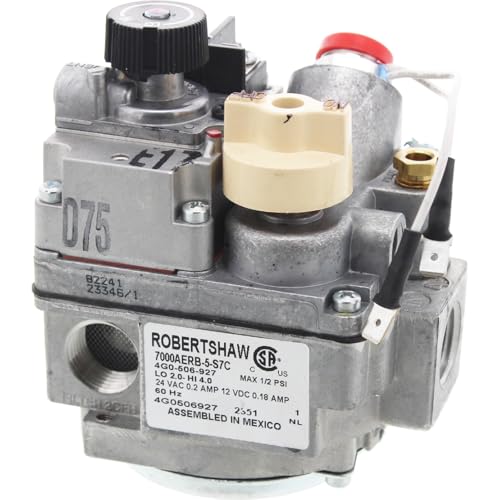
Best for: Upgrading or replacing older gas valve components in residential or commercial gas systems.
Why selected: This upgraded gas valve is designed as a direct replacement part for the indicated Robertshaw model, offering a modern alternative built to last. It is suited for technicians performing standard valve replacements in compatible gas lines.
Limitations: The listing mentions replacement compatibility; verify exact appliance or regulator compatibility before purchase to ensure proper fit and operation.
Buying Guide: Key Considerations for 4″ Gas Valves
- Valve type and function: Choose based on need—gate valves for inline shutoff, check valves to prevent backflow, or ball valves for fast, reliable on/off control. Consider whether you need horizontal, vertical, or different port configurations.
- Material compatibility: Brass provides good general resilience; stainless steel (esp. 316) offers superior corrosion resistance in harsh environments. Gas service often benefits from corrosion-resistant materials and compatible sealing compounds.
- Connection type and pressure: Ensure 4″ NPT threads match your piping and that the valve’s pressure rating suits your system. Full-port ball valves minimize pressure drop but require enough space for operation.
- Environment and media: For hydrocarbon or oil-containing systems, materials and seals should be compatible with the media and ambient temperatures to prevent leakage or failure.
- Installation and maintenance: Some valves allow easier disassembly for cleaning or seal replacement. Consider whether your project needs serviceable parts or sealed units.
- Regulatory and safety considerations: Gas valves must meet local codes and installation standards. Verify that chosen valves are appropriate for gas service and compliant with applicable regulations.
Frequently Asked Questions
- What is the difference between a gate valve and a ball valve for gas lines?
Gate valves offer tight shutoff with minimal leakage, but operate slowly. Ball valves provide quick on/off control with low torque and minimal flow restriction in a full-port design. - Are brass or stainless steel valves better for gas applications?
Brass is common and durable for many gas systems, while stainless steel (especially 316) offers enhanced corrosion resistance in harsher environments. Choose based on media and pressure. - Should I install valves horizontally or vertically?
Horizontal installations are common for inline flow control, while vertical valves can be used where space constraints or gravity-assisted flow is a factor. Check manufacturer guidance for each model. - What should I verify before buying a 4″ valve for a gas system?
Check thread type (NPT), pressure rating, material compatibility with the gas, and whether the valve is rated for gas service in your jurisdiction. - Do 4″ valves require special tools for installation?
Standard plumbing wrenches and torque guidelines from the manufacturer are typically sufficient. Some larger valves may need a torque wrench or pipe dope suitable for gas lines.