
If you’re shopping for a 24V DC heating element, you’re likely seeking compact, efficient, and safe options for immersion heating, water tanks, or custom heating projects. This guide highlights five reliable choices suited for battery, solar, and off-grid setups. Each product is described with who it’s best for, why it’s a good pick, and a practical note on limitations to help you compare quickly.
Product Comparison at a Glance
| Product | Voltage / Power Range | Best For | |
|---|---|---|---|
| DERNORD 24V 900W Stainless Steel Heating Element | 24V, 900W | High-power immersion heating for larger tanks or fast heat-ups | Requires compatible 24V power source |
| CNTOPHEAT 12V/24V/36V/48V Immersion Element | 12–48V (DN25) | Flexible voltage options for multi-source systems | Check thread compatibility for your tank |
| LSUHUI 12V/24V Immersion Cartridge Heater | 12V/24V | Compact, easy-to-install tube heater for smaller tanks | Limited power in 12V/24V versions may be slower heat |
| CYUUTRA 2pcs 24V DC Cartridge Heaters | 24V | High power per unit with modular approach | Install guidance needed for multiple units |
| Bestol 24V PTC Ceramic Thermostatic Elements | 24V | Energy-saving, safe heat with constant temp features | PTC behavior depends on ambient temperature |
DERNORD 24V 900W Stainless Steel Heating Element

This 24V DC heater is designed to connect with batteries, solar panels, hydro generators, and wind turbine dumps. It uses a 1″ NPSM flange that fits USA standard water tanks or your own heater tank. It is UL and cUL listed for safety compliance, making it suitable for off-grid or backup systems. Best for larger tanks or scenarios requiring quick heat-up times and robust construction. Potential limitation: ensure your power source can sustain 900W output without voltage drop.
CNTOPHEAT 12V/24V/36V/48V Heating Element Immersion
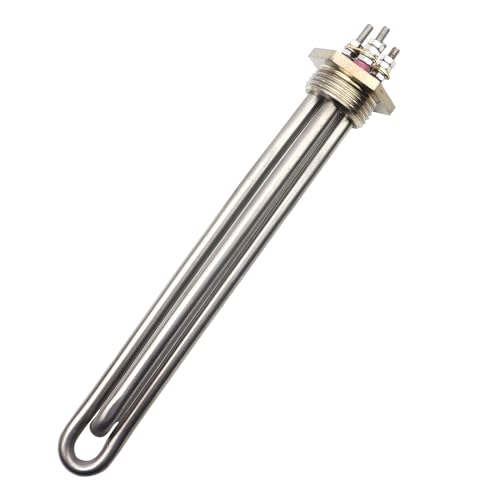
Material: 304 stainless steel. Voltage options span 12V to 48V with DN25/1″ BSP threads. This flexibility makes it compatible with various power setups and water tanks. Best for modular systems that may source power from different PV or battery configurations. Limitation: ensure correct voltage selection and threading for your specific installation to avoid leaks or poor performance.
12V/24V Immersion Cartridge Heating Element With Water Proof Cable

High-efficiency heating with rapid heat-up and energy-saving potential. The element is designed for straightforward installation and comes in multiple sizes to fit different equipment and systems. Best for compact tanks or projects where space is limited. Caution: check fitment and available clearance in the tank to avoid contact with tank walls or fittings that could limit performance.
2pcs 24v DC Cartridge Heaters

This pair of cylindrical stainless steel cartridge heaters offers high anti-corrosion performance and broad applicability across industries like plastics, automotive, or food processing. Best for projects needing higher total wattage by combining units. Limitation: multi-unit installation requires careful electrical and thermal management to prevent overheating or uneven heat distribution.
Bestol 12V 24V 220V 100W 200W 300W Insulated PTC Ceramic Air Heater

PTC heating elements provide constant temperature with no open flame and energy-saving features. This model supports multiple voltages, including 24V, and offers gradual power reduction as ambient temperature rises. Best for air heating and systems needing stable, automatic temperature control. Caution: suited for air heating; not a direct water heater, so use in appropriate applications.
Bestol 2pcs PTC Heating Element for 24V Systems

Two PTC heating elements provide reliable warmth with constant surface temperature. The design supports easy integration into 24V circuits for energy-efficient heating. Best for projects prioritizing safety and stable heat output. Limitation: PTC behavior is temperature-dependent and may require appropriate control electronics to maximize efficiency.
Buying Guide
What to consider when choosing a 24V DC heating element
Power needs: Determine your required heat-up rate and tank volume. Higher wattage yields faster heating but demands stronger power sources.
Voltage compatibility: Match the element’s voltage range with your battery bank, solar array, or generator. Some products offer multiple voltage options for flexibility.
Connection and thread size: Confirm the thread (DN25/1″ BSP etc.) and flange or tank compatibility to ensure a leak-free install.
Material and corrosion resistance: Stainless steel elements perform well in water tanks and hot environments, while ceramic or PTC options offer safety and energy efficiency advantages.
Safety certifications: UL/cUL listings and proper insulation reduce risk in electrical installations. Consider elements with built-in safety features or compatible control gear.
Installation ease: Some units are designed as cartridges or modules for quick upgrades, while others require more complex mounting and wiring. Plan for space and access inside the tank.
How to compare 24V DC elements
- Best for high power: Look for 900W+ per unit and check tank size compatibility.
- Best for compact setups: Choose smaller wattage with a tight form factor and straightforward installation.
- Best for multi-source systems: Favor elements with 12V–48V support and flexible thread options.
Common installation considerations
- Positioning away from direct water spray to minimize corrosion and wear.
- Use appropriate fittings and gaskets to prevent leaks at tank interfaces.
- Incorporate a temperature controller or thermostat when using PTC or high-power elements for stable performance.
FAQ
- Q: Do 24V DC heating elements require a special power source? A: They need a 24V DC supply from batteries, solar panels, or compatible generators; ensure continuous current for steady operation.
- Q: Can I mix different 24V elements in the same system? A: Mixing is possible if the power budget is managed and wiring is correctly rated for the total load.
- Q: Are cylindrical cartridge heaters easy to install? A: Yes, many are designed for straightforward insertion and mounting in standard tanks, with proper thread compatibility.
- Q: Is UL/cUL listing important? A: Yes, it helps confirm safety compliance for electrical components used in water or heated environments.
- Q: What maintenance is required? A: Inspect for corrosion, leaks, and insulation integrity; replace elements showing wear or degraded performance.
- Q: Which option is best for off-grid use? A: High-wattage, robust stainless steel elements with UL/cUL safety listings and compatibility with battery or solar power are ideal.