
Looking for a reliable single-pole 22A thermostat to control baseboard or wall-mounted heaters? This guide highlights solid options for residential and light commercial use. Best for DIY installers replacing legacy line-voltage thermostats, these models offer straightforward two-wire hookups, simple dial controls, and compatibility with common voltages (120V, 208V, 240V).
Summary at a glance:
| Product | Best For | Key Benefit |
|---|---|---|
| Homeowners replacing old thermostats | Wide voltage compatibility; easy two-wire install | |
| Residential and light commercial | Versatile with many heater types; precise dial | |
| Cadet Cadet F series users | Built-in interior install saves wall space | |
| Cadet Com-Pak wall heaters | Integrated control inside heater | |
| Durable, all-around use | Durable steel housing; heating/cooling control |
Cadet Single Pole Line Voltage Thermostat for Baseboard & Wall Heaters
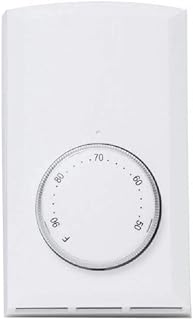
Best for: Homeowners replacing an aging line-voltage thermostat. This Cadet model supports 120, 208, and 240-volt electric heaters and handles up to 5,280 watts at 240V or 2,640 watts at 120V. It uses a simple two-wire hookup with color-coded wires for a fast swap-in installation. The dial control provides quick, intuitive adjustments to maintain a steady comfort level. The unit is a straightforward, one-turn dial that operates a responsive bimetal sensor to cycle the heater and hold steady temperatures.
Caution: As a single-pole design, it does not offer a full off switch if you need complete power shutdown in some installations.
Stelpro Line Voltage Wall Thermostat – Single Pole 22A – SWT1F – White

Best for: Residential and commercial spaces needing broad compatibility with various heaters. This model supports a wide range of applications, including baseboards, wall fan heaters, and commercial fan-forced heaters. It uses a simple mechanical dial for precise temperature control and is designed for quick two-wire installation. The device is valued for straightforward operation in spaces where a reliable analog setting is preferred.
Caution: As a single-pole unit, it does not provide a true off switch in all configurations; plan power shutoff strategies accordingly.
Feekoon Built in Thermostat Compatible with Cadet, Single Pole, 1 Pack

Best for: Cadet F-series baseboard installations seeking an integrated interior thermostat. This built-in option saves external wall space by fitting inside the heater housing and supports dual voltages (240/208V and 120V). It is designed for straightforward wiring with a screwdriver and includes detailed installation guidance. The adjustable range, manual control, and compatibility with Cadet systems help ensure consistent heating performance.
Caution: This is a non-universal part; confirm compatibility with your Cadet model and internal space requirements before purchasing.
Cadet Com-Pak Single Pole Built-in Thermostat Kit for Wall Heaters, White
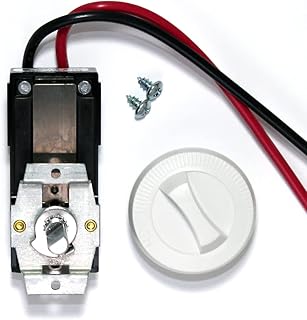
Best for: Cadet Com-Pak wall heater users who want built-in control. This kit installs inside the heater (CS, CT, CM series) and uses a two-wire connection, eliminating the need to run a thermostat at a separate wall location. The adjustable dial ranges from 40 to 85 degrees Fahrenheit, offering simple, on-board temperature management. Note that single-pole operation provides limited shutoff capability compared with double-pole systems.
Caution: As an internal mount, confirm space and compatibility with your specific Com-Pak model before purchase.
Tempro TP500 Line Voltage Thermostat | Heating & Cooling, Single Stage
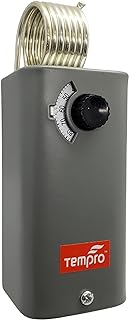
Best for: Environments needing a durable, all-purpose line-voltage thermostat. The Tempro TP500 is housed in a sturdy steel enclosure designed for tougher environments and supports simple single-stage control for heating and cooling applications. UL and cUL listings provide a basic level of compliance that supports standard residential and light commercial use.
Caution: The description emphasizes general use; verify that a single-pole design suits your power-off requirements and installation setup before choosing.
Buying Guide
What should you consider when choosing a 22A single-pole thermostat?
- Voltage compatibility: Ensure the unit supports your heater’s voltage (120V, 208V, 240V). Some models offer multi-voltage compatibility to cover multiple installations.
- Installation method: Decide between wall-mounted two-wire installation and built-in options inside Cadet Com-Pak or Cadet Cadet F-series heaters. Built-in models save wall space but require compatible heater design.
- Control type: Dial-based mechanical controls are simple and reliable, but some users may prefer more precise digital or programmable options if available in your selection.
- Safety and compliance: Look for UL or cUL listings where applicable and confirm the unit is rated for the intended environment (residential vs. commercial).
- Shutoff behavior: Single-pole units may not provide full off capability in every configuration. If you need complete power shutoff at the thermostat, consider double-pole designs where appropriate.
- Physical fit and space: Built-in models require internal mounting space within the heater; ensure dimensions and wiring access align with existing hardware.
Frequently Asked Questions
- What is a 22A single-pole thermostat best for?
It’s ideal for basic on/off temperature control for baseboard and wall heaters in homes or light commercial spaces where a simple dial suffices.
- Can I replace a line-voltage thermostat by myself?
Yes, most models use a basic two-wire hookup. Follow the manufacturer wiring diagram and power-off safety practices; if unsure, consult a professional.
- Are built-in thermostat kits compatible with all Cadet heaters?
No. Built-in kits are designed for specific Cadet series (such as Com-Pak or F-series). Check product compatibility before purchasing.
- Do these thermostats provide a full shutoff?
Single-pole devices may not fully shut off power in every setup. If full shutoff is required, consider a double-pole model or a different configuration.
- What voltages do these thermostats support?
Many models support 120V, 208V, and 240V. Verify the exact voltage range in the product specifications to match your heater.
- Is safety labeling important for line-voltage thermostats?
Yes. Look for listings from UL or equivalent safety organizations, especially for installations in commercial or high-heat environments.