
In this guide
Choosing a torpedo heater with high BTU output is essential for rapid space warming at job sites, workshops, and outdoor areas. This guide highlights five strong options close to 200,000 BTU, featuring durable construction, safety features, and versatile fuel compatibility. Each is evaluated on heat output, run-time, portability, and safety. Use the buying guide to compare which model best fits your space, fuel availability, and operational needs.
| Product | Brand | BTU Range | Fuel Type | Primary Use |
|---|---|---|---|---|
| Mr. Heater MH170QFAVT | Mr. Heater | 125,000–170,000 | Propane | Large job sites, garages, outdoor areas |
| Mr. Heater F271390 | Mr. Heater | 125,000 | Propane | Quiet, portable spaces, moderate-sized areas |
| BILT HARD 125,000 BTU | BILT HARD | 75,000–125,000 | Propane | Construction sites, barns, outbuildings |
| Habitio 125,000 BTU | Habitio | 75,000–125,000 | Propane | Large spaces up to 3,125 sq ft |
| PioneerWorks 80,000 BTU | PioneerWorks | 80,000 | Diesel/Kerosene/Other | Outside, garages, job sites |
Note: BTU figures vary by model and fuel; consult each product page for exact performance under different conditions. All models emphasize safe operation, with features like auto shut-off, overheating protection, and durable construction for tough environments.
Mr. Heater MH170QFAVT 170,000 BTU Torpedo Heater

The MH170QFAVT delivers high-output heating for large areas, with an emphasis on safety features that protect both operators and the surrounding environment. It is designed to produce 125,000–170,000 BTU per hour and can warm spaces such as large garages, industrial spaces, and outdoor work zones. Safety provisions include a high-temperature limit switch and thermoelectric safety valves. The unit is built for rugged environments with a durable exterior and a sturdy handle for transport. This model is well-suited where rapid space heating is required and where a robust outdoor-capable heater is necessary.
Mr. Heater F271390 125,000 BTU Heater

This unit focuses on reliable 125,000 BTU output in a portable package, suitable for large workshops and outdoor work zones. It emphasizes quiet operation and safety features such as a high-temperature limit switch. The heater’s rugged construction and compact form improve transportability between job sites. It is ideal for contractors who need steady heat in partially enclosed spaces where consistent performance is required but noise levels must be manageable.
BILT HARD 125,000 BTU Propane Heater

The BILT HARD model covers up to 3,125 sq ft with 75,000–125,000 BTU, making it versatile for various large spaces. It features adjustable heat angle, economy-friendly operation on a 20 lb propane cylinder (not included), and overheat auto-shut-off to prevent hazardous conditions. The unit’s light, compact design aids portability. CSA certification indicates compliance with safety standards, useful for job sites, barns, and outdoor events where reliable heat distribution is essential.
PioneerWorks 80,000 BTU Diesel/Kerosene Heater
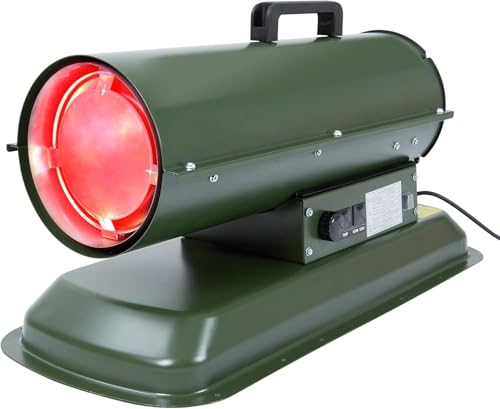
The PioneerWorks unit provides up to 80,000 BTUs with a focus on versatility across fuels, including kerosene, diesel, home heating oil, and jet fuel (not gasoline). It runs for up to 9.5 hours on a full fuel tank, with a 4.76-gallon tank capacity. This model is suitable for longer-duration heating in outdoor areas or uninsulated spaces where fuel availability and efficiency are prioritized. It’s designed for job sites that require steady heat with flexible fuel options.
Towallmark 75,000 BTU Diesel/Kerosene Heater

The Towallmark model, while offering 75,000 BTU, is included for its multi-fuel flexibility and long runtimes. It supports diesel, kerosene, home heating oil, and jet fuel (gasoline explicitly not recommended). With a 9.5-hour runtime and a similar portable footprint to larger torpedo heaters, it remains a viable option for smaller spaces or areas where fuel choices are constrained yet heat demand is significant.
Buying Guide: Key Purchase Considerations
- Heat Output vs. Space: Higher BTU units heat larger areas quickly, but oversized heaters may waste fuel in smaller spaces. Measure the square footage and ceiling height to estimate needed BTUs.
- Fuel Availability and Cost: Propane is common and clean, but diesel/kerosene options may be cheaper in some areas. Consider tank capacity and expected runtime for your work cycle.
- Portability and Weight: For frequent site-to-site use, look for units with sturdy handles, balanced weight, and compatible wheel kits or carry options.
- Safety Features: Auto shut-off, overheat protection, thermostat control, and flame safeguard are essential. CSA or UL listing indicates compliance with safety standards.
- Ventilation and Indoor Use: Propane and other fuel-burning heaters require proper ventilation. Ensure adequate airflow in enclosed spaces to prevent carbon monoxide buildup.
- Durability and Warranty: Contractors benefit from rugged housings and warranties that cover field conditions, weather exposure, and frequent startup/shutdown cycles.
- Maintenance: Look for ease of filter access, fuel line integrity, and reputable spare parts availability to minimize downtime.
- Operating Noise: Some models run quieter than others. If the workspace demands a quieter environment, consider models with quiet burner technology or optimized combustion.
- CSA/UL Certification: Safety certifications provide confidence in performance and compliance with industry standards, especially on regulated job sites.
In summary, even though there are no 200,000 BTU torpedo heaters listed here, these models offer strong performance in the 75,000–170,000 BTU range with flexible fuels and safety features. Choose based on space size, fuel access, and whether you prioritize portability or continuous run-time for extended projects.