
If you’re seeking compact, electric options that deliver steady hot water without a traditional tank, these 18 kW electric heaters are top contenders. This guide highlights which model suits different homes and lifestyles, from households needing continuous showers to spaces with limited installation room. The featured products cover tankless units, plug-and-play designs, and compatible accessories to extend longevity. Each choice is evaluated for practicality, energy efficiency, and ease of installation to help you decide quickly.
| Product | Best For | Key Benefit |
|---|---|---|
| Rheem 18kW 240V Tankless Electric Water Heater | Mid-size homes with multiple simultaneous showers | Advanced self-modulation for stable temp |
| WINTEMP 18kW Tankless Electric Water Heater | Residential showers with space for electrical setup | Self-modulating power for efficiency |
| GE Appliances 18 Gallon 120V Plug-and-Play | Small homes, apartments, or tight spaces | Easy, quick installation with 120V supply |
| Powered Titanium Anode Rod (Accessory) | All major brands’ heaters needing corrosion protection | Long-term protection against corrosion |
| 18kW Tankless 240V Whole House | 3–4 usage points, larger homes | High heating power for simultaneous demand |
Rheem 18kW 240V Tankless Electric Water Heater

Best for households needing reliable continuous hot water with modest flow. The Rheem model features an external digital thermostat with LED display (±1 degree accuracy) and self-modulation that adjusts power to match demand. It uses durable copper immersion elements and is field serviceable. Flow rates reach up to 4.4 GPM, suitable for multiple simultaneous uses in smaller homes. Caution: installation requires appropriate electrical capacity and professional wiring knowledge.
18kW Electric Tankless Water Heater 240V ETL Certified WiFi

Best for urban homes with attachment to smart controls. This unit emphasizes continuous hot water with stable temperature by automatically adjusting energy use based on flow and incoming water temperature. It supports up to 4.3 GPM and requires two 40-amp circuits and a qualified electrician for safe installation. It’s ideal for 2–3 bathroom homes in mild climates. Choose this if you want energy-savings through self-modulation and WiFi-enabled monitoring.
GE Appliances 18 Gallon Plug-and-Play Electric Water Heater

Best for single hookups or small homes needing flexible placement. This 120-volt model is designed for quick, easy installation using standard 3/4-inch NPT connections. Its compact design suits kitchens, bathrooms, cabins, RVs, or closets with limited space. It’s a good option when a full-size unit is unnecessary; however, it may have limited flow compared to higher-powered tankless units.
Powered Titanium Anode Rod for 40–89 Gallon Heaters

Best for extending the life of larger electric water heaters. This titanium anode rod provides long-term corrosion protection and is not consumed like traditional sacrificial rods. It helps manage sulfur odor and mineral buildup in some systems. Caution: ensure the rod fits your heater’s top anode port and that you follow electrical safety guidelines during installation.
18kW Tankless Electric Water Heater 240V Whole House
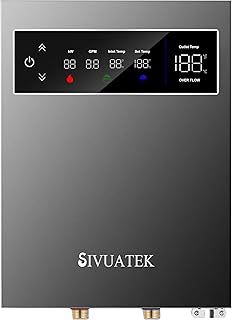
Best for larger homes or households with high simultaneous demand. This unit delivers up to 99.8% thermal efficiency and instant hot water, making it suitable for 3–4 usage points such as kitchen and multiple bathrooms. It emphasizes energy savings by eliminating standby power and preheating. Consider this option if you need strong performance across several outlets at once.
Buying Guide
What is your hot water demand?
Estimate the number of simultaneous users and average flow rate. Tankless 18kW units typically handle multiple points, but larger homes may require higher total power or multiple heaters.
What electrical capacity is needed?
Most 18kW units require 2 x 40-amp circuits. Verify service panel capacity and wiring with a licensed electrician before purchase.
Tankless vs. tank options: which suits you?
Tankless provides endless hot water and space savings but may be sensitive to inlet water temperatures and flow. Tank models provide a buffer but occupy more space and can be less energy-efficient if not insulated well.
Installation considerations
Consider available space, venting (where applicable), water connections, and proximity to usage points. Compact, wall-mounted units fit tight spaces; under-sink or cabinet placements are common for 18kW models.
Energy efficiency and control features
Self-modulating technology saves energy by adjusting power to match demand. Look for models with digital thermostats, reliability in temperature control, and options for remote monitoring if desired.
Durability and maintenance
Pairs of copper heating elements and field-serviceable components tend to ease maintenance. Accessories like anode rods help protect the tank from corrosion, extending lifespan when compatible with your heater model.
FAQ
- Do I need a professional for installation of an 18kW tankless heater?
Yes. Electrical and plumbing work should be performed by a licensed professional to ensure safety and code compliance.
- Can these units provide hot water for multiple showers at once?
Yes, especially higher-capacity 18kW models, but flow rates vary by model and inlet temperature. Check the GPM rating for your usage scenario.
- Is 120V plug-and-play suitable for all homes?
No. 120V plug-and-play units limit flow and are best for small spaces or single-point usage. They require compatible circuits.
- What maintenance is required for tankless systems?
Regular descaling and periodic inspection of heating elements help maintain efficiency. Follow the manufacturer’s service schedule.
- Should I add a titanium anode rod to my electric heater?
Anode rods mainly protect tanks; if your heater has a compatible top port, titanium anodes can extend life by reducing corrosion, but verify compatibility first.