
Looking for a reliable 12,000 BTU propane heater to warm a porch, garage, or small living area? This guide highlights five strong options, with clear reasons who each model best serves. The top picks are chosen for portability, efficiency, and ease of use, helping you pick the right heater for your space and climate. Below you’ll find quick comparisons, detailed product sections, and a buyer’s guide to help you decide.
Summary table of selected products:
| Product | BTU (Max) | Best For | |
|---|---|---|---|
| The Boss Propane Heater | 12,000 | Outdoor patios and campsites | Three heat levels; portable with handle |
| Mr. Heater 18,000 BTU Vent Free | 18,000 | Small-to-medium rooms needing extra warmth | Higher BTU, best for larger spaces |
| ProCom 10,000 BTU Infrared Plaque | 10,000 (Infrared up to 5,000–10,000) | Compact spaces and offices | Infrared warmth with wall-mount option |
| Mr. Heater 10,000 BTU Vent Free Radiant | 10,000 | Small rooms and garages | Piezo ignition; heats up to ~300 sq ft |
| ProCom ML300HBA-B 30,000 BTU | 30,000 | Very large spaces or workshops | Higher capacity; not 12k but included for context |
THE BOSS Propane Heater for Patio

The Boss heater delivers up to 12,000 BTU for outdoor use, with three heat levels and a simple twist ignition. Best for outdoor spaces like patios, decks, or camp setups where rapid warmth is desirable. Choose this if you need robust warmth in open-air settings and prioritize portability. Limitation: designed for outdoor use; indoor use is not recommended due to ventilation needs.
Mr. Heater 18,000 BTU Vent Free Radiant

This model provides 18,000 BTU for larger or colder spaces while remaining vent-free for quick setup. Best for medium rooms or workshops that require extra heat. It is a stronger option if you need higher warmth than a 12k unit can provide. Caution: higher BTU means more gas consumption; ensure adequate ventilation to avoid buildup in enclosed spaces.
Mr. Heater 10,000 BTU Vent Free Radiant

This 10,000 BTU unit heats up to about 300 square feet and uses Piezo ignition for quick starts. Best for small living rooms or enclosed spaces where vent-free operation is acceptable. Better for compact areas where full 12k BTU might be excessive. Limitation: not ideal for larger spaces or outdoor use without adequate shelter.
Propane Patio Heater Indoor/Outdoor, 18,000 BTU
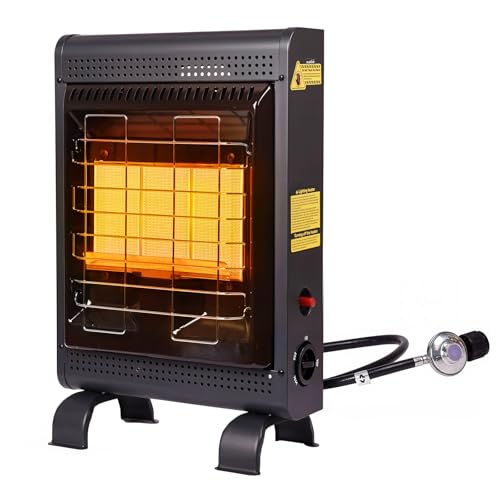
Offers 6,000–18,000 BTU with three modes and no electricity needed. Best for versatile indoor/outdoor warmth in patios, garages, or camps. Advantage: electricity-free operation in many scenarios. Limitation: no 12,000 BTU option, but a strong mid-range alternative for flexible use.
ProCom ML100TPA-B Infrared Plaque Heater

This compact infrared heater provides up to 10,000 BTU using liquid propane and can heat up to 500 sq ft. Best for small rooms, offices, or bedrooms where infrared warmth is preferred. Choose this if you want a slim profile with wall-mount or base feet options. Caution: not ideal for very large spaces; higher BTU options perform better in bigger rooms.
Buying Guide: Key Considerations For A 12,000 BTU Propane Heater
- Space size and heating needs: For spaces around 300–450 sq ft, a 12,000 BTU heater commonly provides adequate warmth. For larger rooms, consider models with more BTU or supplemental heat sources.
- Ventilation and safety: Vent-free models are convenient but require proper ventilation in enclosed spaces. Always follow local safety guidelines and use CO detectors where applicable.
- Fuel and electricity requirements: Most units run on propane with minimal or no electricity. If you need ignition or electronic controls, plan for a power source or battery backups in outdoor settings.
- Portability and installation: For outdoor patios or temporary setups, a compact, portable design with a carrying handle is advantageous. Wall-mountable infrared units save floor space in rooms.
- Ignition type and controls: Piezo ignition is common for quick starts. Thermostatic control helps maintain a steady temperature, while manual settings require more attention to heat levels.
- Safety features: Look for oxygen depletion sensors, tilt/ tip-over protection, and automatic shut-off systems to reduce risk in enclosed spaces or garages.
- Vent-free vs vented: Vent-free units provide easy setup but need adequate room ventilation. Vented units expel combustion byproducts outside, which can be preferable in heavily sealed spaces.
- Energy efficiency and operating cost: Higher BTU output uses more propane. Match BTU to space and climate to avoid unnecessary fuel consumption.
Frequently Asked Questions
- What size space is best for a 12,000 BTU propane heater? – Typically suitable for about 300–450 square feet, depending on insulation and climate.
- Are vent-free heaters safe indoors? – Yes when used according to manufacturer instructions and with proper ventilation and a detectors in place.
- Can I use these heaters in a tent or cabin? – They can be used in tents or cabins with ventilation and caution; always follow safety guidelines for enclosed spaces.
- Do 12,000 BTU heaters require electricity? – Many models operate without electricity, but some have electronic ignitions or thermostats that require power.
- Which is better for outdoor warmth: 12,000 BTU or 18,000 BTU? – 18,000 BTU provides more heat for larger or windier outdoor areas; 12,000 BTU suits smaller spaces or milder conditions.
- What maintenance is required? – Regularly check hoses and regulators, ensure proper gas connections, and store propane tanks safely when not in use.