
If you’re outfitting an RV for cold weather, the goal is reliable freeze protection that’s easy to install and energy efficient. The best 12 volt heat tapes are self-regulating cold-weather heaters designed to protect water lines and pipes without overheating. They work with typical RV power systems and can be installed by DIY enthusiasts. This guide highlights five dependable options and explains who each one suits best, including practical cautions to note before purchasing.
Summary of recommended products:
| Product | Best For | Length | Key Benefit |
|---|---|---|---|
| MincoHome DC 12V~14V Heat Cable (13 ft) | Budget-friendly, simple install | 13 ft | Pre-assembled and energy efficient |
| Nob.Yi DC 12V~14V Heat Cable (32.8 ft) | Long runs, large RVs | 32.8 ft | Self-regulating, waterproof |
| MincoHome Self-Regulating Heat Cable DC (10 ft) | Compact setups, trucks and campers | 10 ft | Durable three-layer design |
| MincoHome DC 12V~14V Heat Cable (6.5 ft) | Short pipe runs or apartments | 6.5 ft | Pre-assembled, efficient |
| Nob.Yi DC 12V~14V Heat Cable (16 ft) | Medium-length runs, versatile | 16 ft | Low-voltage ease, waterproof |
MincoHome DC 12V~14V Heat Cable (13 ft)

Best for economy-minded RV owners who want straightforward installation. This kit uses a three-layer construction—copper conductor, conductive heating element, and PE outer sheath—to resist wear and aging. The pre-assembled design means wiring is minimal, and the 12–14V input with 15 Watts per meter at 10°C supports energy efficiency. A 40 cm cold conductor with heat shrink tubing provides a sealed joint to reduce moisture risk. Choose this if you value a compact setup with easy installation for moderate-length pipe runs.
Who it’s best for: Weekend warriors with limited wiring experience; smaller RVs needing a simple, ready-to-go heat trace. Limitation: Only 13 ft may not suffice for longer pipe runs in larger RVs or multi-branch setups.
Nob.Yi DC 12V~14V Heat Cable (32.8 ft)

Best for extended pipe runs or larger RVs, this longer heat cable provides comprehensive coverage along water lines. It operates on low voltage and self-regulates, reducing the risk of overheating. The PE jacket delivers water resistance for outdoor or damp environments, making it suitable for exposed under-car or exterior piping. A practical pick when long, continuous protection is needed without a separate controller.
Who it’s best for: RVs with long water lines or those needing a single length to cover multiple segments. Limitation: Longer cables can be more cumbersome to route and secure in tight spaces.
MincoHome Self-Regulating Heat Cable DC 12V-14V (10 ft)

Best for compact or mid-length runs in trucks and campers, this 10-foot kit emphasizes durability with a three-layer construction that includes a protective outer sheath. The pre-assembled design simplifies installation, and the 12–14V rating with 15 Watts per meter at 10°C keeps energy use reasonable for smaller RV setups. Includes a 40 cm cold lead to help with safe, insulated connections.
Who it’s best for: Owners needing a ready-to-install option for shorter routes. Limitation: The 10 ft length may require multiple segments for longer pipe runs.
Nob.Yi DC 12V~14V Heat Cable (16 ft)

Best for flexible mid-length installations, this Nob.Yi option provides low-voltage convenience and a self-regulating design that reduces risk of overheating. The PE jacket and insulation deliver better water resistance for outdoor use, making it suitable for exposed lines or outdoor connections on many RV setups. A practical middle-ground choice between very short and very long runs.
Who it’s best for: RV owners who need moderate length coverage with straightforward installation. Limitation: Not the longest option for extensive piping networks.
MincoHome DC 12V~14V Heat Cable (16.5 ft)
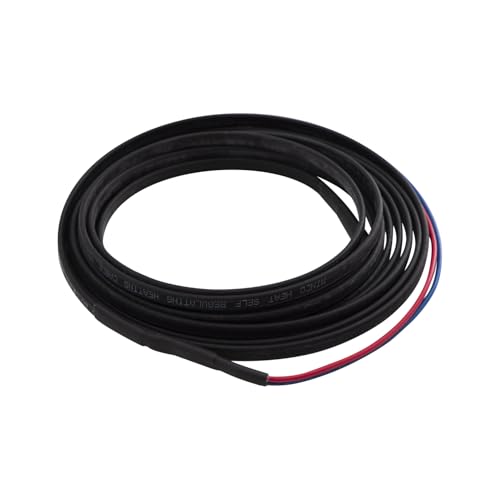
Best for longer but still manageable installations, this 16.5-foot kit pairs a durable three-layer construction with easy wiring through a pre-assembled design. The 12–14V operation at 15 Watts per meter at 10°C makes it energy-efficient for longer runs in winter camping. The included cold lead and insulated joint reduce moisture risk at connection points.
Who it’s best for: RVs with longer pipe networks or more complex routing. Limitation: Slightly longer length may require planning to fit within tight under-belly compartments.
Buying Guide: 12V Heat Tape For RV Buyers
What to consider when choosing heat tape for RV water lines:
- Length and coverage: Measure the total run length and evaluate whether one continuous length or multiple sections are needed. Longer runs can reduce joints but may require careful routing.
- Voltage compatibility: Most RV systems use 12–14V power. Ensure the product is designed for low-voltage DC use and matches your battery setup.
- Self-regulating vs manual control: Self-regulating cables adjust heat with ambient temperature, lowering risk of overheating and eliminating the need for a separate controller in many setups.
- Durability and weather resistance: Look for a robust outer jacket (PE) and insulation, especially if the cable may be exposed to moisture or cold outdoor conditions.
- Pre-assembled vs DIY wiring: Pre-assembled options save time and complexity; consider your comfort with splicing and sealing cold leads where needed.
- Cable density and energy efficiency: Higher watts per meter provide more heat but use more power. Balance heat needs with available battery capacity, especially off-grid.
- Joint protection: Sealed joints with heat shrink tubing help prevent moisture intrusion at cold leads and connections.
FAQ
- Do I need a temperature controller with self-regulating heat tapes?
– No, many self-regulating cables regulate heat automatically based on ambient temperature, reducing the need for an external controller in typical RV setups. - Can I use these heat tapes outdoors on RV water lines?
– Yes, but ensure the jacket and insulation are rated for outdoor moisture exposure and install with proper sealing at joints. - What length should I choose for a mid-sized RV?
– For mid-sized RVs, 16–32 feet total coverage is common, but plan for longer runs if you have multiple bending pipes or exterior lines. - Are these cables compatible with standard RV power systems?
– They are designed for 12–14V DC supplies typical of RV electrical setups, including battery banks and auxiliary power sources. - What is the advantage of a pre-assembled kit?
– Pre-assembled kits reduce installation time and minimize the chance of poor connections, but verify that the cold lead length matches your routing needs. - Is overheating a concern with these cables?
– Self-regulating designs limit heat output to avoid overheating, especially important in confined RV spaces.